











Main Facts: The New Frontier in Minimally Invasive Surgery
Distalmotion, the Swiss-based medical technology innovator, has secured a significant regulatory milestone that underscores its ambition to disrupt the surgical robotics market. The U.S. Food and Drug Administration (FDA) has granted expanded clearance for the company’s Dexter robotic system, specifically authorizing its use in three additional reconstructive surgical procedures aimed at correcting pelvic organ prolapse.
This expansion marks a pivotal moment for the Dexter platform, which is being positioned not as a competitor to the massive, stationary robotic systems that dominate inpatient hospital environments, but as a lean, agile alternative tailored for Ambulatory Surgery Centers (ASCs). By broadening its portfolio to include complex gynecological reconstructions—in addition to existing clearances for endometriosis resection, hysterectomy, ovary removal, gallbladder removal, and inguinal hernia repair—Distalmotion is effectively creating a robust value proposition for outpatient facilities that prioritize throughput, cost-efficiency, and clinical versatility.
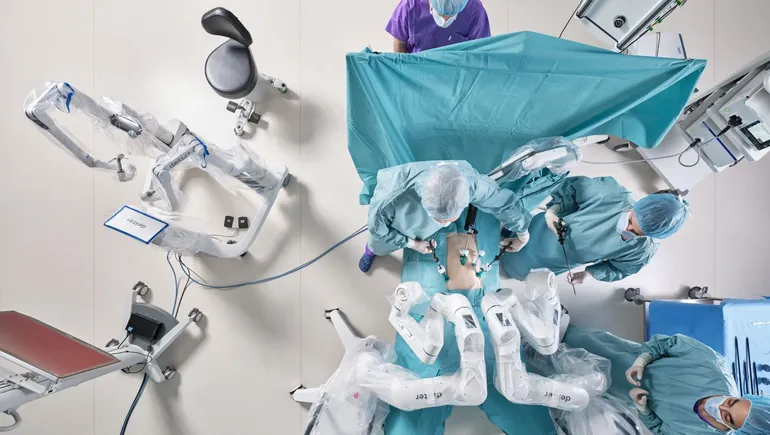
The Dexter system is differentiated from market incumbents like Intuitive Surgical’s da Vinci platform by its compact, portable architecture. In an era where healthcare systems are aggressively migrating surgeries from high-cost inpatient hospital settings to lower-cost outpatient centers, Distalmotion’s design philosophy aligns with the physical and financial constraints of the modern ASC.
Chronology: A Path to Market Maturation
The journey of the Dexter system from a Swiss engineering project to a U.S. market participant has been one of calculated, iterative expansion.
- Early Development: Founded with a vision to simplify robotic-assisted surgery, Distalmotion focused on the "on-demand" nature of robotics, seeking to eliminate the logistical burdens associated with large-format surgical robots.
- Initial European Adoption: Before establishing a significant footprint in the United States, the Dexter system underwent rigorous clinical application in Europe, where it began accumulating patient data and refining its user interface.
- The U.S. Regulatory Entry: Upon entering the U.S. market, the company pursued a series of 510(k) clearances, targeting general and gynecological surgery. Each milestone was strategically chosen to build a platform capable of handling the most common procedures performed in outpatient settings.
- The Current Milestone: With the latest FDA authorization regarding pelvic organ prolapse, the company has significantly widened its clinical "moat." This follows previous clearances for essential gynecological procedures, such as hysterectomies and oophorectomies.
- The Future Pipeline: Distalmotion is currently engaged in an Investigational Device Exemption (IDE) trial focused on myomectomy (the removal of uterine fibroids), signaling that the company’s regulatory strategy is far from complete.
Supporting Data: Why the ASC Shift Matters
The move to perform complex surgeries in ASCs is not merely a preference; it is a financial imperative for the U.S. healthcare system. Recent industry data indicates a profound shift in the surgical landscape.
The Economics of Outpatient Surgery
ASCs offer a significantly lower cost-per-case compared to traditional hospitals. These savings are driven by specialized staffing models, lower overhead costs, and a focus on high-volume, predictable procedures. However, the lack of robotic platforms that fit within the physical footprints of these smaller facilities has historically prevented the adoption of advanced minimally invasive techniques in this space.
Distalmotion’s data suggests that the Dexter platform’s footprint is significantly smaller than the industry standard. By requiring less OR space and offering faster setup and breakdown times, the Dexter system helps centers maintain the high turnover rates necessary for financial viability.
Clinical Throughput and Patient Outcomes
To date, more than 4,000 patients have been treated using the Dexter system. While this figure is modest compared to the millions treated by legacy systems, it represents a concentrated group of patients who have benefited from the robot’s precision in outpatient settings. The focus on gynecological indications is particularly strategic; as women’s health procedures continue to migrate to ASCs, the demand for robotic assistance to reduce recovery times and post-operative complications is expected to skyrocket.
Official Responses and Strategic Intent
Distalmotion’s leadership has been vocal about the "why" behind their design. The company emphasizes that current robotic systems were largely designed for hospital-based, multi-specialty, high-complexity cases, often resulting in "over-engineering" for the needs of an ASC.
"Efficiency is the lifeblood of the Ambulatory Surgery Center," a representative for the company noted during a recent industry briefing. By stripping away the massive hardware requirements of traditional robots, Distalmotion believes it can provide the same clinical benefits—tremor filtration, 3D visualization, and enhanced dexterity—without the prohibitive cost of ownership or the logistical challenges of large equipment.
The company’s decision to move into pelvic organ prolapse correction is a direct response to surgeon demand. Providers who are increasingly tasked with performing these procedures in outpatient centers have been seeking a robotic partner that provides the stability of a robot with the mobility of a portable surgical tool.
Implications: The Future of Surgical Robotics
The expansion of the Dexter platform carries profound implications for the surgical robotics industry, the hospitals that currently host these procedures, and the patients who will receive them.
1. The Decentralization of Specialized Surgery
For decades, the "center of gravity" for complex surgery has been the large tertiary care hospital. The success of the Dexter system in ASCs suggests a trend toward decentralization. As more complex gynecological and general surgical procedures move to outpatient settings, the competitive advantage of the large hospital is being eroded. If a surgeon can perform a hysterectomy or a complex prolapse repair in an ASC with the same robotic precision as in a hospital, the justification for a hospital stay diminishes.
2. Market Disruption and the "Incumbent" Response
Intuitive Surgical and other established players have long held a near-monopoly on robotic surgery. While these companies have massive resources and deep-rooted hospital contracts, they face the "Innovator’s Dilemma." Adapting their massive, heavy, and expensive systems to the nimble requirements of an ASC is a significant engineering challenge. Distalmotion has bypassed this by designing for the ASC from the ground up, effectively creating a new category of "on-demand" surgical robotics.
3. Patient Access and Equity
The shift toward outpatient robotics also has the potential to improve patient access. ASCs are often located in suburban or community settings, making them more accessible than centralized, downtown academic medical centers. By enabling robotic-assisted surgeries in these local facilities, patients may find it easier to schedule procedures closer to home, with shorter wait times and, ideally, lower out-of-pocket costs due to the lower facility fees associated with ASCs.
4. The Path to Comprehensive Care
Distalmotion’s ongoing IDE trial for myomectomy is the next major hurdle. Should this trial succeed, the Dexter system will be positioned to capture a massive segment of the gynecological surgery market. For many women suffering from uterine fibroids, the prospect of a minimally invasive, robot-assisted procedure in a same-day setting is a significant quality-of-life upgrade over traditional, more invasive surgical approaches.
Conclusion: A New Standard of Efficiency
As the healthcare industry continues to grapple with rising costs and the need for greater operational efficiency, the role of specialized technology becomes increasingly vital. Distalmotion’s Dexter system is not merely a tool; it is a catalyst for a systemic change in how and where surgery is performed.
By successfully navigating the FDA’s rigorous clearance process for gynecological reconstructive procedures, Distalmotion has validated its strategy. The company is betting that the future of surgical robotics lies in the hands of the agile, the efficient, and the specialized. As the platform continues to evolve—moving from gallbladder repairs to complex pelvic reconstruction—it serves as a bellwether for a broader movement: the democratization of high-tech surgery.
While the competition remains fierce and the barriers to entry in the medical device space are high, Distalmotion has successfully carved out a niche that is likely to grow alongside the ASC sector. For patients, surgeons, and healthcare administrators alike, the rise of the Dexter platform represents a shift toward a more flexible, accessible, and efficient future in surgical care. The coming years will undoubtedly see a battle for the ASC OR, and with this latest clearance, Distalmotion has firmly established itself as a frontrunner in that race.