











Introduction: The Looming Public Health Challenge
In June 2026, the Global Food Institute (GFI) at George Washington University released a landmark policy brief titled Changing the Default: A Policy Roadmap for Reducing Added Sugars in U.S. Children’s Diets. Authored by researchers P. Fielding-Singh, D. Cherlin, and M. Maitin-Shepard, the report serves as a stark wake-up call regarding the dietary landscape of American youth.
For decades, public health experts have warned about the correlation between high sugar intake and the rising prevalence of chronic metabolic diseases in children. However, this report goes beyond mere observation. By aligning its recommendations with the ambitious targets set by the 2025-2030 Dietary Guidelines for Americans, the authors provide a structural, legislative, and social blueprint aimed at fundamentally altering how children interact with food. As the report poignantly argues, the problem is not merely a matter of individual willpower or parental choice; it is a systemic issue rooted in a "food environment" that currently defaults to high-sugar options.
Main Facts: The Scope of the Report
The central premise of the GFI report is that the current American food system is "sugar-saturated." From school cafeterias to grocery store end-caps, added sugars are omnipresent, making it nearly impossible for families to navigate a healthy diet without constant, exhaustive vigilance.
The report identifies three core pillars for systemic change:
- Educational Empowerment: Equipping families with the tools to identify hidden sugars and make informed purchasing decisions.
- Regulatory Reform: Establishing more rigorous federal and state nutritional standards for foods served in schools, effectively removing the "default" of sugary snacks and beverages in educational settings.
- Supply and Demand Reshaping: Implementing policy levers—such as fiscal incentives for manufacturers and supply chain adjustments—to reduce the availability and affordability of high-sugar products while increasing access to nutrient-dense alternatives.
The report emphasizes that while education is a necessary component, it is insufficient on its own. To see meaningful progress, the "choice architecture" of the American diet must be restructured so that the healthy choice becomes the path of least resistance.
Chronology: The Road to the 2026 Policy Roadmap
To understand the significance of this report, one must look at the timeline of the shifting nutritional landscape in the United States.
- 2015–2020: The conversation around added sugars intensifies as research links childhood obesity and Type 2 diabetes directly to the overconsumption of ultra-processed foods.
- January 2025: The federal government releases the 2025-2030 Dietary Guidelines for Americans. These guidelines set the most aggressive targets for sugar reduction in history, acknowledging the public health crisis posed by non-communicable diseases.
- Mid-2025: Realizing that the federal guidelines lack a comprehensive implementation strategy, the Global Food Institute commissions the research team to bridge the gap between abstract nutritional targets and real-world policy application.
- June 2026: The publication of Changing the Default. The report is released amidst a climate of growing bipartisan concern regarding the long-term economic impacts of childhood health conditions on the national healthcare system.
Supporting Data: Why the Current Trajectory is Unsustainable
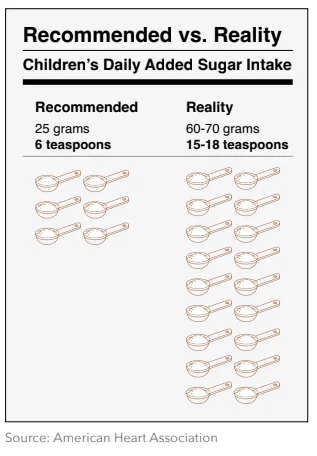
The data underpinning the GFI report paints a sobering picture of American health. According to the research, a significant percentage of caloric intake among children aged 2–18 comes from added sugars—far exceeding the recommended limits set by the American Heart Association and the USDA.
The Hidden Sugar Trap
The report highlights that added sugars are not just found in desserts and sodas; they are ubiquitous in "savory" foods, including bread, pasta sauces, and yogurts, which are often marketed as "healthy."
Economic Implications
Beyond the physiological cost, the report notes that the economic burden of diet-related diseases in children is projected to skyrocket over the next decade. If current trends continue, the United States faces a massive increase in pediatric healthcare spending, lower academic performance due to nutritional deficiencies, and reduced long-term productivity as these children transition into the workforce. The report argues that the cost of implementing these systemic changes is a fraction of the cost of treating chronic diseases over the next thirty years.
Official Responses and Stakeholder Perspectives
The release of the report has sparked a robust debate among policymakers, food industry lobbyists, and public health advocates.
The Public Health Community
Advocates for children’s health have largely lauded the report. Many experts have long argued that relying on "nutritional literacy" programs is an ineffective strategy when the environment itself is stacked against healthy eating. "We cannot expect parents to out-educate a food industry that spends billions on marketing high-sugar products to children," said one independent pediatric nutritionist.
The Food Industry
Predictably, representatives from the processed food and beverage industries have expressed caution. While acknowledging the importance of nutrition, trade groups emphasize the role of "consumer choice" and warn against government overreach that could restrict product variety or impose undue economic burdens on small-to-medium-sized manufacturers. They advocate for voluntary reform rather than mandatory federal regulations.
The Academic Perspective
University researchers who were not involved in the report have praised its "succinct and actionable" nature. However, many point to the primary hurdle: political willpower. As the report concludes, the challenge is not designing the policy, but navigating the legislative landscape to implement it.
Implications: The Path Forward
The GFI report suggests that the "Default" setting in America is currently set to "Sugar." To change this, the following steps are proposed:
1. Reforming School Nutrition Standards
Schools are the most critical intervention point. By requiring all foods sold on school grounds to meet strict sugar-thresholds, the government can ensure that, regardless of socioeconomic background, all children have access to healthy meals.
2. Fiscal Policy and Subsidies
The report suggests that subsidies currently provided for high-fructose corn syrup and other sugar-heavy agricultural products should be redirected toward the production of fruits, vegetables, and whole grains. By shifting the financial incentives, the retail price of healthy food can be lowered, making it more competitive with processed alternatives.
3. Clearer Labeling
The report advocates for front-of-package warning labels that are easier for children and parents to understand. Building on the success of similar policies in countries like Chile and Mexico, the report suggests that visual cues (such as high-sugar warning icons) can significantly reduce consumption by making the nutritional impact of a product immediate and undeniable.
A Call to Action: The Implementation Gap
The report concludes with a sense of urgency that borders on frustration. The authors explicitly state that while the scientific consensus on the dangers of added sugar is settled, the policy implementation remains paralyzed by lobbying and political hesitation.
"It’s a clear, succinct report with lots of good suggestions," one commentator noted upon the release. "If only they could be implemented. Get to work!"
The implementation of these recommendations will require a coordinated effort between the Department of Education, the Department of Agriculture, and the Department of Health and Human Services. It will also require public pressure. Without a mobilized constituency of parents, educators, and doctors, the GFI report risks becoming another document lost in the archives of public policy, while the nation’s children continue to face the long-term health consequences of a sugar-laden food environment.
The roadmap is laid out. The data is undeniable. The remaining variable is the political and social will to move the needle. As the 2025-2030 cycle of the Dietary Guidelines progresses, the 2026 GFI report serves as the primary standard against which the success—or failure—of American nutritional policy will be measured.
The question for the remainder of the decade is no longer "what should we do?" but rather "when will we begin to do it?" The health of the next generation depends on the answer.