











Twenty years ago, the sight of a kettlebell in a commercial gym was a rarity, often relegated to the dusty corners of a basement "hardcore" gym or the occasional garage of a dedicated strength enthusiast. For over a century, the dumbbell reigned supreme as the undisputed king of the free-weight area. However, the fitness landscape has shifted dramatically. With the meteoric rise of functional fitness and the cultural phenomenon of CrossFit, the "cannonball with a handle" has moved from the fringes to the center stage of modern training.
Today, it is common to see trainers prescribe kettlebell-exclusive routines for every client, regardless of their age, injury history, or specific fitness goals. But as the industry leans heavily into the "functional" buzzword, a critical question remains: Have we allowed fitness trends to supersede the foundational logic of exercise science?
The Evolution of Resistance: A Chronology of Iron
To understand the current tension between these two implements, we must look at their histories. Dumbbells, tracing their lineage back to ancient Greece and 17th-century England, were designed for simplicity. By distributing weight evenly on both sides of the handle, they allow for a neutral, stable path of movement. They are the quintessential tools for progressive overload, hypertrophy, and structural balance.
Kettlebells, or girya in their native Russia, served a different purpose: they were originally used as counterweights for market scales before being adopted by Russian strongmen in the 18th century for feats of endurance and explosive power.
The divide between these two became a chasm in the early 2000s. As the "functional movement" movement gained traction, the industry began to characterize traditional bodybuilding-style training (often associated with dumbbells) as "non-functional" or "isolated." Kettlebells were marketed as the cure-all for the sedentary modern worker, promising to integrate movement patterns that supposedly mimic the chaotic demands of real life. While this served as a powerful marketing catalyst, it inadvertently created a false dichotomy: the "functional" kettlebell versus the "stagnant" dumbbell.
Design Mechanics: The Physics of the Load
The primary reason these tools should not be viewed as interchangeable lies in their physical design.
The Dumbbell Advantage: Predictability and Stability
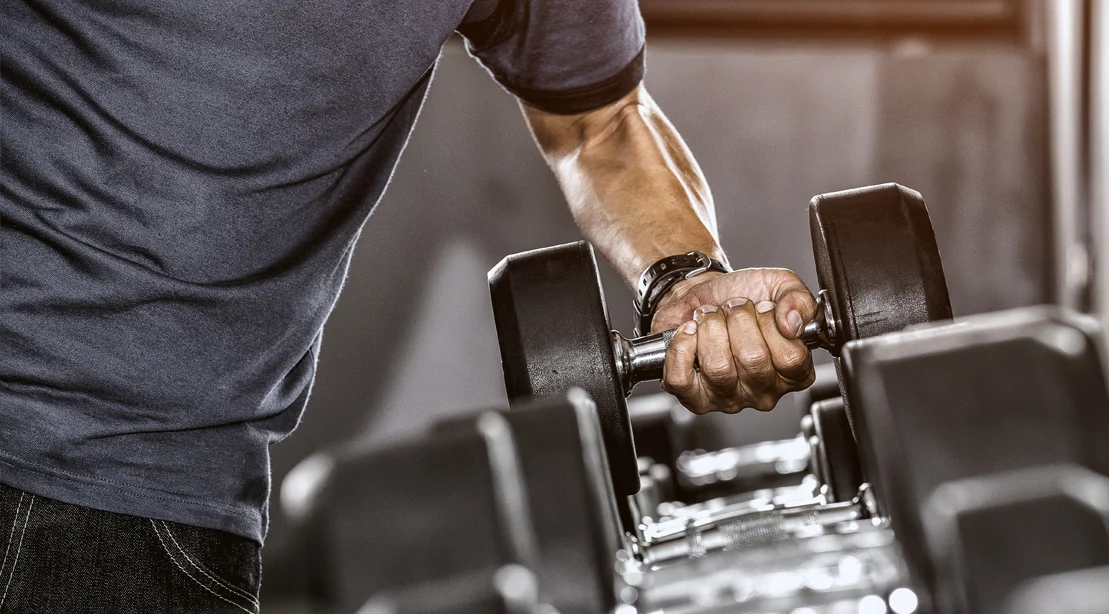
A dumbbell’s weight is centralized in line with the wrist, forearm, and elbow. This linear alignment allows for maximum force production and mechanical tension on the target muscle. Because the center of gravity is essentially "held" within the hand, the lifter can focus on isolating specific muscle groups or executing compound movements with a lower risk of balance-related failure. This stability is exactly what makes the dumbbell superior for hypertrophy (muscle building). When your goal is to push a muscle to failure, you want the resistance to be consistent, not unpredictable.
The Kettlebell Challenge: Dynamic Instability
A kettlebell’s center of gravity resides several inches below the handle. This creates a leverage challenge that shifts during movement. While this "instability" can be a powerful tool for developing core engagement and grip strength, it is a double-edged sword. The dynamic nature of the kettlebell—specifically in movements like the snatch, clean, and jerk—requires a high degree of neurological coordination and technical proficiency.
The Safety Elephant in the Room
Perhaps the most contentious point in modern training is the promotion of ballistic kettlebell work for the general population. Advocates praise the kettlebell swing for its "explosive" benefits. However, when viewed through a physiological lens, the swing is a high-velocity, high-momentum movement.
For the average gym-goer—someone who spends eight hours a day in a seated position—the biomechanical requirements of a proper, safe kettlebell swing are significant. When technique breaks down, the kinetic energy meant to be absorbed by the glutes and hamstrings is often transferred directly to the lumbar spine.
"The risk-to-reward ratio of aggressive kettlebell ballistics for a sedentary beginner is often skewed," says Dr. Aris Thorne, a specialist in sports biomechanics. "We see an increase in acute spinal and shoulder impingement issues in clients who attempt high-rep ballistic training before mastering foundational hinge and squat patterns. Dumbbells, by contrast, offer a controlled environment where the movement can be scaled back without sacrificing the ability to train the muscle."
Supporting Data: Hypertrophy and Strength Metrics
Research into muscle activation suggests that while kettlebells elicit high levels of core engagement, they are rarely the most efficient tool for direct muscle hypertrophy. A 2021 study on muscle fiber recruitment indicated that when the objective is "time under tension"—a key driver for muscle growth—dumbbells consistently outperform kettlebells.
The reason is simple: the "off-center" load of the kettlebell limits the amount of weight a lifter can safely handle in a press or a row. If your primary goal is to increase the size of your pectorals or deltoids, you are limited by the instability of the kettlebell, not by the strength of your muscle. Dumbbells allow for incremental load progression (often in 2.5 to 5-pound increments), which is essential for long-term adaptation.
Official Perspectives from Industry Experts
The professional consensus is shifting back toward a balanced, hybrid approach. Many elite strength coaches argue that the "kettlebell vs. dumbbell" debate is a false choice.
"Programming should dictate the implement, not the other way around," says strength coach Marcus Vane. "If I have an athlete who needs to improve power and rate of force development, I’ll use kettlebells. If I have a client looking to improve body composition and lean muscle mass, I’m putting a pair of dumbbells in their hands. The industry needs to stop trying to make one tool do everything."
The Verdict: Why "Functional" Is Not a Synonym for "Better"
The obsession with "functionality" has led to a misunderstanding of what the human body actually needs. The body does not recognize the shape of the iron in your hand; it recognizes tension, fatigue, and mechanical overload.
If you are a beginner, your training should prioritize:
- Stability: Learning to control the weight through a full range of motion.
- Scalability: The ability to decrease the load as you fatigue without changing the movement pattern.
- Safety: Minimizing the risk of injury while maximizing the stimulus.
Dumbbells remain the gold standard for these objectives. They are intuitive, scalable, and carry a lower barrier to entry. Kettlebells, conversely, should be viewed as a specialized tool for specific training blocks—such as conditioning, grip endurance, or athletic power.
Final Implications: Back to Basics
If you walk into a gym and your trainer insists that kettlebells are superior for every single exercise, it is time to ask for a deeper explanation. The reality is that for 90% of the population, the benefits of the "old school" approach remain unmatched.
History shows us that the most aesthetic, strongest, and healthiest physiques have been built using simple, effective tools. If you haven’t exhausted the potential of traditional dumbbell training—improving your strength, your form, and your muscle density—then you aren’t ready to worry about the "functional" superiority of a cast-iron ball.
Lifting is a pursuit of physical excellence, not a religious adherence to a specific piece of equipment. Respect the iron, master the movement, and remember: if a tool is being used to replace logic rather than enhance it, it is likely doing more harm than good. Focus on the basics, master the fundamentals, and leave the gimmicks for those who prefer trends over results.