The American Diabetes Association (ADA) has officially concluded its internal investigation into the highly publicized and contentious removal of five prominent diabetes researchers from its annual meeting in New Orleans this past June. While the organization maintains that the probe was comprehensive and independent, the fallout continues to reverberate through the scientific community, with the researchers involved—collectively known as the “New Orleans Five”—dismissing the findings as a calculated “whitewash.”
The incident, which saw respected medical professionals forcibly escorted from the venue by security and police, has sparked an internal crisis for one of the world’s most influential health organizations. As the ADA attempts to pivot toward organizational reform, critics argue that the investigation has failed to address the fundamental concerns regarding academic freedom, governance, and the organization’s relationship with its membership.
The New Orleans Incident: A Chronology of Conflict
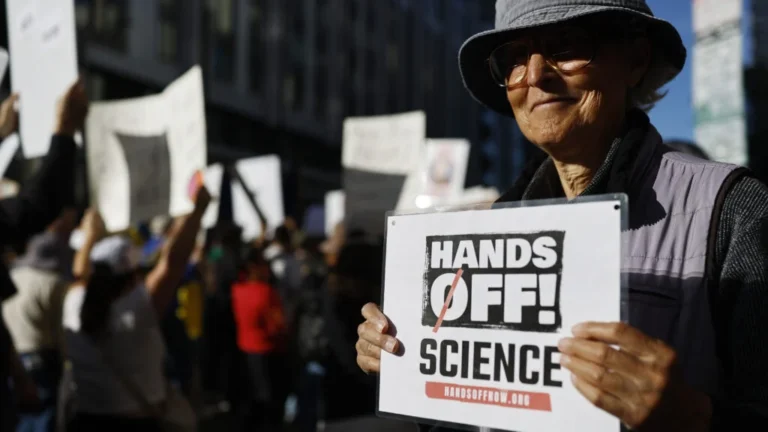
The controversy began on June 5, during the ADA’s annual scientific sessions. Steven Kahn, MBChB, and four colleagues—Maureen Gannon, PhD, Aaron Kelly, PhD, Justin Ryder, PhD, and Desmond Schatz, MD—were handing out copies of an editorial they had authored. The editorial, titled "Misguided Brushes of a Pen Continue to Dismantle," was critical of the Trump administration’s policies regarding healthcare and diabetes research.
Although the editorial had already been published in the ADA’s flagship journal, Diabetes Care, the distribution of the literature within the conference hall prompted an immediate, aggressive response from event security. Video footage obtained by MedPage Today captured the chaotic scene: security officers and local law enforcement confronted the researchers, a state police officer physically pushed one of the attendees, and a security guard forcibly seized the stack of journals from Dr. Kahn’s hands.
The immediate aftermath saw two high-ranking ADA officials—President-Elect Jennifer Green, MD, and Scientific Sessions Planning Committee Chair Mark Atkinson, PhD—resign from their posts in protest. By June 10, ADA CEO Charles Henderson released a video apology, acknowledging that the handling of the situation had been unacceptable. However, the subsequent months have seen the gulf between the ADA leadership and the researchers widen significantly.
The Audit and Governance Committee Findings
Following the outcry, the ADA board of directors commissioned an internal review conducted by its Audit and Governance Committee. The resulting report, which remains private, was summarized in a public press release. According to the ADA, the committee interviewed 28 individuals, including the five removed attendees, and reviewed an extensive array of digital evidence, including internal communications, video surveillance, and media coverage.
The core findings of the report are:
- Conduct-Based Removal: The researchers were removed strictly due to their behavior, which the committee deemed disruptive and in violation of the ADA Attendee Code of Conduct.
- Content Neutrality: The ADA asserts that the political nature of the editorial being distributed had no bearing on the decision to remove the researchers.
- Security Protocol: The report denies that the ADA contacted the New Orleans Police Department directly, stating that security officers acted under the authority of the event’s contracted security provider.
The organization stated that it plans to implement several initiatives to "strengthen how we serve the scientific community," including revised guidance for staff and volunteers and improved policies for handling large-scale events.
Skepticism and Dissent: The Researchers’ Response
For Dr. Steven Kahn and his colleagues, the ADA’s report is not a resolution, but an insult. Dr. Kahn has been vocal in his criticism, questioning the definition of "independence" applied to the committee. He pointed out that two members of the Audit and Governance Committee currently serve on the ADA board, raising significant concerns about conflict of interest and potential bias in the investigation process.
"In the end, very few answers have been provided and lots of questions remain," Dr. Kahn stated in an email to MedPage Today. He noted that despite repeated requests, he and his co-authors have not been granted access to the full report. Furthermore, he remains perplexed by the ADA’s justification, noting, "It is unclear what aspects of the code of conduct we in fact violated."
The sentiment is echoed by Dr. David Nathan, a renowned expert from Massachusetts General Hospital. Dr. Nathan, who provided testimony to the committee, described the experience as frustrating. "I was clearly not effective, as the press release suggests that the ‘independent review’ is only going to be a whitewash of the events," Nathan remarked. He warned that the lack of accountability could threaten the long-term viability of the organization, noting, "I fear for the survival of this once-admirable institution."
Institutional Implications and Academic Freedom
The conflict highlights a deeper, systemic tension between scientific organizations and the political landscapes they navigate. The ADA has long positioned itself as an advocate for diabetes patients, frequently criticizing federal budget cuts to research. In a recent STAT op-ed, CEO Charles Henderson reiterated the ADA’s commitment to this mission, noting that the organization has successfully fought to keep research funding intact despite various administration proposals.
However, the "New Orleans Five" incident suggests that the ADA’s internal culture may be at odds with its external mission of advocacy. By suppressing—or appearing to suppress—the distribution of critical medical journalism within its own scientific sessions, the organization invited charges of censorship.
The situation further escalated when the ADA declined to publish a follow-up packet of editorials concerning the June incident in Diabetes Care. In a move signaling a definitive break with the association, the journal’s deputy editors bypassed the ADA and published the collection on Zenodo, the CERN-backed open-access repository. This move highlights a growing trend of scientists seeking alternative, decentralized platforms to ensure the dissemination of information when traditional professional societies are perceived to be acting as gatekeepers.
Looking Forward: Governance and Transparency
The ADA now faces the arduous task of rebuilding trust with a constituency that feels increasingly alienated. The promised reforms—improving communication and clarifying event protocols—are viewed by many as administrative band-aids on a deeper wound of governance.
For the scientific community, the questions remaining are profound:
- Who audits the auditors? The criticism of the committee’s composition highlights a lack of third-party oversight, which is often standard in investigations of this sensitivity.
- Where is the line between "disruptive behavior" and "advocacy"? Scientific meetings are historically forums for the exchange of radical and challenging ideas. The ADA’s strict application of a "code of conduct" in this context has set a chilling precedent for other medical associations.
- Will the ADA release the full report? Continued opacity is only fueling speculation and further damaging the institution’s reputation.
As the American Diabetes Association prepares for future conferences, the memory of the June 5 incident remains a cautionary tale. The organization’s ability to navigate this period will depend on whether it chooses to prioritize its internal bureaucratic comfort or the principles of academic freedom and transparency that its members expect.
As it stands, the "New Orleans Five" remain unsatisfied, and the broader diabetes research community continues to monitor the ADA’s next steps with a watchful eye. The struggle is no longer just about a single event in Louisiana; it is about the future of professional societies in an era where the boundary between political advocacy and scientific discourse is increasingly, and often dangerously, blurred.