










The release of the 2025–2030 Dietary Guidelines for Americans (DGAs) was met with significant anticipation, arriving with the bold, consumer-facing tagline: "Eat Real Food." On the surface, the updated federal guidance appears to be a long-overdue pivot toward modern nutritional priorities. By taking a stronger, more explicit stance against the consumption of added sugars and the proliferation of highly processed foods, the Departments of Agriculture (USDA) and Health and Human Services (HHS) have signaled a desire to align federal policy with the growing body of evidence linking ultra-processed diets to chronic disease.
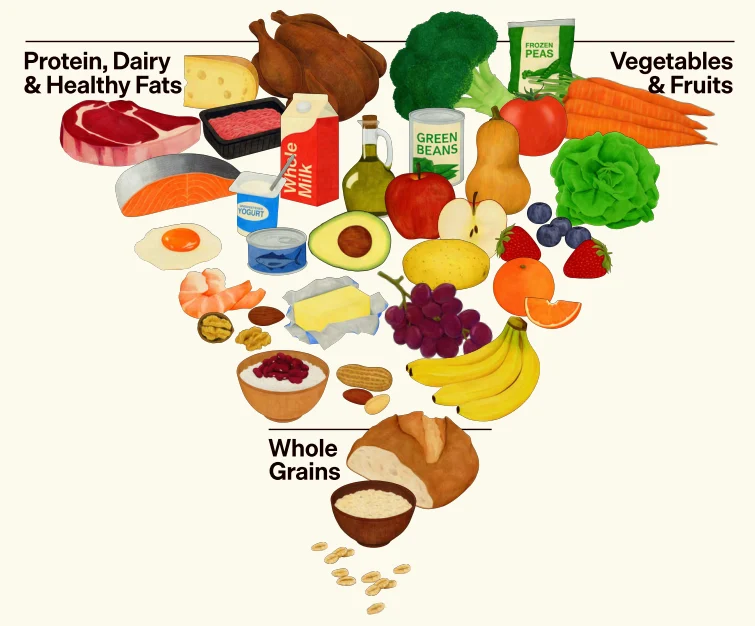
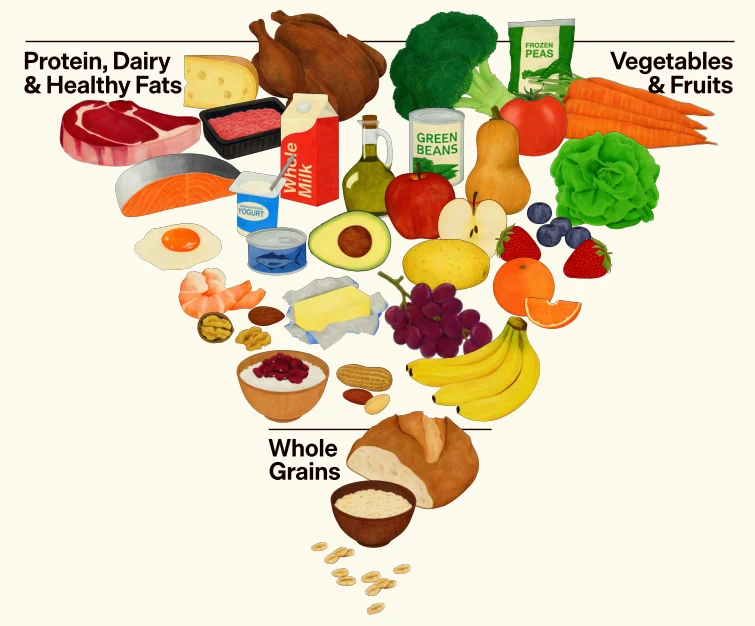
However, beneath this veneer of progress lies a deeply contentious document. The release has been accompanied by a new, "flipped" pyramid graphic that visually prioritizes animal-based foods like steak, butter, and full-fat dairy—a choice that has left leading public health experts, including those at the Harvard T.H. Chan School of Public Health, questioning the consistency, transparency, and scientific integrity of the final product.
Main Facts: A New Direction with Familiar Pitfalls
The 2025–2030 DGAs represent the primary federal framework for nutrition in the United States, dictating the standards for school lunches, military meals, and public health initiatives. While the text makes strides in discouraging "highly processed foods"—a first for the DGAs—it simultaneously introduces significant contradictions.
The most jarring visual element is the reintroduction of a pyramid-like graphic. Unlike its predecessors, this version is inverted, placing high-saturated-fat staples in prominent positions. Despite this visual prominence, the written text of the Guidelines maintains the long-standing scientific recommendation that saturated fat intake should be capped at 10% of total daily calories. This creates an immediate cognitive dissonance for the average consumer: the visual guide suggests a diet rich in red meat and dairy, while the text warns against the exact nutritional profile those foods provide.
Chronology: The Road to a Disputed Document
The creation of the DGAs is a multi-year, rigorous endeavor, traditionally insulated from political and industrial influence. Every five years, an independent Dietary Guidelines Advisory Committee (DGAC)—a group of preeminent nutrition scientists—conducts a massive synthesis of current research. Their findings are usually the bedrock of the final Guidelines.
- Evidence Synthesis (2023–2024): The independent DGAC conducted its standard, transparent review of the science, focusing on the impact of diet on chronic disease prevention.
- The Rejection (Late 2024): In an unprecedented move, the current administration rejected the advisory committee’s core report, opting instead to commission a "supplemental scientific analysis" via a private, federal contracting process.
- The Shift in Methodology: This supplemental process bypassed the traditional, highly transparent peer-review structures developed by the HHS. The methodology used to select the new evidence remains opaque, and the identities of those who synthesized the final recommendations were not initially disclosed.
- The Release (January 2026): The final DGAs were launched with a more "consumer-friendly" digital presence, yet the underlying scientific consensus appeared to have been filtered through a process that critics argue was susceptible to industry lobbying.
Supporting Data: The Saturated Fat Math Problem
To understand why experts are concerned, one must look at the "saturated fat math." For a standard 2,000-calorie diet, the 10% cap equates to approximately 22 grams of saturated fat per day.
The new DGAs recommend three servings of dairy daily. If a consumer follows the "full-fat" suggestions implied by the new pyramid—one cup of whole milk (5g), three-quarters of a cup of full-fat Greek yogurt (6g), and one ounce of cheddar cheese (6g)—they have already consumed 17 grams of saturated fat. Adding a single tablespoon of butter (7g) for cooking, as suggested by the guide, pushes the consumer to 24 grams. This leaves zero room for the saturated fat naturally occurring in other protein sources or incidental intake, effectively rendering the 10% limit impossible to meet if one follows the pyramid’s visual cues.
Furthermore, while the guidelines mention olive oil, they treat it as an equivalent alternative to animal fats. Nutritional epidemiologists like Frank Hu, Chair of the Department of Nutrition at Harvard, emphasize that this is a dangerous equivalence. "Olive oil contains mostly oleic acid, but relatively small amounts of essential fatty acids such as alpha-linolenic acid and linoleic acid compared with other oils that are rich sources of these fatty acids, such as soybean oil and canola oil," says Dr. Hu. "Importantly, all these plant oils have been shown to lower LDL cholesterol and cardiovascular risk compared with animal fats."
Official Responses and The Transparency Crisis
The departure from the advisory committee’s original report has sparked intense backlash. Deirdre Tobias, an assistant professor at Harvard who served on the 2025-2030 DGAC, has been vocal about the breach in protocol. In a recent Q&A, Tobias highlighted that there was no transparency in the methodology employed by the contractors who drafted the final version.
"The reviews themselves, as well as their overall presentation and integration, deviate significantly from the rigorous process that the HHS developed," Tobias noted. Her concerns are echoed by investigative reports that have identified financial ties between several members of the supplemental review panel and the beef and dairy industries. These disclosures have led to accusations that the "New Food Pyramid" was designed to serve industrial interests rather than the metabolic health of the American public.
Implications for Public Health
The consequences of these "mixed messages" are not merely academic; they have real-world implications for a nation already struggling with record levels of obesity, cardiovascular disease, and Type 2 diabetes.
1. The Confusion of "Highly Processed"
While the Guidelines attempt to define "highly processed" foods, the definition remains vague. By failing to provide a clear, actionable spectrum, the DGAs may lead consumers to believe that any food in a package is inherently "bad," while potentially allowing for the overconsumption of high-sodium, high-saturated-fat animal products that are arguably just as detrimental to heart health as refined sugars.
2. The Protein Paradox
The new DGAs suggest an increase in protein intake to 1.2–1.6 grams per kilogram of body weight. While protein is essential, the Guidelines fail to distinguish between high-quality sources (fish, legumes, nuts) and those associated with higher disease risk (processed meats, high-fat red meats). Promoting "more protein" without emphasizing the "protein package"—the fats, fiber, and sodium that come along with it—could lead to an increase in harmful lipid profiles across the population.
3. The Environmental and Socioeconomic Gap
Notably absent from the new guidelines is any consideration of the environmental impact of food choices. As the climate crisis begins to intersect with food security, the omission of sustainability metrics makes the DGAs feel increasingly archaic. Furthermore, the guidelines do not adequately address the socioeconomic barriers that prevent lower-income families from accessing fresh, whole foods, instead offering "one-size-fits-all" advice that may be financially unattainable for many.
Conclusion: A Need for Independent Guidance
The 2025–2030 Dietary Guidelines arrive at a time when the American public is desperate for clear, evidence-based nutritional direction. While the emphasis on reducing added sugars is a welcome development, the document is ultimately undermined by its internal contradictions and the shadow of political interference.
When a government guide asks its citizens to prioritize cardiovascular health while simultaneously promoting the consumption of foods that increase LDL cholesterol, it loses the trust of the public. For those looking for reliable, science-backed dietary patterns, the "Healthy Eating Plate" or consultation with a registered dietitian remains a far more consistent and protective choice than the shifting, politically-tinged landscape of the federal pyramid. Ultimately, the 2025–2030 DGAs serve as a reminder that in the realm of public health, the process of reaching a conclusion is just as important as the conclusion itself. Without transparency, even the most well-intentioned guidelines risk doing more harm than good.