









For most New Yorkers, the first Sunday in November is a day for slow-roasted coffee, the Sunday papers, and a leisurely transition into the work week. For nearly 60,000 participants, however, November 1, 2026, represented the culmination of months of grueling labor, psychological fortitude, and a singular obsession: conquering the 26.2-mile labyrinth of New York City’s five boroughs.
Since its inception in 1970, the New York City Marathon has evolved from a local loop in Central Park into a global phenomenon. It is a stage where elite tactical brilliance meets the raw, unvarnished human spirit. Whether participants were chasing a world championship, a personal record, or simply the finish line before their bodies demanded a total shutdown, the 2026 edition proved once again that this race is the ultimate crucible of fitness.
The Men’s Elite Race: A Debut for the History Books
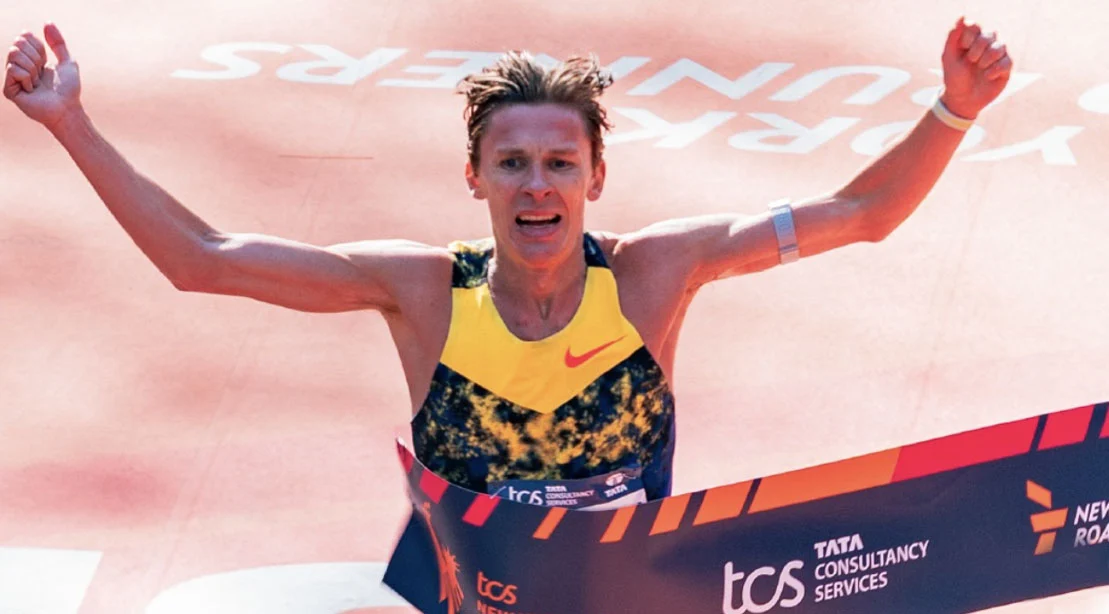
The narrative of the 2026 men’s race was defined by the stunning arrival of Sweden’s Andreas Almgren. Entering the race with a pedigree that included the world half-marathon title and a European 10,000-meter championship, Almgren arrived with an "engine" built for speed but untested at the marathon distance.
His winning time of 2:06:01 on his maiden voyage at 26.2 miles is nothing short of historic. While critics might suggest his lack of marathon experience was a disadvantage, Almgren utilized his background in shorter, high-intensity events to execute a perfectly timed race. The lead pack remained tightly bunched through the treacherous transitions of the boroughs—navigating the Queensboro Bridge, the rolling hills of the Bronx, and the unpredictable turns of Manhattan—before Almgren opted to strike.
His decisive move in the final mile left seasoned veterans in his wake. Italy’s Yemaneberhan Crippa claimed second place, crossing the line just 13 seconds behind the Swede, while Kamohelo Mofolo of Lesotho rounded out the podium. Notably, defending champion Benson Kipruto struggled to match the closing speed of the leaders, eventually finishing fourth. Almgren’s victory serves as a poignant reminder that while the marathon is a unique beast, the fundamental principles of elite aerobic capacity remain the gold standard.
Chronology of the 2026 NYC Marathon
The race day unfolded with the precision of a Swiss watch, starting with the professional wheelchair divisions, followed by the women’s elite field and the main mass-start wave.
- 08:00 AM: The wheelchair elites took to the Verrazzano-Narrows Bridge, setting a blistering pace that would define the early energy of the day.
- 08:40 AM: The professional women’s field commenced their pursuit, setting the stage for a tactical battle that would go down to the final meters.
- 09:00 AM: The professional men’s field and the first wave of mass participants surged forward, creating a sea of movement that stretched across the city’s iconic spans.
- Mid-Race Dynamics: By the 15-mile mark, the men’s lead pack had begun to shed non-essential contenders, while the women’s race remained a tactical chess match, with defending champion Hellen Obiri controlling the tempo.
- The Final Stretch: As the race entered the final 10K, the "wall" began to claim its victims. In the women’s race, the drama peaked in Central Park, where the lead fluctuated until the very final strides.
- The Finish: The day concluded with thousands of amateur runners, including the inspiring Mildred Baker, crossing the line well into the afternoon hours, proving that the spirit of the race is as much about completion as it is about competition.
The Women’s Race: A Thrilling Sprint to the Podium
If the men’s race was a showcase of strategic debut, the women’s elite race was an exhibition of pure, unadulterated grit. Kenya’s Sheila Chepkirui, reclaiming the title she last held in 2024, crossed the finish line in 2:24:36.
However, the headline of the day was the surge of American Jess McClain. In a performance that ignited the crowd, McClain charged from the back of the lead group in the closing meters, overtaking defending champion Hellen Obiri. McClain’s second-place finish (2:24:42) marked the first time an American woman had reached the podium since 2018, a milestone that underscores the growing competitiveness of the domestic elite circuit. Obiri, who finished just one second behind McClain, demonstrated the fine margins that define elite marathon running.
The Wheelchair Division: Power and Precision
Often overshadowed by the foot-race, the wheelchair division offered some of the most compelling athletic performances of the weekend. Switzerland’s Marcel Hug reaffirmed his dominance, capturing his eighth New York City title with a time of 1:28:14. His narrow victory over American Daniel Romanchuk—a margin of just one second—demonstrated the tactical sophistication required to handle both the equipment and the city’s notoriously difficult topography.
In the women’s wheelchair division, Catherine Debrunner delivered a commanding performance, winning in 1:40:02. Her eight-and-a-half-minute lead over Tatyana McFadden showcased a level of physical conditioning and equipment mastery that set a new benchmark for the sport. The upper-body power and technical cornering required at these speeds demand a level of respect that the general public is only beginning to fully appreciate.
Implications: Defining the Spectrum of Fitness
The 2026 NYC Marathon served as a vital cultural critique of modern fitness trends. In an era where "gym culture" often emphasizes localized aesthetics or short-term performance, the marathon forces a confrontation with the true limits of human biology.
The inclusion of runners like 80-year-old Mildred Baker—who finished her first marathon in 7:03:49—is not a mere "feel-good" story; it is an indictment of the narrow definitions of physical excellence. When a world-class athlete like Almgren and an 80-year-old novice share the same course, they are both engaging in a radical act of self-transcendence.
The Science of the Debut
Almgren’s success raises an important question for sports science: does the modern athlete need to specialize early, or is the transfer of athletic skills becoming more efficient? Almgren’s transition from a 10,000-meter specialist to a marathon champion suggests that the future of endurance sports lies in the application of a high-end aerobic engine to the specific metabolic demands of the 26.2-mile distance. Fueling, pacing, and muscle-fiber recruitment are not just variables; they are the governing laws of the marathon.
The "Gym Stupidity" Fallacy
Perhaps the most lasting implication of the 2026 race is the debunking of "one-size-fits-all" fitness. The marathon exposes the limitations of the gym-centric mindset that suggests only one type of exertion holds value. By witnessing a professional athlete navigate the course in two hours and a hobbyist navigate it in seven, spectators are forced to recognize that the marathon is a multifaceted spectrum. It is a knife fight at the front and a personal pilgrimage at the back, with both ends of that spectrum requiring a unique—and equally valid—kind of courage.
Official Responses and Future Outlook
New York Road Runners (NYRR) leadership expressed immense satisfaction with the turnout and the competitive nature of the field. "The 2026 race has set a new standard for diversity in performance," noted an NYRR spokesperson. "From the elite records to the personal milestones of our oldest participants, this event continues to prove that New York is the epicenter of the global running community."
Looking toward 2027, the success of American Jess McClain and the tactical evolution shown by the elite field suggest that the marathon is entering a new era of unpredictability. As training methodologies continue to integrate data-driven nutrition and individualized pacing strategies, the gap between the "impossible" and the "achievable" continues to shrink.
For those watching from the sidelines, the 2026 New York City Marathon offered more than just a race. It offered a mirror. It asked every observer: what are you capable of when you stop negotiating with your own limitations? As the sun set over Central Park, the answer was clear: with enough preparation, the only limits that exist are the ones we place upon ourselves.