By Brooke Quinn, MSc (Oxon), RPSGT, CSSC
In the hushed, low-light environment of a sleep laboratory, the reality of human slumber is laid bare in raw, unfiltered detail. As sleep technicians, we sit before monitors displaying a chaotic, intricate tapestry of brain waves, rapid eye movements, chin muscle tone, shifting airflow, respiratory effort, blood oxygen saturation, and cardiac rhythms. We analyze this data in precise 30-second segments—or “epochs”—assigning each a classification: wake, N1, N2, N3, or REM.
Even with standardized scoring rules, sleep remains an organic, messy phenomenon. Signals bleed into one another, transitions are subtle, and even two highly trained clinicians may occasionally diverge in their interpretation of a complex sleep stage. Yet, in the consumer market, this biological complexity is increasingly distilled into sleek, digestible percentages on smartphone apps. The recent proposed class-action lawsuit against Oura—which alleges the company misled consumers regarding the precision of its sleep-stage tracking—has ignited a firestorm of debate. At its core, the issue is not just about a wearable ring; it is about the dangerous gap between marketing-driven metrics and clinical utility.
The Chronology of a Data Dispute
The tension between consumer wellness technology and clinical diagnostic standards reached a breaking point in late August 2026. A class-action complaint, Surber v. Oura, Inc., was filed in the Northern District of California, challenging the brand’s long-standing marketing claims regarding “95% sleep staging accuracy.”
For those in the sleep medicine community, the lawsuit was the inevitable result of years of mounting friction. On one side, critics argued that the marketing was a form of "data theater," selling consumers a sense of precision that didn’t exist. On the other, proponents argued that such wearables were never intended to be diagnostic tools, but rather accessible trackers for general wellness.
The lawsuit highlights the fundamental disconnect: consumers are buying a "score" to understand their health, while the underlying technology is performing a sophisticated, yet inherently limited, act of inference. As the legal proceedings unfold, the focus has shifted from the specific allegations against Oura to a broader question: What does "accuracy" actually mean in the age of the quantified self?
Inference vs. Measurement: Understanding the Tech
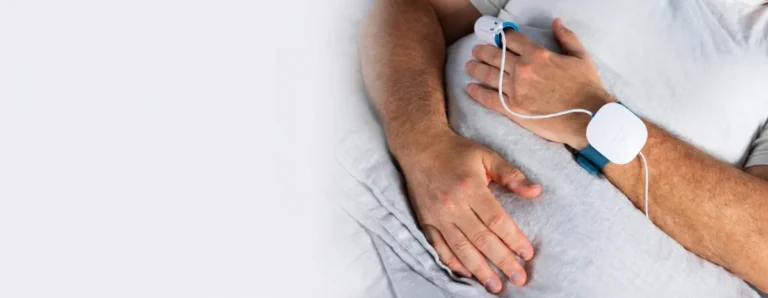
To understand the friction in the courtroom, one must first understand the physiology of the device. An Oura Ring does not possess the capacity to measure brain waves (EEG), which remains the gold standard for clinical polysomnography (PSG). Instead, it relies on proxy measures: pulse-wave velocity, heart-rate variability (HRV), peripheral temperature fluctuations, and actigraphy (movement).
The device’s algorithm observes these autonomic shifts and attempts to map them onto the standard sleep stages. This is an act of inference, not direct measurement. While it is true that heart rate and temperature change in recognizable patterns during REM sleep versus deep sleep, these patterns are influenced by a host of external variables—from alcohol consumption and room temperature to medication and psychological stress.
Inference is not "invention," but it is susceptible to error. The clinical distinction is vital: identifying that a person is likely asleep is a binary task that is relatively easy for modern sensors. Distinguishing between subtle stages, such as the transition from light sleep to REM, is an entirely different analytical burden. When a company uses the word "accuracy" without defining the specific task, they are conflating a successful estimate of "total sleep time" with a precise mapping of "sleep architecture."
Supporting Data: The Statistics of Disagreement
The lawsuit centers on the marketing claim of “95% accuracy.” In its defense, Oura points to studies showing that, in healthy adult populations, their device reaches 90% to 96% agreement with clinical labs when simply differentiating between "asleep" and "awake." However, the percentage plummets when the task becomes more granular—that is, separating wake from light, deep, and REM sleep.
Peer-reviewed literature indicates that four-stage classification agreement usually hovers between 76% and 79% for healthy adults. For the average consumer, this is a massive distinction. A user who sees "95%" expects that 95% of their entire night was mapped perfectly. In reality, they are receiving a mix of highly accurate binary tracking and much lower-accuracy stage classification.

Furthermore, averages can be deeply misleading. A 2025 study of sleep-lab patients revealed that while a device might show a high average accuracy for a group, the variance for an individual can be jarring. In one instance, the Oura Ring overestimated total sleep time by nearly 100 minutes for one patient, while underestimating it by 54 minutes for another. When these errors are smoothed out into a group average, they disappear, but for the patient sitting in a doctor’s office, that individual error is the difference between a restful night and a clinical concern.
Official Responses and Industry Stance
Oura has publicly defended its science, emphasizing that their validation studies involve thousands of epochs and participants. Their position is that the data provided is "useful" for tracking trends, which remains a key pillar of the wellness industry.
Conversely, the American Academy of Sleep Medicine (AASM) has maintained a firm stance: consumer sleep technology should not be viewed as a substitute for medical diagnosis. The AASM position suggests that while these devices can enhance the patient-clinician conversation, they lack the clinical authority required to diagnose conditions like sleep apnea, periodic limb movement disorder, or narcolepsy.
The industry is now at a crossroads. The legal challenge against Oura serves as a warning that the "wellness" label is no longer a "get out of jail free" card when it comes to medical claims. Companies are under increasing pressure to define their boundaries, clarify their validation methods, and be transparent about the populations—and the specific pathologies—that their algorithms were designed to handle.
Clinical Implications: The Rise of Orthosomnia
Perhaps the most significant implication of these accuracy disputes is the psychological impact on the patient. Clinicians are increasingly seeing a phenomenon termed orthosomnia—a condition where patients become pathologically obsessed with achieving a "perfect" sleep score.
When a patient arrives at a clinic with a sleep-tracking app, they often feel that their device is an infallible witness. If the app says they had no deep sleep, the patient feels fatigued, even if their clinical symptoms suggest otherwise. This creates a feedback loop of anxiety that can actually degrade sleep quality, turning the pursuit of health into a source of stress.
In the clinic, the most productive path forward is to treat these devices as "trend monitors" rather than "truth tellers." We must teach patients that:
- Longitudinal trends matter more than nightly scores. A sudden change in sleep duration over several weeks is a meaningful data point for a doctor; a single bad night is usually just life.
- Symptoms override data. If a patient feels refreshed, the tracker’s "poor sleep" score is likely a technical glitch. If a patient feels exhausted, the tracker’s "excellent" score is irrelevant.
- Context is everything. Factors like travel, stress, and exercise change the body’s autonomic signals, which can confuse wearable algorithms.
Conclusion: The Future of Transparent Tracking
The path forward for the wearable industry is not to abandon accuracy claims, but to revolutionize how they are presented. We need "nutrition labels" for sleep data—clear disclosures that state what the device is measuring, what it is inferring, and where its limitations lie.
If a device performs well for healthy 30-year-olds but struggles with 70-year-olds on beta-blockers, that should be stated clearly. If the device struggles to identify motionless wakefulness, that should be disclosed. Transparency does not undermine the value of the technology; it enhances it.
Consumers do not need to be data scientists to understand their health, but they do deserve to know the difference between a clinical measurement and a technological estimate. Whether the courts rule for or against Oura, the ultimate outcome should be a more honest, transparent relationship between the device on our fingers and the sleep we experience every night. True trust in health technology is earned not by projecting an illusion of perfection, but by clearly defining the boundaries of what we can—and cannot—know about the hidden world of sleep.