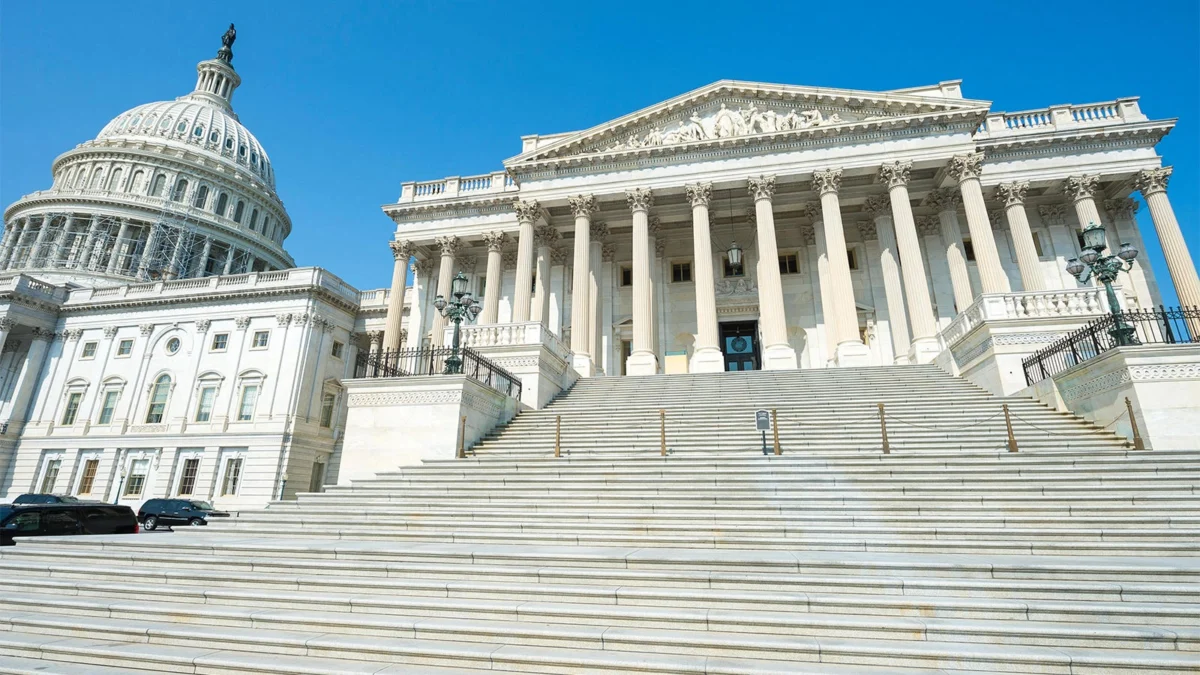
A high-stakes legislative battle over the future of the American healthcare landscape reached a boiling point on Capitol Hill this week. In a narrow 46-50 vote, Senate Republicans successfully blocked a Democratic-led resolution aimed at terminating a contentious artificial intelligence-driven prior authorization pilot program within traditional Medicare. The vote, which fell strictly along party lines, underscores a widening divide over the integration of algorithmic decision-making in the federal government’s most vital health insurance program.
The program at the center of the storm is the Wasteful and Inappropriate Service Reduction (WISeR) Model. Introduced by the Centers for Medicare & Medicaid Services (CMS) in June 2025, the model seeks to utilize advanced technology—specifically AI—to expedite and automate the prior authorization process for medical services prone to fraud, waste, and abuse. While the administration frames the initiative as a necessary evolution to safeguard taxpayer dollars and improve efficiency, critics—including a significant bloc of Senate Democrats—argue that the program is a “shadowy” intrusion that forces seniors into a bureaucratic labyrinth previously associated only with private insurance.
The Genesis of the WISeR Model: A Chronology of Implementation
The WISeR model was born out of a growing federal alarm regarding the skyrocketing costs of certain high-ticket medical services. CMS, under the current administration, identified several categories of care as particularly susceptible to overutilization and predatory billing. These include skin and tissue substitutes, electrical nerve stimulators, and specific orthopedic procedures like knee arthroscopy.
June 2025: CMS announces the launch of the WISeR Model. The stated goal is to partner with private technology firms to provide an “enhanced and expedited” prior authorization process. The agency argues that the model is essential for protecting the integrity of the Medicare Trust Fund.
January 2026: The program officially goes live in six pilot states: New Jersey, Ohio, Oklahoma, Texas, Arizona, and Washington. While technically “voluntary,” the model creates a binary choice for providers: either participate in the AI-driven prior authorization process or face mandatory pre-payment medical review for every claim. Effectively, this leaves providers with little choice but to submit to the system to avoid massive administrative bottlenecks.
Early 2026: Almost immediately following the rollout, reports from the field begin to emerge. Clinicians and patient advocacy groups describe the implementation as “horrendous,” citing unexpected delays in care delivery, system-wide confusion, and a surge in administrative red tape.
February 2026: Sensing the political momentum, Sen. Ron Wyden (D-Ore.), ranking member of the Senate Finance Committee, introduces a resolution of disapproval to terminate the program.
Late February 2026: The Senate votes down the Wyden resolution, 46-50, effectively granting the administration the green light to continue the experiment.
The Case for Reform: Why CMS is Betting on AI
The administration’s defense of the WISeR model is rooted in a desire to modernize the antiquated reimbursement systems of traditional Medicare. Abe Sutton, director of the Center for Medicare and Medicaid Innovation, has been a vocal proponent of the program. Speaking at a recent primary care conference, Sutton emphasized that the federal government has a fiduciary duty to stop the bleeding of taxpayer funds.
The statistics supporting the administration’s position are striking. In one notable example, a single Medicare beneficiary in Florida generated an staggering $9.8 million in costs for skin and tissue substitutes within a single year. Data analysis from 2025 suggested that Medicare spending on these specific substitutes could reach $15.4 billion annually if left unchecked.
Proponents argue that the current fee-for-service model incentivizes volume over value, leading to the rampant profiteering of high-cost items. Sen. Mike Crapo (R-Idaho) articulated this stance during the Senate floor debate, arguing that ending the pilot program would deprive the government of a crucial tool. “Every member of this body agrees that avoidable waste, fraud, and abuse in Medicare should be stopped,” Crapo stated. “Ending this pilot program prematurely will deprive CMS of a useful tool to accomplish each of those goals.”
The Human Cost: The Democratic Argument Against Automation
For many Senate Democrats, the economic argument for efficiency does not outweigh the ethical concerns regarding the use of AI in medical gatekeeping. Critics contend that the algorithm, by its very nature, lacks the nuance required to make clinical decisions, effectively putting a “black box” between a doctor’s recommendation and a senior’s treatment.
Senator Patty Murray (D-Wash.) was among the most vocal opponents of the measure. Following the vote, Murray took to social media to express her frustration, accusing Republicans of prioritizing AI over the needs of the elderly. “President Trump came into office saying he would not cut Medicare, but that was clearly a lie,” Murray said. “Right now, his administration is trying to privatize Medicare, in part by putting AI between Medicare beneficiaries and their healthcare.”
Senator Wyden highlighted the real-world impact, noting that the delays are not abstract data points but lived experiences. He cited cases of seniors suffering from severe back pain who have been forced to wait weeks for relief, their lives put on hold while an AI system processes their requests. The argument is that while the program is designed to catch bad actors, the collateral damage is the patient, who is caught in a digital bureaucracy that is often unresponsive and difficult to navigate.
Implications for the Future of Medicare
The defeat of the resolution to terminate the WISeR model carries significant implications for the future of federal healthcare.
1. The Privatization Debate
The controversy has reignited the broader debate over the “privatization” of Medicare. By introducing prior authorization—a hallmark of Medicare Advantage plans—into traditional Medicare, the administration is arguably shifting the fundamental nature of the program. Critics fear that this is the first step toward a system where AI algorithms, designed to prioritize cost-savings, dictate clinical outcomes for millions of seniors.
2. The Tech-Healthcare Nexus
The involvement of private companies specializing in "enhanced technologies" raises concerns about the influence of the private sector on public policy. Questions remain regarding the transparency of the algorithms being used: Are they proprietary? Who is auditing them for bias? If an AI system denies a claim, what is the recourse for the patient and the physician?
3. Impact on the Provider Workforce
Physicians are already experiencing high levels of burnout, and the added administrative burden of navigating the WISeR model may exacerbate this trend. If the pilot is expanded nationwide, it could lead to a decrease in the number of providers willing to accept Medicare patients, particularly in specialties that are heavily targeted by the new authorization requirements.
4. Continued Legislative Resistance
While the Senate vote was a setback for the opposition, the fight is far from over. In the House of Representatives, Rep. Suzan DelBene (D-Wash.) has introduced H.R. 5940, a companion bill intended to halt the program. With 43 cosponsors, the movement in the House remains a potential thorn in the side of the administration. DelBene has vowed to continue the pressure, stating, “We will continue fighting to end this dangerous program so seniors can get the care they need when they need it.”
Conclusion: A Balancing Act Between Fraud and Access
The WISeR model represents a fundamental tension in modern healthcare: the need to control costs in an aging society versus the imperative to provide timely, compassionate care. As the pilot program continues, the administration will be under immense pressure to prove that the AI-driven system is not only saving money but also not compromising patient safety.
For the six states currently participating in the pilot, the coming months will be a testing ground for the future of American medicine. If the administration can refine the technology and address the complaints of long wait times and clinical confusion, the model may be touted as a success story of digital transformation. However, if the negative reports persist, the political backlash could prove to be a defining issue in upcoming electoral cycles.
As it stands, the "AI-driven prior authorization" debate has moved beyond the realm of theoretical policy and into the daily lives of thousands of American seniors. The outcome of this experiment will likely determine the extent to which algorithms will govern the delivery of healthcare for decades to come.