










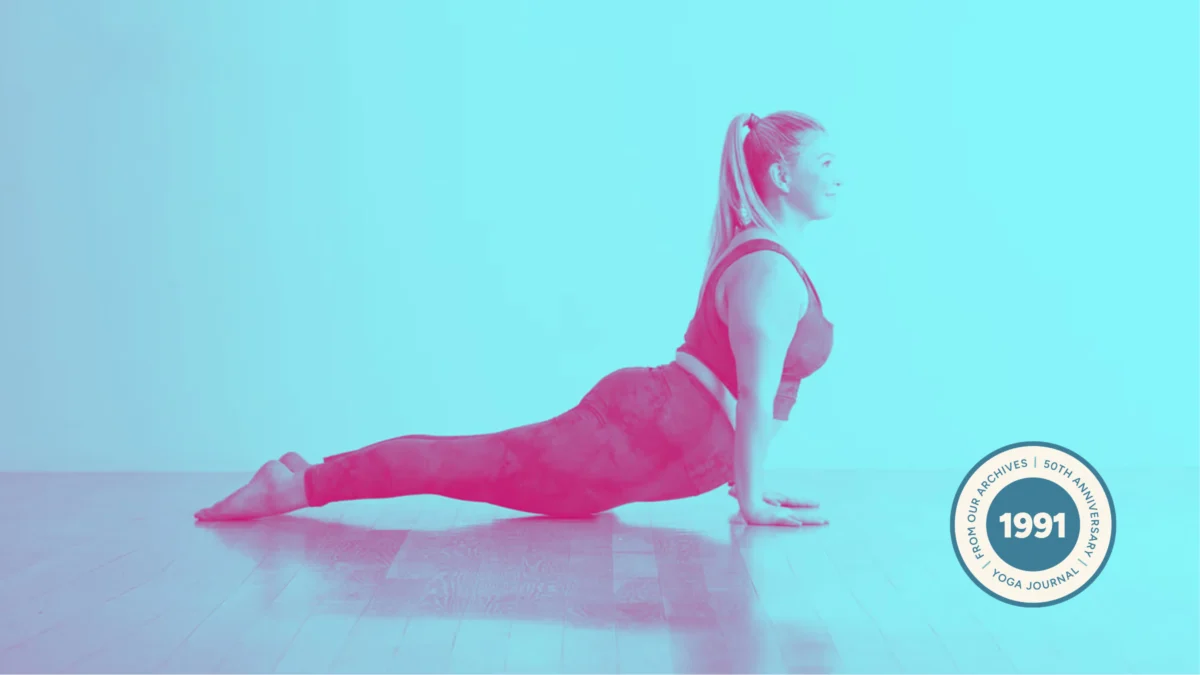
Originally published in the May-June 1991 issue of Yoga Journal, this archival feature offers a timeless masterclass on the mechanics of Urdhva Mukha Svanasana.
Main Facts: The Essence of the Asana
In the modern yoga studio, Upward-Facing Dog (Urdhva Mukha Svanasana) is often treated as a standard transition—a fleeting moment between the descent of Chaturanga and the inversion of Downward-Facing Dog. However, to treat this asana as merely a transitional movement is to overlook a foundational blueprint for spinal health and kinetic intelligence.
The name itself, Urdhva Mukha Svanasana, serves as the primary instructional manual left to us by ancient practitioners. By observing the natural behavior of our canine companions, we can unlock the biomechanical secrets of the pose. When a dog stretches, it does not collapse into its lower back; it creates a dynamic, 90-degree expansion between the torso and the hindquarters. For the human practitioner, the challenge lies in replicating this stability. The pose is not a passive backbend but a sophisticated exercise in "opposing extensions"—the legs must reach back with such intensity that they feel as though they are lengthening, while the chest must reach forward and up with equal vigor.
A Chronology of Practice: From 1975 to the Present
Since the formal documentation of yoga practices in Western journals began in earnest during the mid-1970s, the pedagogy surrounding backbends has undergone a rigorous evolution.
- The Early Period (1975–1985): Yoga instruction was largely focused on general flexibility. Backbends were often taught with a focus on "opening the heart," with little regard for the specific engagement of the lower extremities.
- The Refinement Era (1985–1995): This period, which saw the original publication of this guide, marked a shift toward anatomical precision. Teachers began to emphasize the "anchoring" effect of the legs. The realization that the lumbar spine acts as a vulnerable fulcrum led to the development of preparatory variations, such as using a chair to support the body.
- The Modern Integration (2000–Present): Today, we incorporate advanced biomechanical understandings of the sacroiliac joint and the rotational mechanics of the femur. The lessons taught in 1991 remain the "Gold Standard" for preventing lower-back strain in modern vinyasa classes.
Supporting Data: The Mechanics of the Legs
The central thesis of the proficient practitioner is that the lower back is often the victim of an "unanchored" spine. If we visualize the spine as a rubber band, pulling only from the chest (the top) while leaving the legs (the base) limp creates a dangerous compression in the lumbar region.
The Kinetic Chain
When the legs are active, they perform several critical functions:
- Pelvic Stabilization: By engaging the gluteal muscles and the hamstrings, the practitioner prevents the pelvis from tipping excessively, which protects the lumbar discs.
- Internal Rotation: Contrary to popular belief, "squeezing the glutes" without awareness leads to outward rotation of the kneecaps and a collapse of the weight onto the outer edges of the feet. This creates tension in the sacrum.
- The Counter-Rotation Strategy: By turning the feet slightly inward (pigeon-toed) and pressing them against a wall, the practitioner forces an internal rotation of the femur heads. This creates a "widening" of the sacral space, allowing the spine to move into a backbend without the structural "squashing" that leads to injury.
Official Perspectives: The Teacher’s Philosophy
The instruction provided in these archives emphasizes a move away from "thoughtless" movement. Many contemporary instructors mistakenly advise students to avoid tightening the buttocks entirely, fearing that any engagement will lead to joint pain.
However, the "official" perspective offered by our archival experts suggests that the fault lies not in the engagement of the buttocks, but in the concomitant actions—the splaying of the knees and the shifting of weight. The path to a painless backbend is not to relax the body, but to perform "sophisticated and conscious actions."
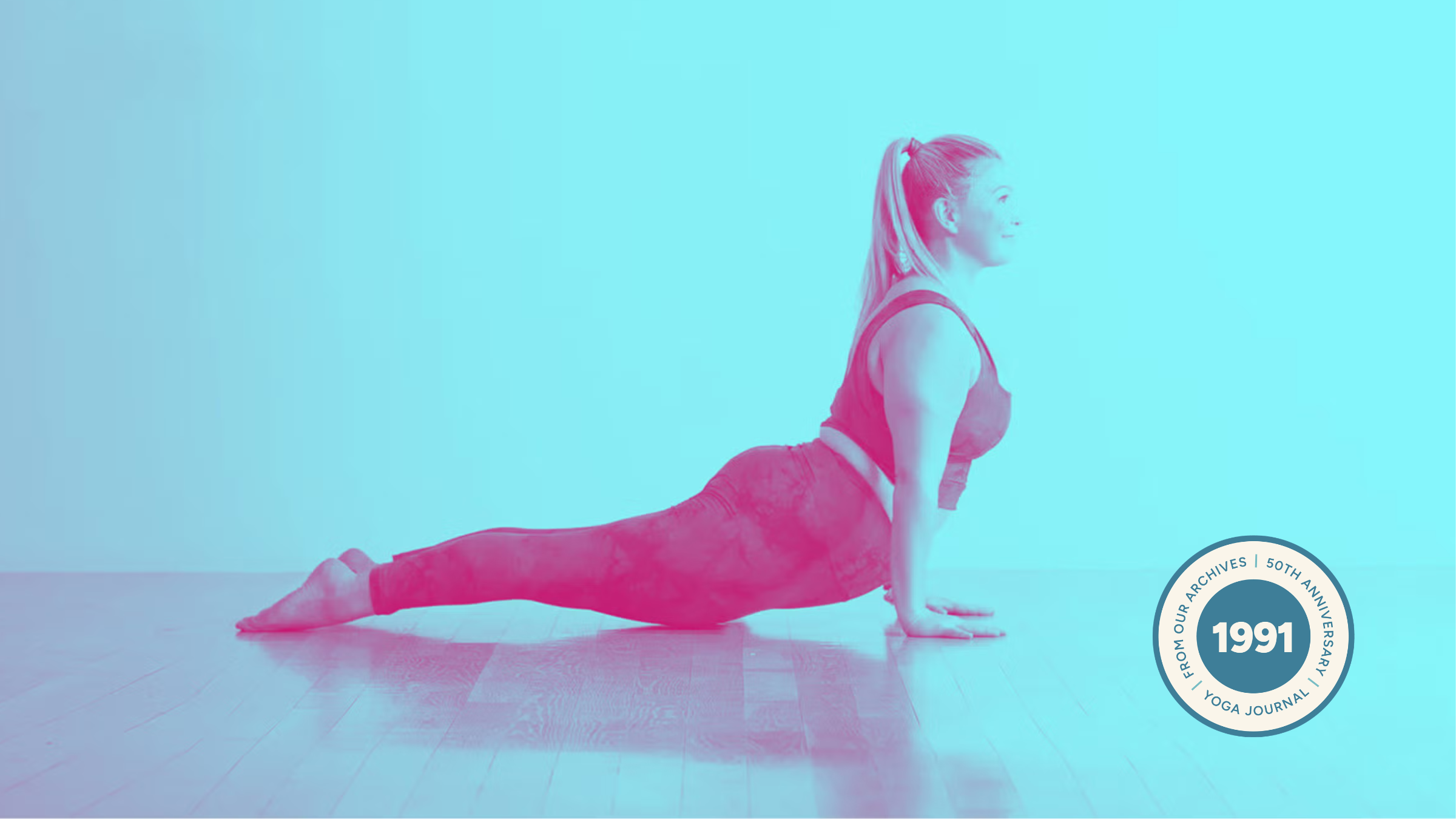
By learning to firm the glutes while simultaneously rotating the inner thighs away from each other and drawing the inner knees toward the ceiling, the student creates a state of "dynamic tension." This is not merely physical labor; it is a mental exercise in precision. When the skin under the armpits is rolled forward and the breastbone is lifted, the torso is no longer "sagging" into the floor. Instead, the practitioner feels as if they are being physically lifted by their own armpits, creating a suspension that defies the downward pull of gravity.
Implications for Practice: Preventing Injury
The primary implication of these findings is that lower back pain is almost always a diagnostic signal of an incomplete pose. If a student experiences pain, it is rarely because the back is "too stiff"; it is almost always because the legs are "too soft."
The Chair Variation as a Diagnostic Tool
For the beginner, the floor is an unforgiving surface. Using a chair—with the backrest secured against a wall—allows the student to:
- Reduce the acute angle: By elevating the hands, the compression on the lower spine is significantly reduced.
- Build Upper Body Strength: By removing the immediate struggle for balance, the student can focus on the subtle, internal rotations of the thighs.
- Develop Proprioception: The chair allows the practitioner to feel the "current of extension" moving through the legs without the distraction of fearing a collapse.
Advanced Considerations
For the intermediate student, the transition to the floor is the final test of this knowledge. When the hands are on the ground, the fingers should point forward. The tops of the feet—not the toes—should carry the weight of the leg extension. If the practitioner can maintain the "pigeon-toed" rotation even while on the floor, the result is a liberated sacrum and an elongated, pain-free spine.
Conclusion: The Path of the Dog
We return, ultimately, to the observation of our four-legged friends. They do not struggle with the ego of the pose; they simply allow their anatomy to dictate the stretch. By mirroring their 90-degree alignment, we move from a place of straining to a place of structural alignment.
The next time you find yourself in the middle of a sun salutation, pause. Do not rush to the next movement. Check your anchor. Are your legs vibrating with energy? Is your tailbone tucked in a way that allows your thoracic spine to bloom? If you can master these simple, foundational actions, the "advanced" poses of the yoga tradition will not only become accessible—they will become a source of profound, injury-free vitality.
As we move deeper into the 21st century, the wisdom contained in these 1991 archives reminds us that while the trends of yoga may change, the mechanics of the human body remain constant. Precision, awareness, and the intelligent use of the lower extremities remain the keys to a lifelong practice. Whether you are a novice or a seasoned practitioner, the message is clear: Look to the legs, anchor the base, and let the heart follow.