








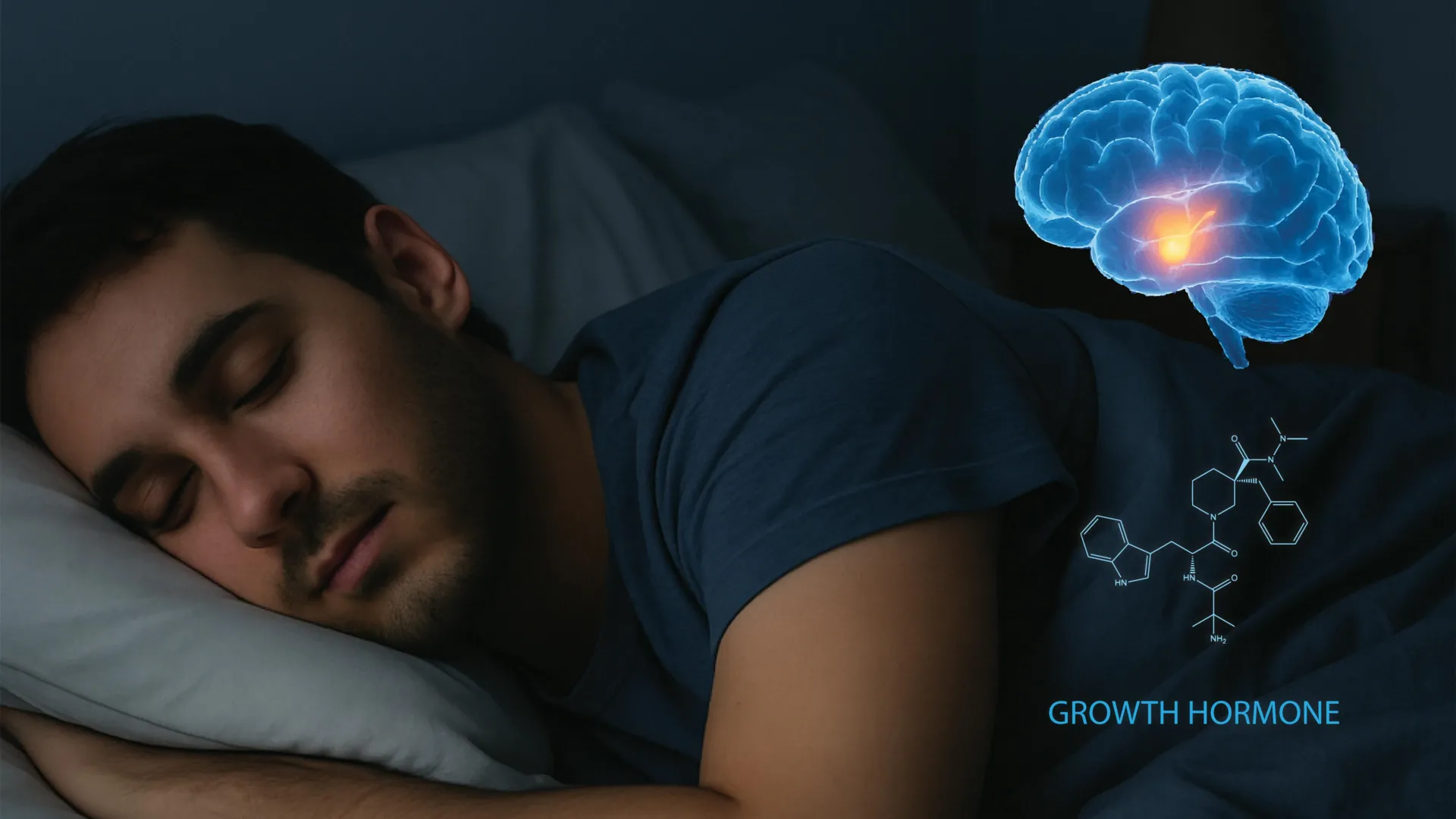
For decades, the medical community has operated under a well-established mantra: sleep is essential for physical restoration. We have long understood that a deep night’s slumber is the body’s primary window for releasing growth hormone—a vital chemical messenger responsible for building muscle, strengthening bone density, and regulating metabolic functions. Yet, despite its importance, the specific biological "wiring" that links the brain’s sleep cycles to this hormonal output remained a mystery.
A groundbreaking study conducted by researchers at the University of California, Berkeley, and published in the journal Cell, has finally mapped this elusive neural circuitry. By observing the interplay between specific hypothalamic neurons and the brainstem, scientists have uncovered a sophisticated feedback loop that not only explains how we grow during sleep but also reveals how growth hormone itself acts as a regulator for our internal alarm clock.
The Core Discovery: Mapping the Brain’s Hormonal Switchboard
The UC Berkeley team, led by professor of neuroscience Yang Dan, set out to decipher the "how" behind the body’s hormonal production. The research focused on the hypothalamus, an evolutionarily ancient region of the brain that serves as the command center for hunger, body temperature, and the circadian rhythm.
Within the hypothalamus, the researchers tracked two critical, opposing types of neurons: those that produce growth hormone-releasing hormone (GHRH) and those that produce somatostatin. As their names suggest, these chemical messengers act like a gas pedal and a brake. GHRH encourages the pituitary gland to secrete growth hormone, while somatostatin works to suppress it.
By utilizing advanced electrode implantation and optogenetics—a technique that uses light to stimulate specific neurons—in mice, the team observed that these neurons do not fire randomly. Instead, they exhibit highly coordinated activity patterns that shift depending on the stage of sleep.
Chronology of the Neural Dance
- REM Sleep: During rapid eye movement sleep—the phase characterized by vivid dreaming—the brain exhibits a simultaneous increase in both GHRH and somatostatin activity. While these hormones typically oppose one another, the team discovered that their coordinated, elevated activity during REM sleep actually serves to ramp up growth hormone secretion.
- Non-REM Sleep: As the subject transitions into the deep, restorative stages of non-REM sleep, the pattern shifts significantly. Somatostatin activity drops, effectively removing the "brake" on the system, while GHRH activity rises moderately. This precise combination creates the ideal environment for the pituitary gland to release steady pulses of growth hormone.
This discovery is significant because it provides the first direct, real-time look at how the brain transitions between different sleep states to optimize hormonal output, moving beyond the older, less precise methods of drawing blood to estimate hormone levels.
The Feedback Loop: Growth Hormone as an Alarm Clock
Perhaps the most startling revelation of the study is that the relationship between sleep and growth hormone is not a one-way street. While sleep clearly stimulates the release of growth hormone, the hormone itself exerts a powerful influence back onto the brain.
The researchers identified that as growth hormone accumulates in the bloodstream during sleep, it begins to signal the locus coeruleus—a region in the brainstem responsible for alertness, attention, and the drive to explore. This creates a functional feedback loop: the brain facilitates growth hormone release during sleep, and that hormone, in turn, signals the locus coeruleus to facilitate the transition toward waking.
This process highlights the concept of homeostasis—the body’s innate ability to maintain stable internal conditions despite fluctuating environmental demands. However, the system is delicate. The researchers noted that while moderate activation of the locus coeruleus promotes wakefulness, overstimulation can have a paradoxical effect, leading to increased sleepiness. This suggests that the body is constantly "tuning" its arousal levels through this hormonal feedback mechanism.
Supporting Data and the Metabolic Connection
The importance of this discovery extends far beyond childhood development. While growth hormone is famous for its role in helping teenagers reach their full height, it remains essential throughout the human lifespan. It is the primary regulator of glucose metabolism and fat storage.
When the neural circuits identified by the Berkeley team are disrupted by sleep deprivation, the consequences are profound. "People know that growth hormone release is tightly related to sleep," said Xinlu Ding, a postdoctoral fellow and the study’s first author. "But we are providing a basic circuit to work on in the future to develop different treatments."
The data suggests that chronic sleep disruption leads to dysregulated growth hormone production, which in turn impairs the body’s ability to process glucose and manage lipids. This explains why epidemiological studies have consistently linked poor sleep quality to a heightened risk of metabolic disorders, including:
- Type 2 Diabetes: Due to impaired glucose regulation.
- Obesity: Driven by inefficient fat metabolism.
- Cardiovascular Disease: Stemming from chronic metabolic stress.
By identifying the locus coeruleus as a key node in this network, researchers now have a potential target for addressing the neurological underpinnings of these metabolic conditions.
Official Perspectives: A New Frontier in Therapy
The research team, which included a wide array of neuroscientists from UC Berkeley and Stanford, emphasizes that their work is a fundamental stepping stone. By pinpointing the specific cells involved, they have opened the door for future "precision medicine" approaches.
"Understanding the neural circuit for growth hormone release could eventually point toward new hormonal therapies to improve sleep quality or restore normal growth hormone balance," noted study co-author Daniel Silverman.
Silverman highlighted the potential for experimental gene therapies that could target specific cell types to modulate the excitability of the locus coeruleus. Currently, many sleep disorders are treated with systemic sedatives or stimulants that impact the entire brain. A targeted approach, focusing on the specific circuit controlling the growth hormone-wakefulness feedback loop, could offer a way to treat sleep disturbances without the "blunt force" side effects of current medications.
Furthermore, because the locus coeruleus is intimately tied to cognitive function, memory, and attention, the findings suggest that the benefits of deep, uninterrupted sleep are as much about mental performance as they are about physical recovery. "Growth hormone not only helps you build your muscle and bones and reduce your fat tissue, but may also have cognitive benefits, promoting your overall arousal level when you wake up," Ding added.
Implications for Future Medicine
While the study was conducted in mice, the evolutionary conservation of the hypothalamus suggests that these mechanisms are likely mirrored in humans. The implications for clinical practice are vast:
- Neurological Disorders: The locus coeruleus is often implicated in the pathology of Alzheimer’s and Parkinson’s diseases. If growth hormone signals are failing to reach this region effectively, it could be a contributing factor to the cognitive decline and sleep disturbances seen in these patients.
- Metabolic Health: Doctors may eventually look at growth hormone rhythmicity as a biomarker for metabolic health, potentially using targeted therapies to "reset" the sleep-hormone circuit in patients struggling with obesity or insulin resistance.
- Sleep Architecture: The findings reinforce the idea that sleep is an active, highly regulated state. "Rest is not simply a period when the brain switches off," the study concludes. "It is an active, carefully coordinated process in which hormones and neural circuits constantly communicate to support growth, repair, metabolism, and wakefulness."
The Path Forward
The scientific community now faces the task of translating these findings from the laboratory to the clinic. Future research will need to determine how these hypothalamic circuits function in human subjects and whether the feedback loop can be safely manipulated to alleviate sleep disorders.
Supported by the Howard Hughes Medical Institute and the Pivotal Life Sciences Chancellor’s Chair fund, this study marks a turning point in our understanding of sleep. We no longer view sleep as a passive void, but as a dynamic, intelligent biological process—one that builds our bodies and tunes our minds every single night. As we continue to decode the "how" behind this process, we move closer to a future where sleep quality can be medically optimized, potentially unlocking new ways to combat the diseases that plague the modern, sleep-deprived world.