Published: July 15, 2026
Archive Series: Originally published May-June 1986
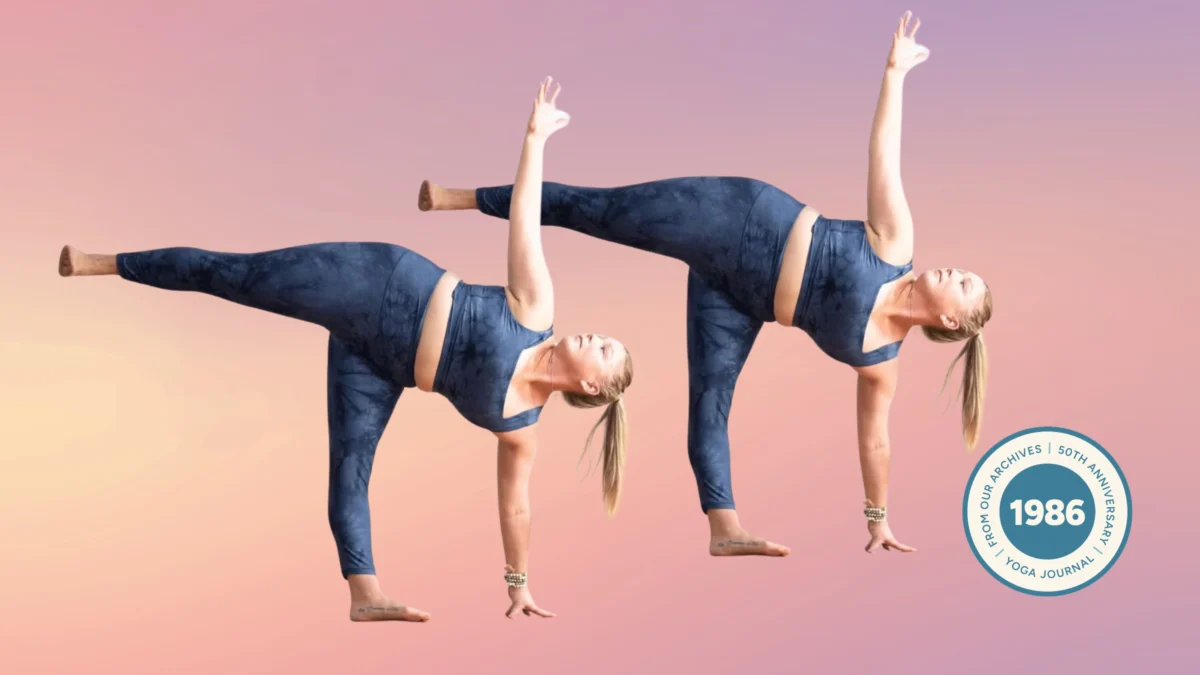
In the modern landscape of high-intensity fitness, the ancient practice of yoga offers a profound corrective: the return to equilibrium. Among the pantheon of standing postures, few encapsulate the intersection of physical integrity and mental stillness as elegantly as Ardha Chandrasana, or Half Moon Pose. First featured in the May-June 1986 issue of Yoga Journal, the insights regarding this posture remain as relevant today as they were four decades ago, serving as a masterclass in the "art of being at the edge without falling."
The Philosophy of the Edge: Understanding Ardha Chandrasana
At its core, Ardha Chandrasana is a balancing act that functions as both a natural extension of Trikonasana (Triangle Pose) and a formidable independent asana. For the practitioner, the pose is a diagnostic tool—a way to measure one’s current state of flexibility, physical alignment, and internal composure.
A Tool for Temperance
Yoga philosophy classifies asanas into three functional categories: those that are quieting, those that are neutralizing, and those that are activating. In an era characterized by chronic overstimulation, Ardha Chandrasana is prized for its cooling, quieting effect. It serves as a meditative bridge, allowing the student to transition from the chaos of a hyper-active daily life into a state of "dynamic stillness."
This concept of balance is not merely physical; it is an ethical and physiological aspiration. In Buddhist thought, "right action" is defined by harmony between intent and outcome. Similarly, the practice of yoga uses the body as a vessel to recreate that internal homeostasis. When the practitioner steps onto the mat, they are not just stretching muscle; they are recalibrating their nervous system.
Chronology of the Pose: From Foundation to Integration
The mastery of Ardha Chandrasana is a process of layered learning. It is not intended for the uninitiated, but rather for those who have already cultivated a baseline of stability in foundational standing poses.
The 1986 Perspective: The Iyengar Influence
The methodology referenced in the original Yoga Journal archives leans heavily on the teachings of B.K.S. Iyengar, whose precision-based approach revolutionized Western yoga. Iyengar emphasized that the pose does more than challenge the vestibular system—it acts as a tonic for the gastrointestinal tract and the liver.
By examining the evolution of the pose, we see a shift from viewing yoga as purely gymnastic to recognizing it as a systemic health intervention. The 1986 documentation remains a cornerstone because it prioritizes the architecture of the body. It teaches that the pose is only as stable as its foundation: the supporting foot, the engagement of the ankle, and the integrity of the knee.
Supporting Data: The Mechanics of Alignment
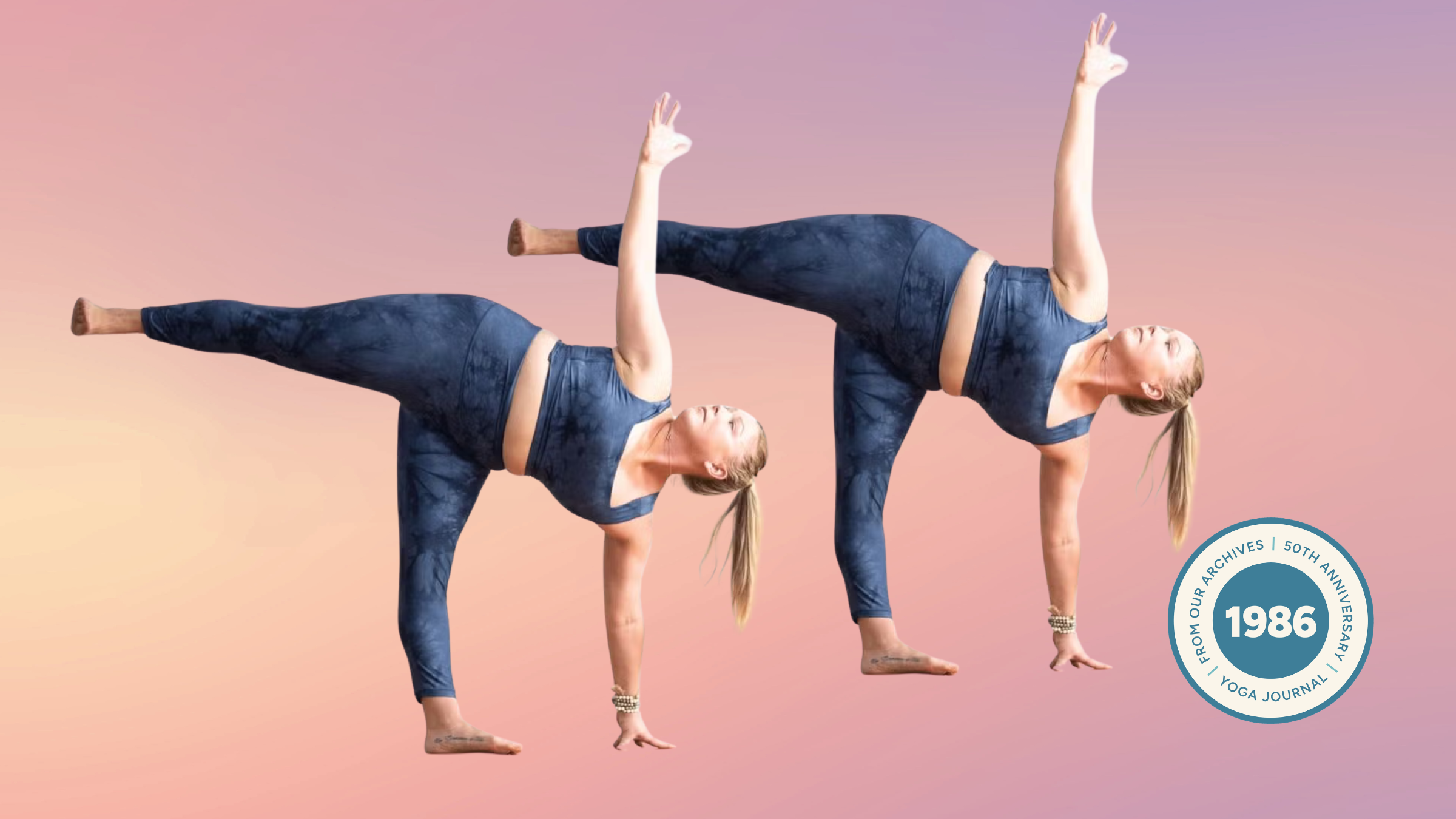
To achieve the "lightness and ease" that defines a successful Half Moon, one must adhere to strict biomechanical principles. The common pitfalls identified by early practitioners remain the most frequent errors made by students today.
The Anatomy of Failure vs. Flow
- The Supporting Foot: A frequent error is the involuntary inward rotation of the standing foot as the student lifts into the pose. This destabilizes the entire kinetic chain.
- Ankle and Knee Integrity: Collapsing the supporting ankle or hyperextending the knee—or conversely, keeping it too bent—disrupts the vertical column of support.
- The "Vertical Dynamic": True balance is found when the supporting leg is held with absolute stillness, the arch of the foot is lifted, and the knee is held "straight without being too straight."
When these mechanical requirements are met, the pose transforms. The practitioner is no longer "fighting" gravity; they are engaging in a dialogue with it. The horizontal stretch of the uplifted leg must be counterbalanced by the vertical reach of the arms, creating a cross-pattern of tension that fosters a feeling of suspension.
Official Guidance: Best Practices for the Practitioner
The 1986 archive provides a clear, step-by-step roadmap for executing Ardha Chandrasana safely and effectively. The guidance underscores the importance of using "props"—a concept that was, at the time, beginning to gain significant traction in the West.
Step-by-Step Implementation
- Preparation: Always begin with Trikonasana. Use an exhalation to bend the forward knee, moving the fingertips toward the floor.
- The Use of Props: For those with limited hamstring flexibility, the use of a folded blanket or a stack of books under the fingertips is not a sign of weakness; it is a tool for achieving the correct spinal alignment.
- The Ascent: As you lift into the pose, avoid turning the trunk toward the floor. Keep the chest open. If the chest closes, the balance is lost.
- Supportive Modifications: Beginners should not hesitate to utilize a wall. Placing the back against a wall—or even just the heel of the back foot—provides the proprioceptive feedback necessary to learn the vertical alignment of the supporting leg.
- The Exit: Exhale to descend. Move with the same mindfulness used during the ascent. Ensure the transition back to Trikonasana is slow and deliberate.
Implications for Modern Wellness
Why revisit a 40-year-old article? The implications of Ardha Chandrasana extend far beyond the yoga studio. In a world of increasing digital noise and sedentary habits, the ability to find "poise at the edge" is a metaphorical skill for navigating modern life.
The Psychology of Equilibrium
When we practice Ardha Chandrasana, we are practicing how to handle uncertainty. The pose requires the student to hold their focus on the horizon while their body is challenged by gravity. This is a profound exercise in mental focus. If the mind wanders, the body falls. If the mind is "open" and the chest is expanded, the body finds its center.
Therapeutic Applications
The physical benefits—strengthening the legs, increasing flexibility in the adductors, and stimulating the abdominal organs—are well-documented. However, the true value lies in the re-balancing of the nervous system. By treating Ardha Chandrasana as a "cooling" pose, practitioners can utilize it to combat the physiological stress responses that plague modern professionals. It is an act of defiance against the "always-on" culture.
Conclusion: The Dynamic Stillness
The "art of yoga" is defined by the ability to express dynamic stillness through the medium of the body. As B.K.S. Iyengar and the practitioners of the 1980s championed, the goal is not to reach a final, static destination, but to reside in the state of balance.
Whether you are a seasoned yogi or a curious beginner, returning to the fundamentals of Ardha Chandrasana provides a sobering and refreshing reminder: health is a state of balance. It is a fragile, beautiful, and active process that must be cultivated, breath by breath, day by day. By focusing on the integrity of our foundation and the openness of our heart, we do more than perform a pose—we reclaim our composure in a world that is constantly trying to pull us off-center.
For those interested in further study, the Yoga Journal archives provide an extensive database of foundational asana history, tracking the evolution of modern yoga from its mid-20th-century roots to its current global influence.