Published August 4, 2026
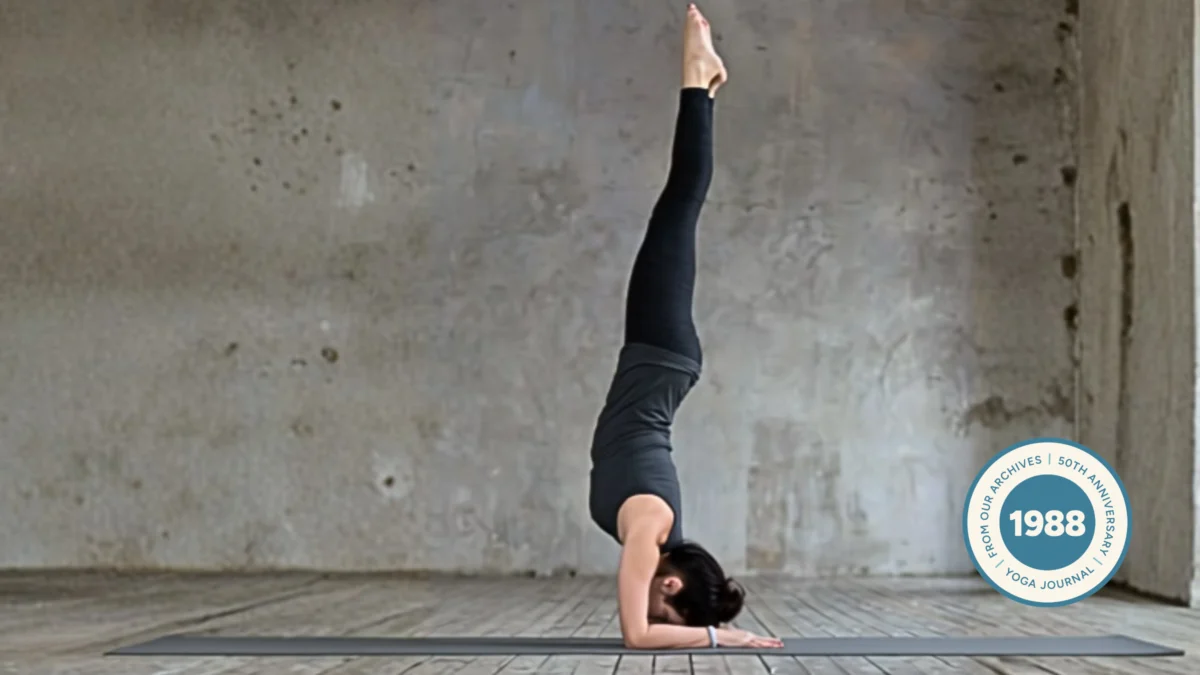
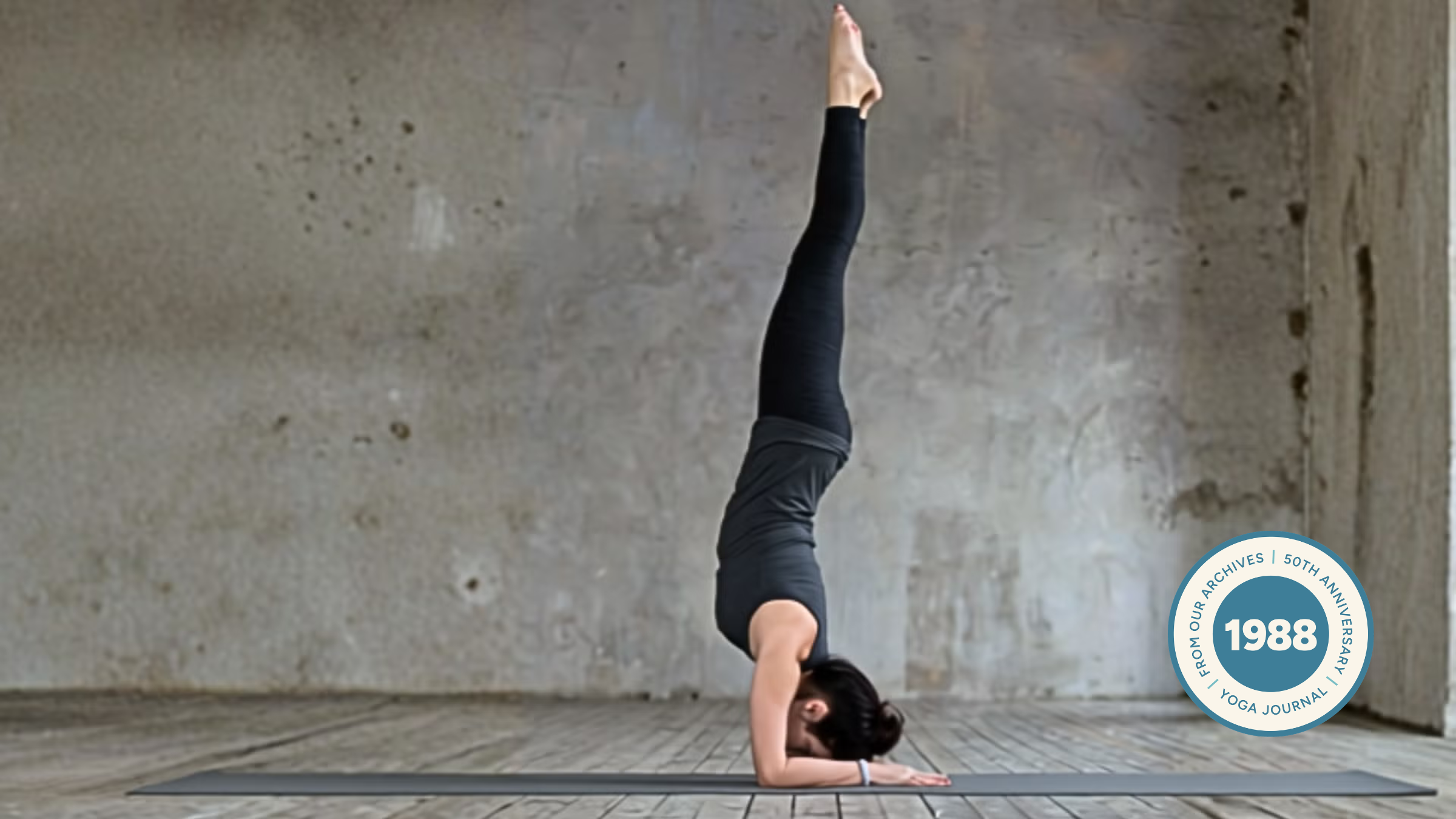
In the vast lexicon of yoga asanas, few postures capture the imagination quite like Pincha Mayurasana, or the Forearm Balance. Known colloquially as the "Peacock Feather Pose," the name is derived from the Sanskrit pincha (feather) and mayura (peacock), mimicking the elegance of a bird fanning its plumage. While contemporary practitioners often view this inversion as a display of physical prowess, its roots—as detailed in the archives of Yoga Journal—suggest that the pose is a profound laboratory for the mind, a study in the transition from fear to complacency, and finally, to true presence.
The Chronology of a Classic
The study of Pincha Mayurasana has evolved significantly since it was formally codified in the mid-20th century. While the roots of the practice trace back centuries, the systematic approach to this inversion was popularized in the West by masters like B.K.S. Iyengar. In the July-August 1988 issue of Yoga Journal, the practice was presented not merely as an acrobatic feat, but as a mental milestone.
For decades, the pedagogical approach has remained consistent: it is a bridge between the foundational stability of Adho Mukha Svanasana (Downward-Facing Dog) and the high-intensity focus of Adho Mukha Vrksasana (Handstand). By revisiting these archival insights, modern practitioners can reconnect with the foundational philosophy that defines the pose: the mastery of the self through the mastery of gravity.
The Psychology of the Inversion
To enter Pincha Mayurasana is to confront one of the most primal human anxieties: the fear of falling. In the initial stages of practice, the nervous system enters a state of high alert. Every micro-adjustment is a survival mechanism. However, as the body gains strength and the student becomes familiar with the sensation of being inverted, a secondary challenge emerges: complacency.
Once the physical fear dissipates, the mind often wanders. Teachers frequently note that the true practice of the pose begins exactly where the struggle ends. When the fear of falling is replaced by the ease of balance, the student faces a deeper task: remaining watchful. The challenge is to maintain a state of total, vigilant presence—observing the breath, the subtle movements of the spine, and the flow of thoughts—even when the body is suspended effortlessly.
This mirrors the "asana of life." It is often easier to remain self-aware during times of crisis or physical discomfort, such as when one is nursing an injury or navigating a stressful period. It is far more difficult to remain conscious, grounded, and attentive when life is flowing smoothly. Pincha Mayurasana acts as a microcosm for this broader human experience, teaching the student how to retain inner poise amidst external shifts.
Mechanical Demands: The Anatomy of Balance
Achieving the "Peacock Feather" requires a sophisticated harmony between strength and flexibility. It is a common misconception that inversions are purely about shoulder strength; in reality, they are a holistic engagement of the kinetic chain.
The Role of Strength
The triceps brachii are the primary engines of this pose. As extensors, they maintain the structural integrity of the elbow. Simultaneously, the pectoralis muscles (major and minor) act as the stabilizers that prevent the elbows from splaying outward. If these muscles fail, the weight of the torso collapses into the joints rather than being supported by the bones, making the pose exponentially more difficult and potentially hazardous.
The Necessity of Flexibility
Flexibility requirements are twofold:
- The Glenohumeral Joint: In most daily activities, the shoulder blade (scapula) is stabilized while the arm moves. In Pincha Mayurasana, the arm (humerus) is held stable, and the scapula must move around it. This neuromuscular adaptation is what gives the pose its unique, liberating perspective.
- The Thoracic Spine: The mid-back is naturally built for stability, not mobility. However, to achieve a vertical line, the thoracic spine must engage in a subtle backbend. Stiffness here prevents the shoulders from opening fully, forcing the practitioner to compensate with the lumbar spine—a common cause of injury.
Step-by-Step Methodology
For those looking to integrate this pose into a safe and effective practice, the following guidelines, adapted from time-honored techniques, are essential.
Preparation and Props
- The Wall as a Teacher: Always begin with a non-skid mat placed firmly against a wall. Avoid slippery blankets.
- The Block Technique: Beginners should place a block or a firm book between their hands. This prevents the hands from sliding toward one another, which forces the elbows out and breaks the vertical alignment.
- The Setup: With hands framing the block, align the elbows directly under the shoulders. Forearms should be parallel.
Executing the Lift
- Engage the Shoulders: Lift the shoulders away from the floor, moving them horizontally. This creates the necessary space for the spine to extend.
- The Modified Inversion: Straighten the knees into a dolphin-like position. This engages the core and warms the shoulders.
- The Ascent: Exhale and swing one leg up, using the wall only as a point of contact, not a crutch. Do not collapse into the lower back.
- Refining the Shape: Avoid the "banana" shape. Instead, lift from the back of the thighs. Imagine the legs in a forward bend while the upper back is in a backbend. This creates the tension necessary for true balance.
Implications for Daily Life
The true measure of a yoga practice is not found in the aesthetic perfection of a pose, but in the quality of the life that follows. The "poise" developed while balancing on the forearms is designed to be translated into the chaos of modern existence.
When we practice Pincha Mayurasana, we are training our nervous system to adapt to "radically new situations." By repeatedly turning the world upside down, we teach the mind that regardless of external circumstances—be it professional pressure, emotional turmoil, or physical illness—we can remain anchored in the center of our being.
Beyond the Mat
The ultimate lesson of the Pincha Mayurasana is the transcendence of perceived limitations. Asana practice is, by definition, finite; it lasts for a few seconds or minutes. However, the awareness, goodwill, and psychological adaptability cultivated during those moments are infinite.
A successful practitioner understands that the strength gained in the triceps or the flexibility earned in the thoracic spine is merely the vehicle. The cargo is the ability to share that sense of balance with family, friends, and the broader community. In this sense, the pose is never truly finished; it simply continues to unfold in every interaction and every challenge faced off the mat.
Official Guidance and Contraindications
It is imperative to acknowledge that Pincha Mayurasana is an advanced inversion. Those with high blood pressure, eye conditions (such as glaucoma or increased intraocular pressure), or those currently menstruating should avoid this pose entirely.
Furthermore, as with all advanced asanas, one should consult a certified, experienced yoga instructor to ensure that the skeletal alignment is correct. The goal is longevity and awareness, not the premature attainment of a shape. When practiced with patience and an eye toward the long-term, Pincha Mayurasana offers not just a physical challenge, but a lifetime of poise, freedom, and, quite literally, a new way to stand in the world.