
Published: May 7, 2026
In an era defined by the "always-on" culture, the boundary between the workday and the night has become increasingly porous. For millions, the transition from the frantic pace of modern life to the restorative silence of sleep is hindered by a physiological state of high alert. Whether it is the blue-light-induced stimulation of late-night scrolling or a mind that refuses to quiet its internal monologue, the inability to disconnect is a growing public health concern.
Yoga teacher Jaffer Hussain, a proponent of restorative movement, argues that the antidote to this nocturnal restlessness is not more effort, but more surrender. By integrating a structured, Yin-inspired yoga practice into one’s evening routine, individuals can signal to their nervous system that the time for productivity has concluded, and the time for repair has begun.
The Physiology of Transition: Why Nighttime Yoga Works
The efficacy of a bedtime yoga practice lies in its ability to shift the body from the sympathetic nervous system—the "fight-or-flight" response—to the parasympathetic nervous system, responsible for "rest and digest" functions.
When we engage in slow, intentional movement, we lower our cortisol levels and stimulate the vagus nerve, a critical component of the parasympathetic system. Unlike more vigorous forms of yoga, Yin yoga—which involves holding poses for extended periods—targets the deep connective tissues, ligaments, and fascia. This physical release mirrors the psychological shedding of the day’s tensions.
"Consistency is the greatest barrier to rest," Hussain notes. "By creating a ‘container’ for the evening—brushing teeth, donning sleepwear, and engaging in this sequence—you are creating a Pavlovian response. Your body eventually learns that when the bolster comes out, sleep is imminent."

A Step-by-Step Guide to Nocturnal Unwinding
This routine is designed for maximum accessibility. It requires minimal equipment: a bolster or a few firm bed pillows. Because the practice focuses on stillness, it can be performed directly on your mattress, facilitating an immediate transition to sleep.
1. Constructive Rest (The Grounding Phase)
Begin by lying supine. Bend your knees, keeping your feet flat on the surface beneath you. Walk your feet slightly wider than your hips and allow the knees to collapse inward toward one another. This "Constructive Rest" position neutralizes the spine and allows the psoas muscle—often tightened by prolonged sitting—to release. Turn your toes slightly inward to facilitate internal hip rotation. Maintain this for at least one minute, focusing on the contact point between your back and the mattress.
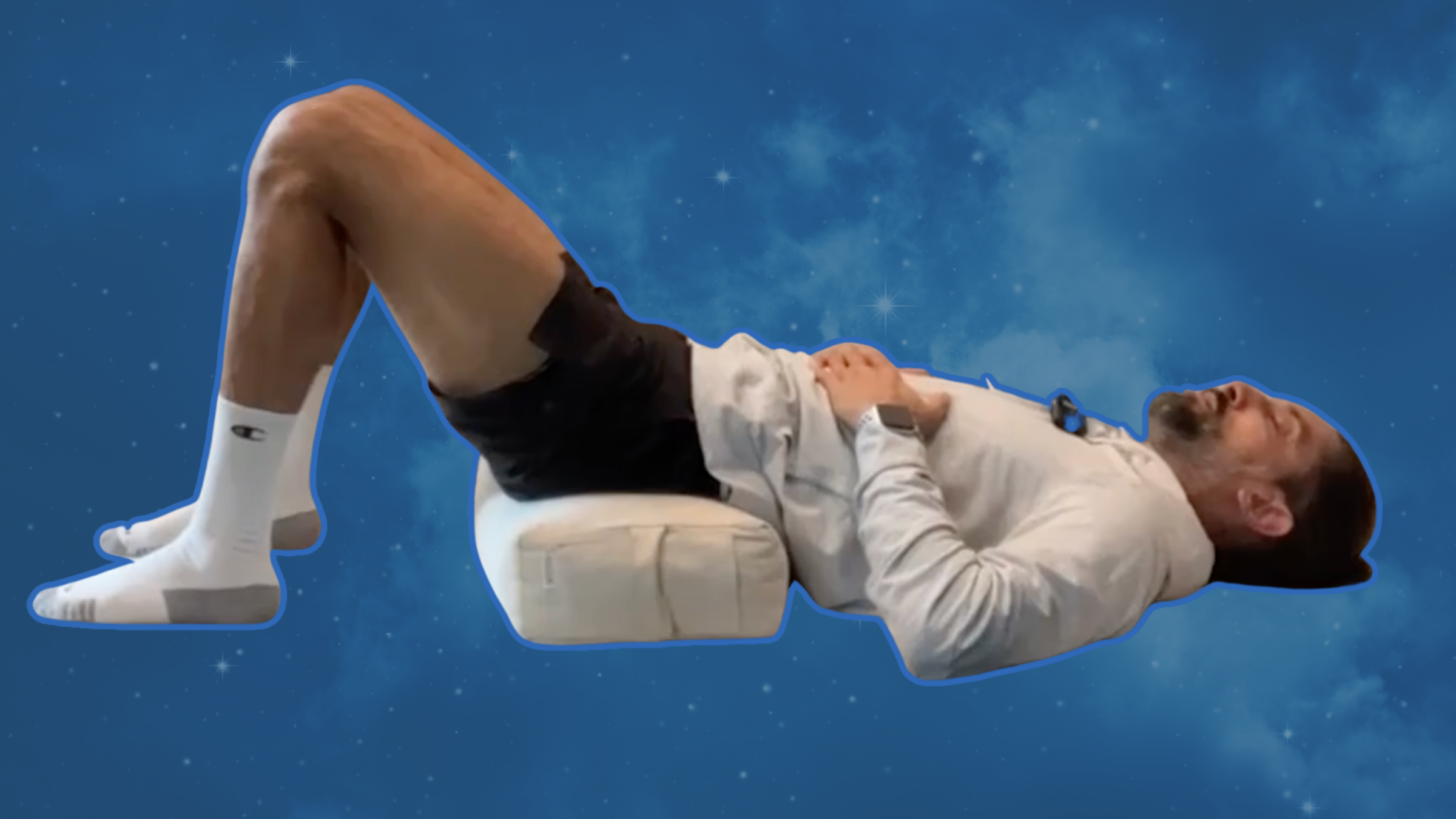
2. Supported Bridge (The Rejuvenation Phase)
Lift your hips gently to slide a bolster or firm pillows under the sacrum, the triangular bone at the base of the spine. This creates an elevation that encourages blood flow toward the heart and promotes a feeling of safety and stability. Keep your feet and knees hip-distance apart. Allow the weight of your pelvis to melt into the support. This pose is particularly beneficial for those who spend their day hunching over digital devices, as it gently opens the chest and rib cage. Hold for a minimum of two minutes.

3. Extended Leg Stretch (The Release Phase)
From the Supported Bridge, carefully extend your legs out along the surface. This creates a gentle stretch along the hip flexors and the front of the abdomen. If you find this position causes lower back strain, extend one leg at a time, or return to the bridge position. This phase is about elongation rather than exertion; allow gravity to do the work. Aim for two minutes of total stillness, or one minute per leg if alternating.
4. Knees to Chest (The Compression Phase)
Gently walk your feet back in and draw your knees toward your chest. Hug them firmly. This compression provides a gentle massage to the digestive organs and helps to ground the nervous system. You may choose to rock slowly from side to side to release tension in the lumbar region. Spend five deep, rhythmic breaths here, exhaling fully to clear the lungs.
5. Waterfall Pose (The Decompression Phase)
With your bolster remaining under your sacrum, extend your feet toward the ceiling. This inversion aids venous return, helping to reduce swelling in the feet and legs caused by gravity throughout the day. Take this time to rotate your ankles and flex your feet—the only "active" movement in the entire sequence—before settling into total stillness. Let your legs be weightless. Hold for at least two minutes.

6. Thread the Needle Variation (The Hip Opener)
Bring your right ankle to your left thigh, creating a "figure-four" shape. Bend your left knee, drawing the legs closer to your chest. This pose addresses the deep hip rotators and gluteal muscles, where many people store physical manifestations of emotional stress. Hold for one minute before switching to the left side.
7. Savasana (The Integration Phase)
Finally, remove the bolster from beneath your hips and place it under the backs of your knees. This slight elevation of the knees is crucial for lower back support during sleep. Extend your arms by your sides, palms facing up. This is the ultimate "Corpse Pose," or Savasana. It is not merely a pose; it is a state of being. Allow your breath to return to its natural rhythm, and release the intention of the practice.
Supporting Data: The Impact of Routine on Sleep Architecture
Clinical studies in sleep medicine have consistently shown that sleep latency—the time it takes to fall asleep—is significantly reduced when the body is primed by a consistent ritual. Research published in the Journal of Behavioral Sleep Medicine suggests that mindfulness-based movements help decrease hyperarousal, a common symptom of insomnia.

By utilizing Yin yoga specifically, practitioners are engaging in a form of "myofascial release" that signals to the brain that the danger has passed. When the body is in a supported, gravity-assisted state, the brain is less likely to cycle through "what-if" scenarios, the primary culprit of late-night rumination.
Implications for Modern Wellness
The implications of adopting such a routine extend beyond the eight hours of sleep one achieves. Improved sleep quality is linked to enhanced cognitive function, better emotional regulation, and a stronger immune system.
However, experts caution that these practices are not a panacea for underlying sleep disorders. "If you are experiencing chronic, debilitating insomnia, yoga should be viewed as a complementary tool alongside professional medical consultation," notes sleep researcher Dr. Elena Vance. "The value of this routine lies in its ability to break the feedback loop of anxiety and wakefulness, but it should not replace clinical care for those suffering from sleep apnea or severe circadian rhythm disorders."

Final Reflections
The beauty of Jaffer Hussain’s approach is its lack of pretension. It does not require a studio, specialized clothing, or even a flexible body. It requires only the willingness to stop.
In a world that rewards speed, choosing to spend ten minutes in stillness before sleep is a radical act of self-preservation. By creating space for the body to let go of the physical remnants of the day, we open the door to the restorative power of deep sleep, ensuring that we wake up not just rested, but recovered.
As you settle into your Savasana tonight, consider the practice less as a chore to be completed and more as a gift to the version of yourself that will wake up tomorrow. The stillness you cultivate on the mat will inevitably follow you into the light of the next day.