








If you have spent any time on social media or listening to health-centric podcasts lately, you have likely encountered the polarizing figure of Bryan Johnson. The tech mogul, who famously appeared in the Netflix documentary Don’t Die, has become the face of a high-stakes, multi-million-dollar quest: to achieve the lowest possible “biological age.”
While Johnson’s regimen—which involves everything from weekly acid peels and hyperbaric oxygen therapy to experimental plasma infusions—is extreme, it highlights a growing trend among the general public: the fascination with "bio-age testing." As these tests migrate from elite laboratories into the hands of everyday consumers, they raise a fundamental question: Is "aging in reverse" a scientific reality, or just the latest wellness industry marketing scheme?
The Science of Biological Age vs. Chronological Age
To understand the current obsession, one must first distinguish between two types of time. Chronological age is the simple count of years since your birth. Biological age (bio-age), however, is a measurement of how your cells and organ systems are actually functioning.
Think of it as the difference between the "model year" of a car and its "condition." Two 2015 vehicles might have the same birth year, but if one has been garaged and meticulously maintained while the other has been driven through harsh winters without oil changes, their mechanical integrity—or "biological age"—will be vastly different.
In human terms, an individual who maintains a consistent strength-training routine, eats a nutrient-dense diet, manages chronic stress, and lives in an environment with low pollution will likely exhibit a lower bio-age than an individual of the same chronological age who leads a sedentary lifestyle, smokes, and consumes high amounts of processed sugar.
The Chronology of the Bio-Age Trend
The trajectory of bio-age testing has moved rapidly from niche academic research to mainstream consumerism:
- The Early Research Phase: Scientists began utilizing biomarkers—such as telomere length (the protective caps on chromosomes) and DNA methylation (a chemical process that alters DNA)—to track how populations age. These were intended for laboratory settings to understand disease progression.
- The "Biohacker" Surge: Figures like Bryan Johnson and health influencers on podcasts hosted by Peter Attia, Joe Rogan, and Andrew Huberman brought these concepts to the public, rebranding complex molecular biology as a personal "project."
- The Commercial Explosion: Today, a quick Google search reveals dozens of direct-to-consumer kits that promise to reveal your "pace of aging" through a simple blood or urine sample. As prices for these kits have dropped, accessibility has soared, making it easier than ever for the average person to receive a "number" that tells them how old they are on the inside.
Supporting Data: How Do We Measure Decay?
The science of measuring bio-age relies on tracking specific biomarkers. While companies claim these metrics provide a roadmap to longevity, the clinical validity varies.
1. DNA Methylation
Often considered the "gold standard" in research, tests like the Horvath Clock and DunedinPACE analyze how methyl groups attach to DNA. Because this process changes predictably with age, it serves as a proxy for biological decay. However, researchers warn that these tests were developed for population studies, not for individual diagnostic purposes.
2. Telomere Analysis
Telomeres are the protective caps at the end of chromosomes. As cells divide, these caps shorten. While severely shortened telomeres are linked to genetic diseases, the "qPCR" tests sold to consumers are often criticized for their lack of precision and diagnostic utility in healthy individuals.
3. VO2 Max
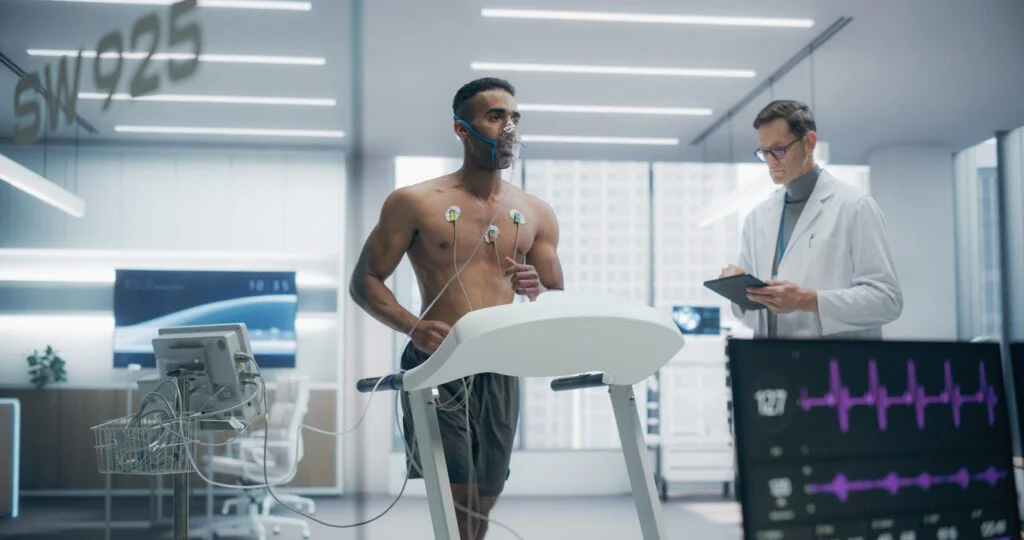
Perhaps the most reliable indicator of functional longevity is VO2 max—the maximum amount of oxygen your body can utilize during intense exercise. Unlike obscure molecular markers, VO2 max is a functional metric. High VO2 max levels are consistently associated with lower all-cause mortality. As the chest wall stiffens and heart muscle efficiency declines with age, VO2 max naturally drops, making it an excellent "canary in the coal mine" for physical aging.
The Counter-Narrative: Is It Just Hype?
Not everyone is convinced by the promise of these tests. A New York Times exposé recently challenged Bryan Johnson’s claims, suggesting that despite his millions spent on interventions, his actual biological age may have increased by a decade.
This brings up a critical caveat: Biological age is not uniform. Your heart, liver, and brain may age at different rates. Measuring one biomarker in your blood does not provide a holistic view of your internal health. Furthermore, many commercial companies that offer these tests also offer "proprietary supplement protocols." When a test result is used as a sales funnel for expensive pills, consumers should be inherently skeptical.
Five Free Ways to Gauge Your "Bio-Age"
You do not need to be a billionaire to track your health. Several scientifically validated tests can be performed at home for free to assess your physical resilience.
- The Sitting-Rising Test (SRT): Lower yourself to the floor and stand back up without using your hands or knees for support. This measures balance, core strength, and coordination—all of which are vital for longevity.
- Grip Strength: Using a hand-held dynamometer or even a simple tennis ball squeeze test, you can gauge your muscular health. Weak grip strength is a known predictor of future frailty and inability to perform activities of daily living.
- One-Legged Balance: The ability to balance on one foot for 60 seconds (or even 30) is a strong indicator of neurological and musculoskeletal health.
- The Pittsburgh Fatigability Scale: By rating your energy levels after specific activities, you can assess whether your "fatiguability" is a sign of underlying health issues rather than just temporary tiredness.
- Tape Measure Body Composition: While expensive scans like DEXA are the gold standard, measuring your waist-to-hip ratio and using a free online body fat calculator remains an effective way to track body composition, which is a stronger indicator of health than total weight.
Implications: Turning Data Into Action
The most important takeaway for any individual—or health professional—is that data without action is useless.
If you take a bio-age test and find that your "number" is older than your actual age, do not panic. Use it as a diagnostic starting point. If the results show a decline in muscle mass or metabolic health, the solution is rarely a high-tech supplement; it is almost always the "boring" stuff:
- Strength Training: To maintain muscle and bone density.
- Aerobic Conditioning: To improve VO2 max and cardiovascular health.
- Sleep Hygiene: To allow for cellular repair and recovery.
- Nutrition: Focusing on whole foods to minimize systemic inflammation.
The Professional Perspective
For health and fitness professionals, the key is to help clients cut through the noise. When clients are stressed and obsessed with "reversing" their age, they often ignore the foundational habits that actually drive health.
The goal of biomarker testing should not be to chase a lower number for the sake of bragging rights. It should be to identify where the "leaks" are in your health—whether that’s poor cardiovascular fitness, declining strength, or metabolic dysfunction—and to apply targeted, evidence-based behavior changes to plug them.
Ultimately, we are all aging. The goal of a "don’t die" crusade should not be the impossible task of stopping the clock, but the very achievable goal of compressing the period of time we spend in poor health. By focusing on the fundamentals—movement, recovery, and nutrition—we can ensure that while our chronological age continues to climb, our functional health remains at its peak.
Note: Before beginning any new rigorous exercise program or making significant changes to your health protocol based on biomarker data, always consult with a qualified healthcare professional.