











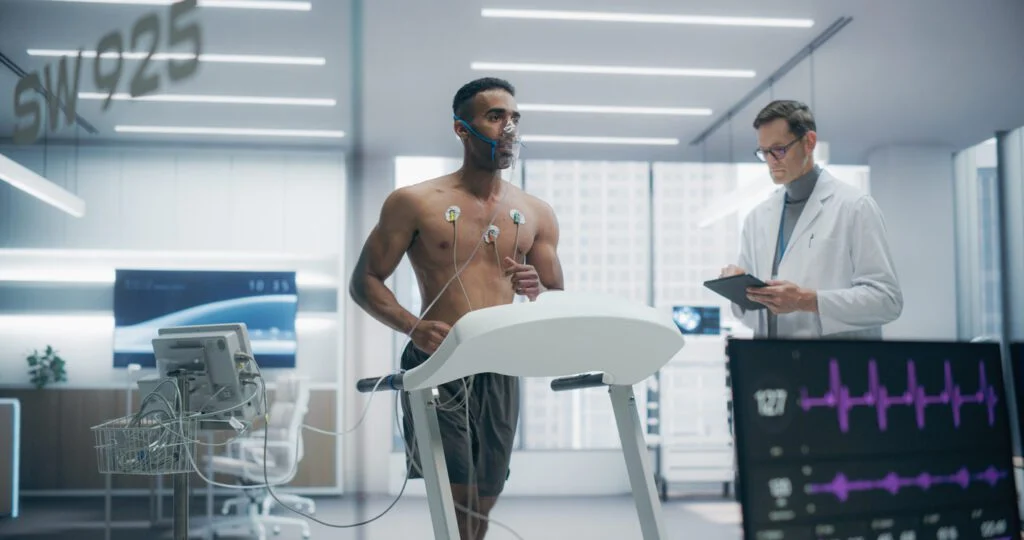
In the quiet, sterile corridors of high-end longevity clinics and the digital echo chambers of biohacking podcasts, a single metric has become the new gold standard for success: biological age. While your chronological age is merely a tally of revolutions around the sun, your "bio age" is a complex, data-driven estimation of how your cells are actually performing.
Fueling this obsession is billionaire entrepreneur Bryan Johnson, the face of the Don’t Die movement. Johnson’s quest to reverse his biological clock has become a cultural phenomenon, characterized by a multi-million-dollar annual budget spent on everything from hyperbaric oxygen therapy and weekly acid peels to controversial plasma infusions. Johnson claims these interventions have shaved over five years off his biological age, effectively "aging in reverse." However, as the medical community scrutinizes these claims—with The New York Times suggesting his biological markers may have actually worsened by a decade—the public is left wondering: Is bio-age testing a breakthrough in preventative medicine, or is it just the latest high-tech vanity project?
The Science of Aging: Defining "Bio Age"
To understand the current obsession, we must distinguish between the two ages we possess. Your chronological age is an unchangeable fact. Your biological age, conversely, is a dynamic reflection of your cellular health. It is shaped by genetics, but increasingly, it is recognized as a reflection of lifestyle, environment, and physiological stress.
Consider two 50-year-old men: "Chang" and "Jabari." Chang lives in a high-pollution urban center, subsists on processed food, smokes, and leads a sedentary life. Jabari resides in the mountains, maintains a plant-rich diet, practices meditation, and engages in consistent physical activity. While both share the same number of candles on their birthday cakes, their cellular realities are vastly different. The modern bio-age industry aims to quantify that difference through "biomarkers"—measurable indicators of biological states.
A Chronology of the Bio-Age Movement
The interest in biological aging is not new, but its accessibility has shifted dramatically in the last decade.
- Pre-2010s: Aging research was confined to academic laboratories, focusing on telomere length—the protective caps on chromosomes—as the primary marker for cellular longevity.
- 2013: Researcher Steve Horvath published his findings on the "Epigenetic Clock," a method using DNA methylation to predict biological age. This provided a more reliable, though still experimental, tool for tracking age.
- 2020–2022: The rise of longevity-focused podcasts (Peter Attia, Andrew Huberman, Joe Rogan) brought these laboratory tools into the mainstream. Companies began capitalizing on the trend, offering mail-order kits for blood and urine analysis.
- 2023–Present: The "Bryan Johnson Effect" has pushed biohacking into the cultural spotlight, turning longevity from a niche scientific pursuit into a lifestyle brand.
Supporting Data: What Are We Actually Measuring?
Commercial tests typically rely on one of three methodologies to estimate how fast you are aging:
- DNA Methylation: Often considered the most accurate, this process measures chemical changes to your DNA that occur over time. Tests like the "DunedinPACE" are designed to measure the pace of aging rather than just a snapshot.
- Telomere Analysis: These tests look at the shortening of protective caps on chromosomes. While scientifically valid for diagnosing certain genetic conditions, their utility as a general health predictor in healthy populations remains debated.
- Metabolic and Physiological Markers: These include blood glucose, cholesterol, blood pressure, and hormone levels. Unlike the "black box" of DNA testing, these are tried-and-true medical metrics that have predicted mortality for decades.
The "Free" Alternative: Assessing Longevity at Home
You do not need a seven-figure bank account to monitor your aging. Researchers have long utilized simple, functional tests to assess how "old" the body feels. These tests are not only free but are often more indicative of daily quality of life than an expensive DNA kit.
The Sitting-Rising Test (SRT)
This test evaluates core strength, balance, and flexibility. To perform it, cross your legs and lower yourself to the floor, then stand back up without using your hands or knees for support. A 12-year study of 4,200 adults found that those who struggled with this movement had a higher risk of all-cause mortality. It is a proxy for the physical mobility required to remain independent in later life.
Grip Strength
Often referred to as the "vital sign of aging," grip strength is a remarkably accurate predictor of future muscle weakness and cardiovascular health. Using a standard tennis ball, a squeeze-and-hold test can reveal much about your baseline strength. Research suggests that grip strength is, in some cases, a more reliable indicator of longevity than blood pressure.
The One-Leg Balance Test
Balance requires the seamless integration of the eyes, inner ear, and skeletal muscles. An inability to stand on one leg for a duration appropriate for your age group can serve as a "canary in the coal mine" for neurological or metabolic decline.
The Pittsburgh Fatigability Scale
Longevity is not just about avoiding death; it is about avoiding the decay of vitality. This scale asks you to rate your fatigue after various tasks, from leisurely walking to heavy gardening. High "fatigability"—the sense of being exhausted by routine life—is a validated predictor of future health decline.
Official Responses and Medical Perspectives
The medical establishment remains cautious about the surge in commercial bio-age testing. Organizations like the American Heart Association emphasize that the most reliable biomarkers remain the "boring" ones: cholesterol, A1C, and blood pressure.
The primary concern among experts is the "actionability" of the data. A test result that claims you are "50 biologically" when you are "40 chronologically" can cause significant psychological distress without providing a roadmap for improvement. Furthermore, because different organs age at different rates, a single blood-based bio-age test cannot tell you if your heart is healthy or if your liver is under stress.
Medical professionals advise using these tests only as supplements to—never substitutes for—standard physicals. If a test company pushes a proprietary supplement stack based on your results, it is a significant red flag that the service is profit-motivated rather than health-motivated.
Implications: The Trap of "Bio-Hacking"
The most significant danger of the current bio-age craze is the temptation to prioritize "bio-hacking" over the "big rocks" of health.
The Mistake of Ignoring Fundamentals
Many individuals will spend $500 on an epigenetic test but fail to meet the basic requirements for health: 150 minutes of moderate aerobic exercise per week, seven to nine hours of quality sleep, a high-fiber, plant-forward diet, and consistent stress management. These foundational habits are the only interventions proven to significantly extend both healthspan and lifespan.
Data Without Action is Meaningless
Gathering data is useless if it does not lead to behavior change. If your VO2 max (a measurement of oxygen utilization and a strong indicator of longevity) is declining, the solution is not a supplement; it is an increase in cardiovascular training. If your body composition shows a loss of muscle mass, the solution is strength training.
Conclusion: A Proactive Approach to Aging
Biological age testing can be a powerful motivator if used as a baseline for improvement. It offers a way to quantify the impact of your choices, turning abstract "wellness" into concrete, objective data.
However, the secret to longevity remains remarkably simple. It is not found in plasma transfusions or expensive DNA kits, but in the mundane, daily commitment to movement, nutrition, and rest. Before you sign up for the latest high-tech test, ask yourself: Am I doing the basics? If the answer is no, start there. Your biological clock will thank you far more for a brisk walk and a good night’s sleep than it will for a data report that tells you what you likely already know.
True longevity is not about cheating death; it is about living with the vitality that makes life worth extending. By focusing on the proven markers of health—strength, cardiovascular efficiency, and body composition—you gain the agency to shape your future, regardless of what any "bio-age" calculator might say.