Published: June 14, 2026
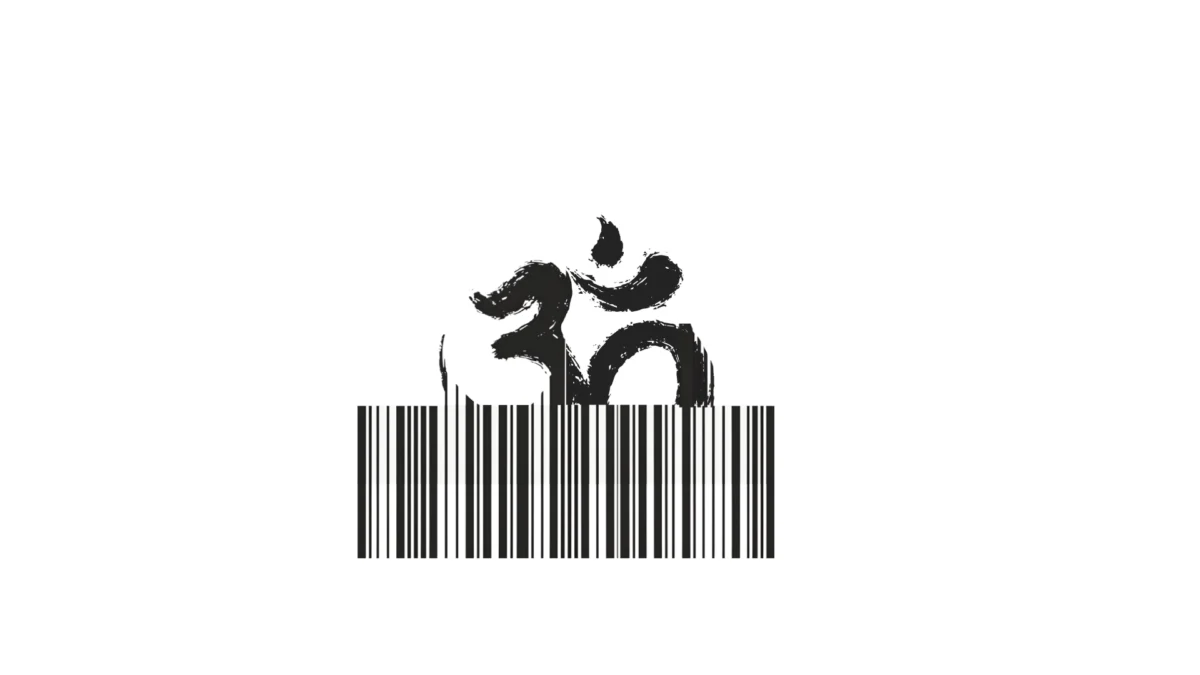
In the modern marketplace, a quiet transformation has taken hold of the wellness industry. A simple stroll through a high-end yoga studio, a visit to a boutique apothecary, or a quick scroll through social media feeds reveals a recurring motif: the word "sacred." It is attached to cacao, ceremony, sound baths, jewelry, retreats, and even bath salts. As the label becomes ubiquitous, a growing chorus of philosophers, theologians, and mindful practitioners are asking a provocative question: In our rush to market the spiritual, are we systematically stripping the "sacred" of its meaning?
The Inflation of the Divine: A Chronology of Commercialization
The trajectory of the word "sacred" from the hushed halls of temples and the inner sanctums of private prayer to the glossy packaging of consumer goods is a recent phenomenon, accelerating rapidly over the last decade.
- The Early 2010s: The term was largely reserved for traditional religious contexts or deeply personal, internal states of being.
- The Mid-2010s: As the "wellness economy" began to balloon into a multi-trillion-dollar global industry, brands began seeking ways to differentiate their products. The prefix "sacred" became a linguistic shortcut to suggest purity, ancient wisdom, and exclusivity.
- The 2020s: With the rise of digital spirituality, the word became a marketing buzzword. Algorithms favor high-vibrational, spiritual-adjacent content, leading companies to slap the "sacred" label on everything from yoga mats to dietary supplements to boost engagement and justify premium pricing.
- 2026 (Present): We have reached a point of saturation. The term has transitioned from a descriptor of internal experience to an extrinsic marketing hook, leading to a profound dilution of the concept’s power.
Supporting Data: The Economics of Spirituality
While it is difficult to quantify the "sacred," the financial data surrounding the wellness market is explicit. According to recent industry reports, the "spiritual wellness" sector has seen a 14% year-over-year growth rate since 2022. Much of this growth is attributed to "premiumization"—the strategy of marketing mundane goods as essential components of a spiritual practice.
Consumer psychology studies suggest that adding the label "sacred" to a product increases its perceived value by an average of 22%, even when the physical composition of the item remains identical to its non-labeled counterparts. This phenomenon, often referred to as "the halo effect of the divine," exploits a consumer’s innate desire for meaning in an increasingly secularized world. By purchasing a "sacred" candle, the consumer isn’t just buying wax and wick; they are attempting to purchase a moment of transcendence, a shortcut to a spiritual state that they feel they cannot access on their own.
Expert Perspectives and Cultural Implications
The dilution of the sacred is not merely a marketing faux pas; it carries significant cultural and philosophical weight.
Dr. Aris Thorne, a sociologist specializing in modern religious trends, notes: "When you commodify the sacred, you shift the locus of control from the individual’s internal work to an external object. You are essentially telling the consumer that they are incomplete, and that completion can be purchased for $45. It’s a form of spiritual gaslighting."
Conversely, some proponents argue that branding items as "sacred" creates an entry point for people who would otherwise be intimidated by traditional religious structures. "If a ‘sacred’ bath salt encourages someone to practice mindfulness for twenty minutes, is that not a net positive?" asks Sarah Jenkins, a wellness entrepreneur. "We are simply making ancient concepts accessible to a modern, distracted audience."
However, the critics remain firm. The danger, they argue, is that by packaging the sacred, we become incapable of recognizing it in its raw, unbranded, and often inconvenient forms—such as in the grit of daily labor, the discomfort of grief, or the silence of a Tuesday morning.
The Yoga Perspective: Self-Study vs. Consumerism
For practitioners of yoga, the situation is particularly poignant. The Yoga Sutras of Patanjali place a heavy emphasis on Svadhyaya, or self-study. In a traditional context, this is a rigorous, often uncomfortable process of examining one’s own biases, attachments, and ego.
Modern "commercial yoga," however, often replaces Svadhyaya with consumption. If the answer to internal dissatisfaction is always a new "sacred" accessory, then the difficult work of self-inquiry is avoided. The irony is that the practice of yoga is designed to help us see that the divine is not something we "get" or "acquire," but something we reveal through the stripping away of the ego—the exact opposite of what the consumer cycle demands.
Implications: The Radical Act of "Ordinary" Sacredness
If we strip away the marketing, what remains? The most revolutionary act in a consumer-driven society may be the refusal to label the sacred at all.
True sacredness, many traditions suggest, is not a property inherent to an object, but a quality of attention brought by the observer. It is a relationship. When we treat an object as sacred simply because it was marketed as such, we are participating in a passive act of consumption. When we decide, through our own conscious intent, to treat a mundane object or moment as sacred, we are participating in an active act of creation.
Consider the potential for this shift:
- The Kitchen: Instead of buying "sacred" kitchen tools, one could practice the mindfulness of washing a dish, treating the simple chore as a ritual of service and presence.
- The Calendar: Rather than seeking "sacred" retreats to find peace, one could designate their daily commute or a fifteen-minute block of time in the evening as a sacred, non-negotiable window of silence.
- Human Connection: Viewing a conversation with a stranger or a difficult interaction with a family member as a "sacred encounter" changes the energy of the interaction entirely, regardless of the physical environment.
The Future of the Sacred
The commodification of the sacred is likely to continue as long as the market finds it profitable. However, the true "hack" to spiritual depth remains immune to marketing. It is the realization that the sacred is not a luxury item. It does not require a price tag, a curated aesthetic, or an imported origin.
By reclaiming the definition of the sacred from the marketplace, we regain our autonomy. We move from being passive consumers of "spiritual" products to active participants in a life where everything is already suffused with meaning. The ultimate irony of the "sacred" label is that it highlights a scarcity that doesn’t exist. If we look closely enough, we find that the sacred is not in the bottle of bath salts, the expensive crystal, or the branded retreat. It is in the messiness, the ordinariness, and the absolute reality of the life we are already living.
To see the sacred in everything is to stop looking for it in the places where it is sold, and to start recognizing it in the places where it is lived. That is the only version of the sacred that is truly inexhaustible—and, quite fortunately, it is the only one that is truly free.