











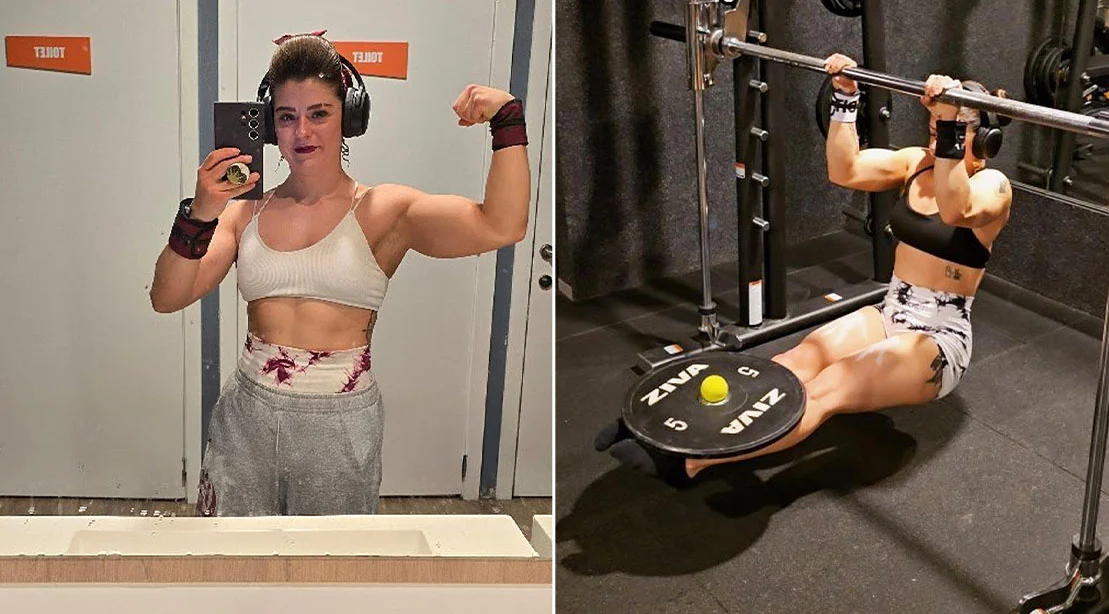
In the rapidly evolving world of social media fitness, where high-intensity interval training (HIIT) and complex calisthenics routines often dominate the algorithm, a new, uniquely punishing movement has emerged. Known as the "Diabolical Hanging Leg Raise Challenge," this exercise is less about brute force and more about the agonizing marriage of stability, coordination, and raw core strength. Popularized by professional pole dancer and fitness influencer Laura Verberne, the move has captured the attention of athletes and gym-goers alike, setting a new benchmark for what it means to possess a functional, iron-clad core.
Main Facts: Deconstructing the "Diabolical" Challenge
The challenge itself is a masterclass in motor control. By combining the classic hanging leg raise—a staple for abdominal hypertrophy—with a precision-based balance task, Verberne has essentially gamified one of the most difficult exercises in the gym.
At its core, the movement requires the practitioner to hang from a pull-up bar while holding a weight plate flat against their shins. A tennis ball is placed on the surface of the plate, and the participant must perform a series of hanging leg raises, maneuvering their hips and legs with surgical precision to roll the tennis ball into the center hole of the weight plate without letting it drop.
The "diabolical" moniker is well-earned. Unlike standard leg raises, which allow for a rhythmic, momentum-based tempo, this variation mandates absolute stillness and deliberate movement. If the hips rotate too quickly or the core loses its tension for even a millisecond, the ball rolls off, forcing the athlete to reset. It is a grueling test of patience and muscular endurance that challenges the body to remain suspended while performing delicate mechanical adjustments.
A Chronological Rise to Viral Stardom
The ascent of the "Diabolical Hanging Leg Raise" was not an overnight occurrence but rather a reflection of the modern fitness community’s appetite for "impossible" athletic feats.
- The Origin: While Verberne popularized the movement for her 100,000+ Instagram followers, the creative spark is credited to fellow Instagram fitness personality Emanuela.
- The Execution: Verberne, known for her background in professional pole dancing and high-level calisthenics, documented her own struggle with the move. Unlike many fitness influencers who present a curated, "first-try" success story, Verberne opted for transparency, posting her bloopers alongside the eventual success.
- The Viral Peak: Within days of posting, the video gained significant traction. The juxtaposition of a highly aesthetic, controlled movement and the inherent clumsiness of a rolling tennis ball created a perfect hook for viewers.
- The Community Response: The challenge quickly transitioned from a niche calisthenics exercise to a community-wide test, with fans and fellow athletes tagging each other to see who could replicate the feat.
The Anatomy of the Challenge: Supporting Data
While the visual spectacle is what draws the eye, the biomechanical reality is what keeps the fitness industry talking. This is not merely a "six-pack" exercise; it is a full-body engagement drill that demands total neuromuscular integration.
Core Recruitment
The primary muscles involved are the rectus abdominis, which must maintain a constant contraction to hold the legs in the elevated position, and the obliques, which are forced to fire intermittently to tilt the pelvis and direct the ball toward the center hole.
Stabilizing Musculature
The "hanging" aspect of the exercise recruits the latissimus dorsi, rhomboids, and lower traps to keep the shoulders stable. Meanwhile, the grip strength required to remain suspended while focusing on the lower body is significant. The forearms and hand flexors are under constant, isometric tension, which, when combined with the focus required for the balancing act, leads to rapid fatigue.
The Kinetic Chain
The quads play an understated but vital role here. By acting as the primary lever for the weight plate, the quadriceps must be kept rigid. If the legs shake due to fatigue, the ball will inevitably roll off. This creates a feedback loop: the harder the core works to stabilize the torso, the more the legs have to work to stay "stiff," leading to a full-body burn that lasts significantly longer than a standard 30-second set.
Official Perspectives and Expert Analysis
The reaction within the fitness community has been overwhelmingly positive, albeit marked by a healthy dose of intimidation. Professional coaches and athletes have weighed in on the efficacy of the move.
"What makes this exercise so brilliant is the feedback mechanism," says one sports performance consultant. "Usually, when people do leg raises, they stop when they feel the burn. Here, the athlete stops when the ball falls. It shifts the goal from a repetition count to a duration of focus. It’s an exercise in mindfulness as much as it is in muscular hypertrophy."
However, experts also warn of the risks. Because the exercise requires the lower back to be in a position of potential strain, those with existing spinal issues are advised to exercise extreme caution. The "hanging" position naturally decompresses the spine, which is beneficial, but the rapid, jerky movements required to save a rolling ball can put undue stress on the lumbar vertebrae if the core is not sufficiently engaged.
Implications: The Future of "Game-Based" Fitness
The popularity of the Diabolical Hanging Leg Raise hints at a broader trend in the fitness industry: the move away from mindless repetition toward "skill-based" training.
1. Gamification as Motivation
Traditional strength training can be monotonous. By adding a balance component—the "Ball in a Maze" concept applied to the human body—athletes are finding new ways to stay engaged. The psychological reward of successfully landing the ball is a powerful motivator that keeps people in the gym longer than a simple set of crunches would.
2. Functional Coordination
The era of training muscles in isolation is slowly being eclipsed by training movement patterns. This challenge emphasizes the importance of the kinetic chain—the ability to move one part of the body (the hips) while keeping the rest of the body (the shoulders and arms) perfectly still. This is a skill directly transferable to complex athletic movements in sports like gymnastics, rock climbing, and martial arts.
3. The Transparency of Failure
Verberne’s decision to include her bloopers has humanized the "fitfluencer" archetype. By showing the repeated failures required to master the move, she has set a tone for the community that emphasizes growth and persistence over perfection. This shift is vital in an industry often criticized for promoting unrealistic standards.
How to Approach the Challenge Safely
If you are looking to attempt the Diabolical Hanging Leg Raise, experts suggest a progressive approach:
- Master the Hanging Leg Raise: Before adding the plate, ensure you can perform 15–20 strict hanging leg raises without swinging.
- The Static Hold: Practice holding a weight plate on your shins while sitting on the floor to get used to the balance required.
- The Transition: Once on the bar, start with a smaller, lighter plate. A 5lb or 10lb plate provides a flatter surface and is easier to control than a larger, thicker bumper plate.
- Prioritize Form over Duration: Do not worry about the time spent under tension in the beginning. Focus on the control of the ball. If you can only keep it on the plate for five seconds, that is a success.
Conclusion
The "Diabolical Hanging Leg Raise Challenge" is more than just a viral trend; it is a testament to the creativity of modern athletes. By blending the rigor of calisthenics with the focus of a balance game, Laura Verberne and her contemporaries have created a benchmark that tests not just the strength of the abs, but the strength of the mind.
As we look toward the future of fitness, it is likely that we will see more of these "skill-based" challenges emerge. They satisfy our innate desire to conquer difficult tasks while simultaneously building the kind of functional, high-performance bodies that define the current generation of athletes. Whether you are a professional pole dancer or a weekend gym warrior, the challenge is clear: get to the bar, find your focus, and see if you have the core strength to keep the ball from falling.