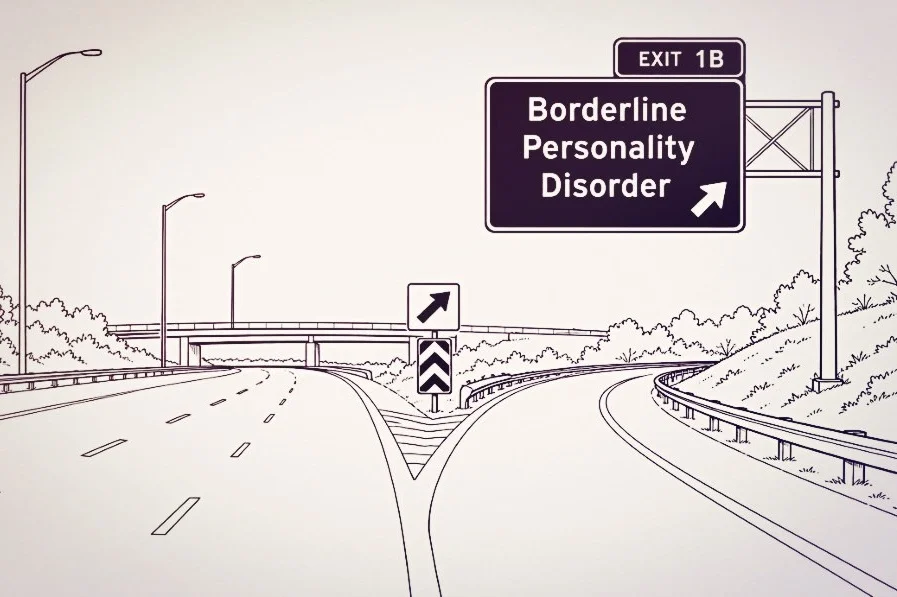
In the contemporary landscape of psychiatric care, the path to recovery is often presented as a linear progression from diagnosis to treatment. However, for many survivors of complex trauma, this path is fraught with systemic pitfalls, bureaucratic "off-ramps," and the weaponization of clinical labels. A recent and harrowing account from a trauma survivor highlights a disturbing trend within the mental health infrastructure: the use of diagnostic shifting to discharge "difficult" patients and the systemic failure to distinguish between Complex Post-Traumatic Stress Disorder (CPTSD) and various neurodevelopmental or personality disorders.
This report examines the case of a survivor who, after seeking help for assault-related trauma, was subjected to a series of contradictory diagnoses that ultimately served to deny them care rather than facilitate healing.
Chronology of a Systemic Failure
The patient’s descent into the "cracks of the system" began following a violent assault. Initially, the clinical response appeared appropriate; the patient was referred for trauma intervention and diagnosed with CPTSD. For the first time, the patient reported significant progress, utilizing trauma therapy to map triggers and understand the physiological manifestations of their experiences.
The ADHD Diversion
Halfway through this successful intervention, the trajectory of care was abruptly altered. The treating psychologist posited that the patient might have Attention-Deficit/Hyperactivity Disorder (ADHD). Following a brief assessment, the psychologist terminated the trauma therapy entirely.
The rationale provided was a promise of a "magic pill"—the suggestion that ADHD medication would resolve the underlying trauma symptoms. Crucially, this transition occurred without a step-down plan or support system. The patient was left in a state of clinical abandonment for over a year, waiting for a psychiatric consultation while their CPTSD symptoms—unmanaged and aggravated by the sudden loss of therapeutic support—reached a state of crisis.
The Autism Pivot and the "Clinical Guess"
When the patient finally saw a second psychiatrist a year later, the ADHD diagnosis was dismissed. Instead, the clinician suggested the patient might be autistic. When the patient requested to resume the trauma therapy that had previously been effective, the request was denied on bureaucratic grounds: the clinic maintained a strict one-year limit on trauma therapy, regardless of the patient’s clinical state or the fact that their previous treatment had been prematurely interrupted by the provider.
The Weaponization of EUPD
In a final, contentious interaction, the consultant psychiatrist—without a formal assessment—issued a "clinical diagnosis" of Emotionally Unstable Personality Disorder (EUPD), known in the DSM as Borderline Personality Disorder (BPD). This diagnosis was delivered "out of the blue" as the patient advocated for the reinstatement of their original care plan. The patient describes this moment not as a medical breakthrough, but as a tactical maneuver to silence their complaints and justify their discharge from the service.
Supporting Data: The Science of Overlap and Bias
The patient’s experience is not an isolated incident of "bad luck" but reflects a broader clinical challenge regarding diagnostic overlap and provider bias.
The Challenge of Differential Diagnosis
The symptoms reported by the patient—hypervigilance, emotional dysregulation, fear of abandonment, and difficulty concentrating—are "textbook hallmarks" of CPTSD. However, as noted in a 2024 study by Sarr et al., these symptoms share nearly identical profiles with autism and EUPD. Without deep, longitudinal assessment, it is nearly impossible for a clinician to distinguish between them accurately.
The ICD-11 identifies "Disturbances in Self-Organization" (DSO) as the hallmark of CPTSD. These include:
- Affective Dysregulation: Difficulty managing intense emotions.
- Negative Self-Concept: Feelings of worthlessness or shame.
- Interpersonal Disturbances: Difficulty maintaining relationships.
These criteria mirror the executive dysfunction of ADHD and the sensory/social difficulties of autism so closely that a rushed clinician may default to a label that is easier for the system to process.
The Impact of Clinician Bias
Research suggests that once a patient is labeled with a personality disorder like BPD/EUPD, the quality of care they receive often plummets. A study by Lam et al. (2015) found that clinicians tend to rate a patient’s prognosis more negatively once the BPD label is applied, even when the symptoms are identical to those of a patient without the label.
Further research by Baker & Beazley (2022) and Black et al. (2011) indicates that clinicians in high-income health systems often hold negative attitudes toward patients with BPD, frequently describing them as "difficult" or "treatment-resistant." In the case of the survivor, the EUPD label functioned as a "wastebasket diagnosis," effectively reclassifying a vulnerable trauma victim as a "difficult patient" who could be legitimately discharged.
Official Responses and Systemic Context
While the specific clinic in this case has not issued a public statement, the survivor’s experience aligns with known systemic pressures within public health frameworks.
The Bureaucratic "Off-Ramp"
In many public health systems, diagnoses are used as tools for resource management. For instance, an autism diagnosis in an adult can sometimes be used to transition a patient out of general psychiatric services. Because many public systems claim to lack specific resources for adult neurodevelopmental support, the label can be used to push patients toward the private sector, effectively "cleaning the books" of the public system.
Breach of Standard Care
The lack of a transition plan or "step-down" care described by the patient represents a significant departure from standard clinical guidelines. Most psychiatric associations mandate that any termination of therapy—especially for high-risk trauma patients—must be handled with extreme care to avoid "iatrogenic harm" (harm caused by the treatment or the provider). The summary discharge of a patient experiencing flashbacks and hypervigilance is widely considered a failure of the "Duty of Care."
The Power Dynamic
The patient’s attempt to seek a second opinion was blocked by the clinic head, highlighting a significant power imbalance. In many psychiatric settings, there is a "closed-loop" of accountability where the person issuing the diagnosis is also the person who handles the complaints. This creates a barrier where the patient’s voice is marginalized, particularly when they have been labeled with a disorder characterized by "emotional instability."
Implications: The Cost of Institutional Gaslighting
The implications of this case extend far beyond a single misdiagnosis. They point to a systemic issue of "institutional gaslighting," where a patient’s valid reactions to poor care are reframed as symptoms of a personality defect.
The Stigma of the Label
The BPD/EUPD label carries a heavy social and professional burden. Once applied, it can follow a patient into their workplace and social circles. If disclosed to an employer, the individual is often viewed as a liability. For the survivor, this was the ultimate betrayal: the very system they turned to for protection after an assault ended up providing a label that could be used by others to cause further harm.
The Erosion of Trust
The most profound implication is the total erosion of trust between the patient and the medical community. The survivor reports leaving the clinic with more trauma than they started with, describing a "deep sadness" and "shattered trust." When a system meant to heal becomes a source of secondary victimization, the patient is left in a state of double-bind: they need help to recover from the trauma, but the help itself has become traumatic.
A Call for Accountability
The survivor has filed a formal complaint, arguing that no patient should be labeled with a personality disorder without a rigorous, formal assessment. There is a growing movement within the mental health community to move away from stigmatizing labels and toward "trauma-informed care," which asks "What happened to you?" rather than "What is wrong with you?"
Conclusion
The case of this trauma survivor serves as a stark warning about the current state of mental health services. When clinical diagnoses are used as bureaucratic tools to manage caseloads and discharge "difficult" patients, the system fails its most fundamental mission. To prevent such failures, there must be:
- Mandatory formal assessments before any personality disorder diagnosis is applied.
- Clear clinical pathways that acknowledge the overlap between CPTSD and neurodivergence.
- Independent oversight for patient complaints to ensure that "clinical diagnoses" are not used as weapons of silence.
Until these changes are implemented, the most vulnerable patients will continue to fall through the cracks, not because their conditions are untreatable, but because the system found it more convenient to label them than to listen to them.