










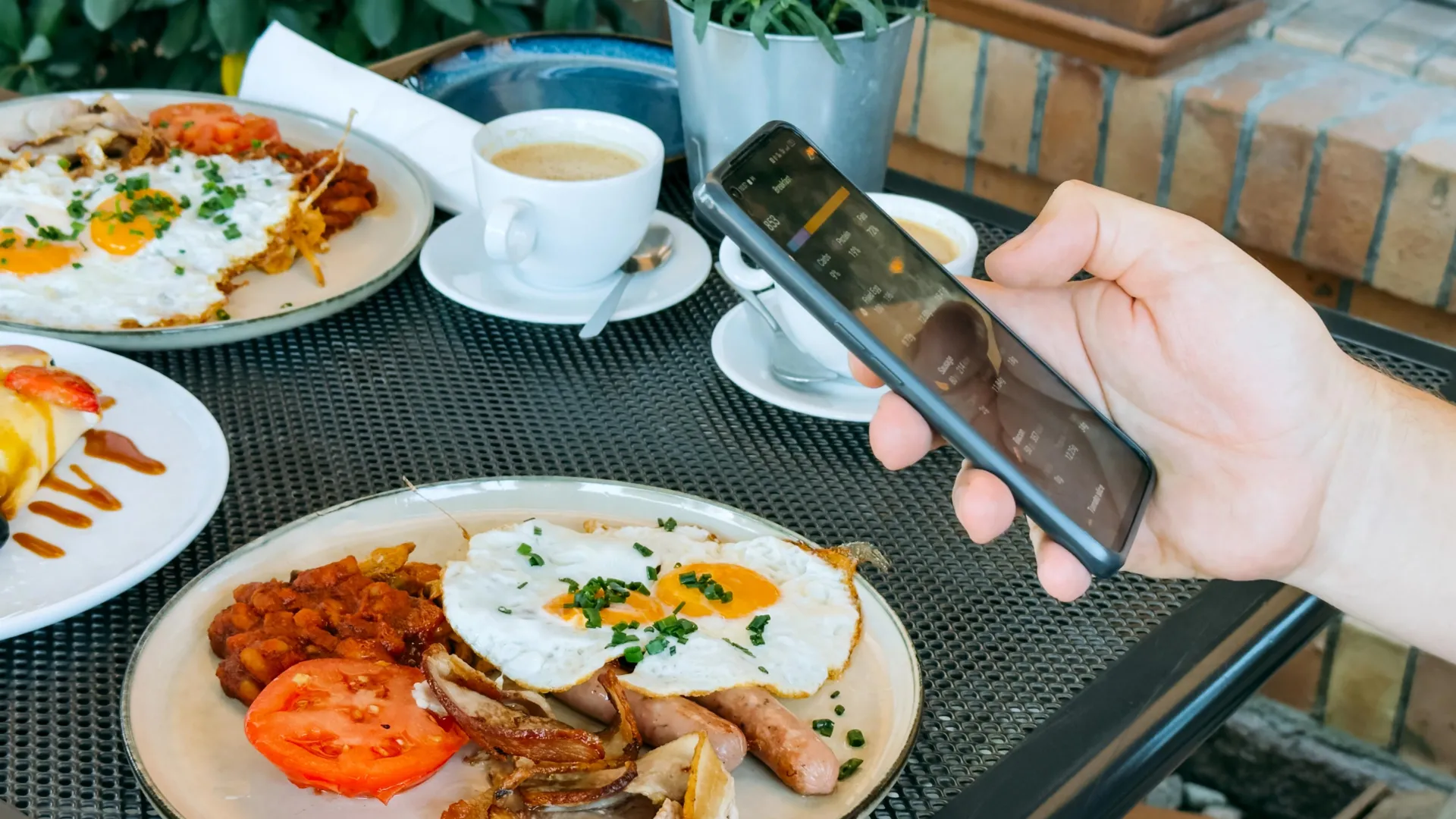
The promise of modern weight management technology has long been anchored in the convenience of automation. For millions of health-conscious individuals, the manual drudgery of tracking every gram of food in a journal or spreadsheet has been replaced by the seamless “snap-and-go” functionality of AI-powered calorie tracking apps. By simply taking a photograph of a meal, users are promised an instant nutritional breakdown. However, a groundbreaking study presented at NUTRITION 2026 suggests that this digital convenience may come at a significant cost to accuracy, potentially sabotaging the health goals of those who rely on these tools.
New research from the National Institute of Diabetes and Digestive and Kidney Diseases (NIDDK), part of the National Institutes of Health (NIH), indicates that photo-based calorie tracking applications consistently underestimate caloric and fat content, often by a wide margin. As users increasingly turn to artificial intelligence to navigate complex dietary landscapes, this study serves as a critical reality check for both consumers and developers.
The Mechanics of AI-Driven Nutrition
Photo-based calorie tracking represents a sophisticated intersection of computer vision and nutritional informatics. These platforms utilize AI image recognition algorithms to identify the specific food items present in an image, estimate the physical volume and portion size, and then cross-reference those findings against massive, proprietary nutrition databases to generate a caloric profile.
For the average consumer, the allure is clear. "Photo-based calorie tracking apps are very popular, especially for people trying to manage their health or lose weight," notes Aaron Hengist, a postdoctoral visiting fellow with the NIDDK. The technology removes the friction of portion estimation, a task that human beings—even nutrition professionals—frequently perform with varying degrees of success. Yet, the reliability of these “black box” algorithms has remained largely unscrutinized until now.
Chronology of a Controlled Investigation
The impetus for this research arose from the need for a rigorous, gold-standard evaluation of consumer-grade nutrition tools. The study was conducted as a sub-project of a broader, long-term clinical trial at the NIH Clinical Center, which is currently investigating the physiological responses to ketogenic (low-carbohydrate) versus standard diets.
Phase One: The Gold Standard Benchmark
To ensure the highest level of accuracy, researchers did not rely on self-reported data or estimated restaurant portions. Instead, they utilized meals prepared in a tightly controlled metabolic kitchen. In this environment, ingredients were measured to the nearest 0.1 gram, providing a precise nutritional baseline against which the AI estimates could be measured.
Between July 25 and July 28, 2026, at the NUTRITION 2026 conference in National Harbor, Maryland, the findings were unveiled. Olivia Charles, a postbaccalaureate intramural research training fellow at NIDDK, presented the data, which analyzed 102 standardized meal photographs submitted to four prominent apps: MyFitnessPal, LoseIt!, CalAI, and Appediet.
Phase Two: Expansion and Nuance
Following the initial findings, the research team expanded their scope. They analyzed more than 200 additional meals to determine if specific dietary patterns—such as the high-fat composition of keto meals—posed unique challenges to AI image recognition software. This secondary phase provided the granular data needed to understand why the apps were failing, rather than simply confirming that they were failing.
Supporting Data: The Magnitude of the Error
The results of the NIDDK study were sobering. Across the four tested platforms, the applications underestimated caloric totals by an average of 250 to 345 calories per meal. Furthermore, fat content was consistently underestimated by approximately 30 grams per meal.
Dissecting the Discrepancies
The data revealed several patterns that warrant attention:
- The "Keto Gap": The researchers found that the algorithms struggled significantly more with low-carbohydrate, high-fat diets. Because these meals often rely on fats that are visually dense but physically compact, the AI models frequently failed to quantify the energy density of the food correctly.
- Variable Accuracy: While some apps performed better with higher-calorie meals, the consistency of the results remained low across the board.
- Macronutrient Variance: Interestingly, the apps demonstrated higher consistency in estimating carbohydrates compared to fats and proteins. This suggests that the visual markers for carbohydrates (such as breads or grains) are more easily recognized by current machine learning models than the subtle visual indicators of high-fat sources like oils, dressings, or marbling in proteins.
Official Responses and Expert Perspective
The scientific community has reacted to these findings with a mix of surprise and cautionary validation. By utilizing a "metabolic kitchen" control group, the NIH team created a dataset that is arguably the most accurate in the history of app-based nutrition research.
"By using meals prepared in a tightly controlled metabolic kitchen, we were able to compare the apps’ estimates against a precise reference," Hengist explained during the conference. "This kind of direct, high-quality comparison hasn’t been available before."
The researchers emphasize that these results, while compelling, are considered preliminary. Because they were presented at a major scientific conference, the work is still undergoing the final stages of the formal peer-review process required for publication in high-impact medical journals. However, the rigor of the methodology suggests that the findings are robust enough to demand immediate attention from both the public and the developers of these applications.
Implications for Public Health and Future Technology
The implications of this study are far-reaching. In an era where digital health tools are prescribed as part of treatment plans for obesity, diabetes, and metabolic syndrome, the accuracy of these tools is not merely a convenience issue—it is a clinical concern.
The Dangers of the "Blind Spot"
If a user is attempting to maintain a specific caloric deficit to achieve weight loss, an underestimation of 300 calories per meal could result in an error of nearly 900 calories per day. Over the course of a week, such an error could be the difference between steady weight loss and unexpected weight gain or plateauing. The "invisible" calories found in fats, in particular, appear to be a major blind spot for current AI technology.
Recommendations for Users
The researchers stop short of suggesting that users abandon their apps. Instead, they advocate for a more informed, hybrid approach to nutrition tracking.
- Supplement, Don’t Replace: Use photo-based tools as a general guide, but rely on manual entry for high-fat ingredients or complex, home-cooked meals where portion sizes are known.
- Adjust and Verify: "People using a photo-based tracking app without adjusting the portions or entering the amounts of food should take the results with a grain of salt," advises Hengist. Manual verification of portion sizes remains the most reliable method for accurate intake tracking.
- Awareness of Limitations: Users on specialized diets, such as the ketogenic diet, should be particularly cautious. Given the AI’s tendency to struggle with high-fat items, these users should anticipate that their actual intake is likely higher than what their app dashboard displays.
The Path Forward for Developers
The study serves as a roadmap for the next generation of nutrition technology. To improve, developers must shift focus toward training models on datasets that include high-fat, high-density meals. Furthermore, the integration of "manual override" features that allow users to easily correct portion sizes after the AI makes its initial estimate could bridge the current accuracy gap.
Ultimately, while the promise of AI-driven nutrition is bright, this research confirms that technology is currently a tool for estimation, not a replacement for nutritional literacy. As we move toward a future where our devices monitor our health in real-time, the "human in the loop" remains an essential component for accuracy, safety, and long-term health success. The "digital diet" may be convenient, but for now, it requires a significant dose of human oversight to be truly effective.