







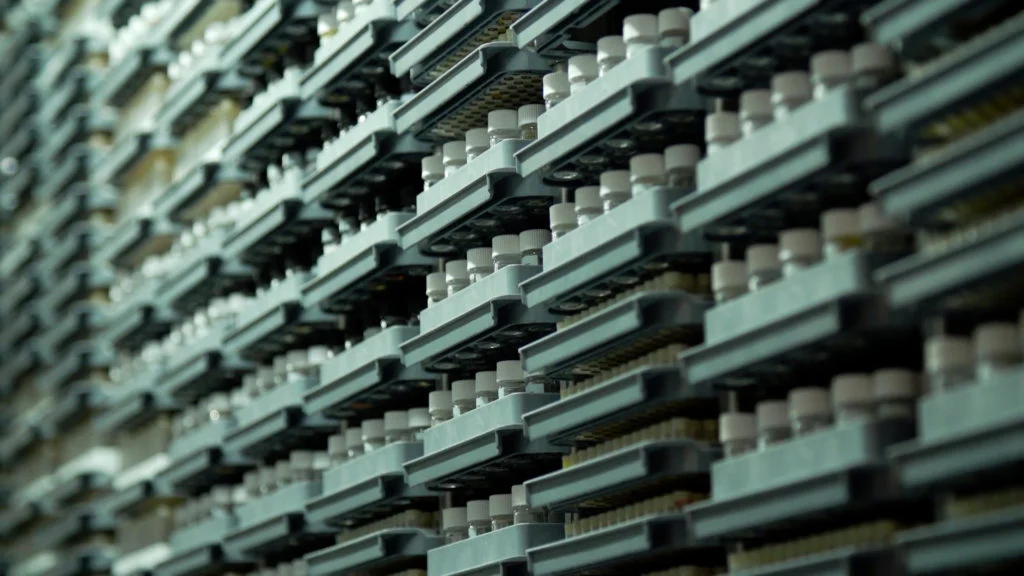
In the quiet, climate-controlled laboratories of the Broad Institute of MIT and Harvard, a high-stakes "biological arms race" is unfolding. It is a battle that defines the current trajectory of modern medicine, pitting the collective ingenuity of human scientists against the relentless, adaptive evolution of pathogenic bacteria. As drug-resistant infections claim more than a million lives annually across the globe, the traditional methods of drug discovery—often described as searching for a needle in an impossibly large and expensive haystack—have proven insufficient. Now, a technological paradigm shift is underway: Artificial Intelligence (AI) is being deployed to scan, simulate, and design the next generation of life-saving antibiotics.
The Paradox of Modern Medicine: Why Antibiotics Are Failing
The crisis of antimicrobial resistance (AMR) is a victim of its own success. Since the mid-20th century, antibiotics have transformed medicine, turning once-lethal infections into minor inconveniences and making complex surgeries, chemotherapy, and organ transplants routine procedures. However, this clinical triumph masks a "fatal paradox," as Dr. Melis Anahtar, a clinical microbiologist at Massachusetts General Hospital, explains.
"The more we deploy this lifesaving medicine, the less effective they are in the long term," Dr. Anahtar notes. Unlike other classes of drugs, the success of an antibiotic is inherently self-defeating. By introducing these compounds into the environment, we exert selective pressure on bacterial populations. In any given infection, there are millions of bacteria; while most are vulnerable, a small fraction may harbor random mutations that grant them survival advantages. When the antibiotic is administered, the vulnerable bacteria perish, leaving the resistant survivors to multiply and spread.
This evolutionary process is not a static threat; it is a "never-ending war." Bacteria are biological machines that do not quit, and their ability to develop resistance in real-time has led to the emergence of multidrug-resistant (MDR), extensively drug-resistant (XDR), and pan-resistant strains that defy our current pharmacopeia.
A Chronology of Discovery: From Frozen Libraries to Neural Networks
Historically, the search for new antibiotics was a laborious, hit-or-miss endeavor. Researchers would delve into "deep-frozen libraries" of stored chemical compounds, manually applying them one by one to a pathogen in a petri dish to observe whether the compound could stunt bacterial growth or kill it outright.
The Old Guard: Labor-Intensive Discovery
The traditional approach was inefficient, with promising molecules identified in less than 1 percent of all screenings. Biomedical engineer Jim Collins, who leads a pioneering lab at the Broad Institute, characterizes this traditional methodology as an inefficient drain on resources. Scientists were limited by their own intuition and the physical constraints of testing every compound in a wet lab.
The AI Revolution
The entry of Artificial Intelligence into this field has effectively "changed the game." Collins and his team have moved beyond manual screening by training deep neural networks to understand the structural properties of molecules. By feeding the AI thousands of known compounds, the model learned to map "ball-and-stick" chemical structures to their biological efficacy.
The system was first put to the test against a library of 6,000 compounds. The AI was tasked with identifying molecules that were effective, non-toxic to human cells, and entirely novel. The result was "halicin," a potent antibiotic that kills resistant bacteria through a previously unknown mechanism.
Following this breakthrough, the research shifted from finding existing molecules to designing new ones. Researchers deployed AI to virtually screen 70 billion theoretical molecules—a feat of computational power that effectively turns drug discovery into a high-speed "molecular dating app." Where a human chemist might intuitively swipe through chemical structures based on experience, the AI offers the scale and persistence to screen millions of fragments in a fraction of the time, identifying the most promising candidates for synthesis and testing.
Supporting Data: The Scale of the Threat
The urgency of this research is underscored by sobering statistics. The World Health Organization and leading medical researchers agree that if current trends continue, the death toll from drug-resistant infections is projected to increase by 50 percent by the year 2050.
Current efforts are focused on the most persistent pathogens, such as Neisseria gonorrhoeae. This bacterium has proven particularly adept at outsmarting medicine, with its resistance profile shifting every five years. The current gold-standard treatment, Ceftriaxone, is rapidly nearing the end of its clinical efficacy.
In a recent experiment, researchers used AI to screen 45 million chemical fragments, narrowing them down to seven million candidates. Rigorous filtering and laboratory testing—using color-coded indicators to track bacterial growth—resulted in the discovery of a novel compound that successfully inhibits gonorrhea without damaging human tissue. This success demonstrates that AI is not just identifying existing drugs; it is creating entirely new chemical structures from scratch.
Official Responses and Expert Perspective
The scientific community recognizes AI as a crucial tool for recharging a dried-up pipeline. Jim Collins emphasizes that while resistance was previously outstripping the pace of pharmaceutical research and development, the infusion of machine learning has provided researchers with a massive, unfair advantage. "We now have tools that have dramatically expanded our ability to both discover and design new antibiotics," Collins states.
However, experts remain cautious about the limitations of this approach. While AI accelerates the discovery phase, it does not bypass the necessity of clinical trials. The safety and efficacy of these AI-discovered compounds must still be rigorously proven in human trials, which remain as time-consuming and expensive as ever. Furthermore, there remains a systemic economic issue: the "Big Pharma" model is currently ill-equipped to incentivize the production of new antibiotics, which are often used sparingly and therefore do not generate the high, consistent profits of drugs for chronic illnesses.
Implications for the Future of Medicine
The integration of AI into pharmacology marks a turning point in the history of medicine. By effectively "learning" the language of molecular biology, artificial intelligence has provided a mechanism to keep pace with the hyper-evolution of bacteria.
The Path Forward
- Accelerated Discovery: The ability to simulate billions of molecular interactions allows scientists to bypass years of initial laboratory failure.
- Novel Mechanisms: AI can identify compounds that work in ways that human researchers might never have hypothesized, potentially bypassing established resistance mechanisms.
- Economic and Policy Challenges: While the scientific hurdle is being lowered, the policy hurdle remains. Governments and private entities must find ways to incentivize the manufacturing of these new antibiotics once they are discovered.
The work being done at the Broad Institute is a testament to the fact that while the "war" against bacteria is indeed never-ending, the weapons of the future will be far more precise and powerful than those of the past. By combining the vast, tireless analytical power of neural networks with the precision of clinical microbiology, humanity may finally be gaining the upper hand in the fight to preserve the efficacy of modern medicine. As we look toward 2050, AI stands not as a replacement for human intellect, but as a critical, high-speed engine for a new era of biological discovery.