





For most Americans, the hum of the refrigerator, the glow of a bedside lamp, and the seamless operation of medical devices are background constants—invisible pillars of modern life. Yet, a growing chorus of energy experts and investigative analysts are raising a harrowing alarm: the stability of the American power grid is not merely declining; it is being systematically dismantled.
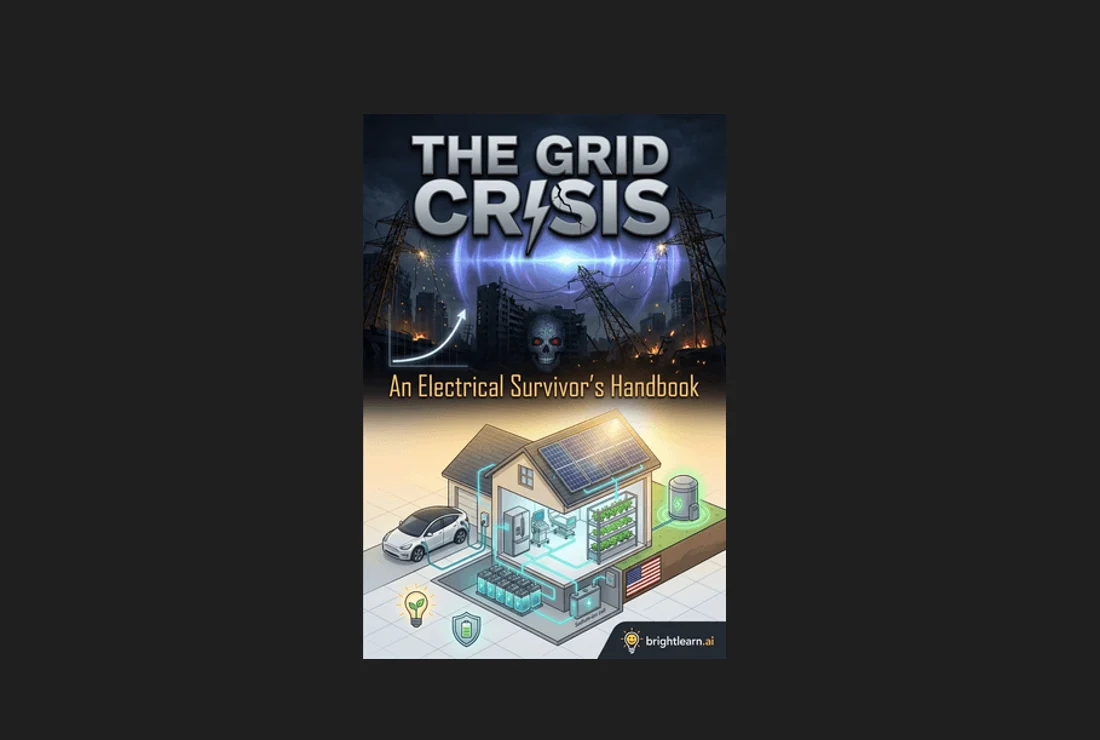
A new, comprehensive exposé, The Grid Crisis: An Electrical Survivor’s Handbook, suggests that the precarious state of our electrical infrastructure is not the result of mere aging or bad luck. Instead, the book posits that the vulnerability of our energy backbone is the predictable outcome of deliberate, decades-long policy choices that have prioritized political agendas over grid reliability.
The Engineered Collapse: A Chronology of Decline
To understand how a nation with the world’s most advanced economy reached the brink of a systemic blackout, one must look at the historical trajectory of energy policy. The decline did not happen overnight; it was a slow-motion erosion of capacity.
The 1970s: The Regulatory Shift
The seeds of current grid instability were sown in the 1970s. During this era, significant regulatory shifts began to sever the direct link between utility investment and consumer return. By altering the incentive structures for energy providers, the government initiated a period where long-term infrastructure maintenance began to lose out to short-term cost-cutting and shifting regulatory mandates.
The War on Baseload Power
The most significant accelerant in the grid’s decay has been the aggressive, climate-driven campaign against reliable baseload power. Since 2010, the U.S. has seen the retirement of over 100 gigawatts of coal-fired generation. In electrical engineering terms, this is an unprecedented loss of "always-on" power. As coal, natural gas, and nuclear facilities were shuttered, they were replaced—often ineffectively—by intermittent renewable sources that lack the inherent physical inertia required to stabilize the grid’s frequency.
The "De-Growth" Agenda
Critics argue that the current trajectory is not a technical failure, but a political one. The Grid Crisis asserts that regulatory bodies—including the EPA and the DOE—have been captured by interests that view the industrialization of the American economy as an environmental liability. By weaponizing carbon dioxide policies, these agencies have effectively forced a "de-growth" strategy, intentionally constricting energy supply to meet ideological targets rather than consumer demand.
Supporting Data: The Anatomy of a Systemic Weakness
The numbers behind the grid crisis are not just staggering; they are mathematically unsustainable. The gap between aging infrastructure and the rising demand of an electrified economy is widening at a dangerous pace.
- The Aging Infrastructure: Approximately 70% of the nation’s large power transformers are now over 25 years old. These components were designed for a specific service life that many have already exceeded.
- The Manufacturing Bottleneck: Replacing a single large-scale power transformer is no longer a matter of weeks. Due to a hollowed-out domestic manufacturing base, lead times for new units now stretch between 18 to 24 months. If a coordinated event were to take out a significant number of these units simultaneously, the grid would be effectively paralyzed for years.
- The Reliability Gap: The retirement of 100 gigawatts of coal capacity has not been met with a 1:1 replacement of dispatchable, reliable energy. This creates a "reliability gap" where the grid is increasingly susceptible to weather fluctuations—a reality highlighted by the rolling blackouts seen in states like Texas and California in recent years.
Hidden Vulnerabilities: Beyond Capacity
While politicians focus on "green energy transition" metrics, the physical reality of the grid remains exposed to existential threats that are often ignored in public discourse.
The EMP Threat
Perhaps the most terrifying scenario is the potential for an electromagnetic pulse (EMP) attack. A 2004 Congressional EMP Commission report remains the gold standard for this discussion: a single nuclear weapon detonated 250 miles above the American heartland could, through the induction of massive electrical surges, destroy the electronics of the national grid. The commission projected that such an event could lead to the loss of 90% of the population within one year, not due to the initial blast, but due to the total collapse of food, water, and supply chain logistics.
Physical and Cyber Sabotage
The grid is not just vulnerable to high-tech warfare; it is exposed to low-tech, high-impact domestic terrorism. The 2022 Moore County, North Carolina, incident serves as a blueprint for vulnerability. Armed attackers disabled multiple substations with gunfire, leaving 45,000 customers in the dark for days. Despite the FBI identifying a rising trend in such attacks, the majority of the nation’s thousands of substations remain protected by little more than chain-link fencing and padlocks.
Official Responses and the "Official Narrative"
The mainstream media and federal agencies often frame grid instability as a "natural disaster" issue or a "transition challenge" related to renewable integration. Official responses frequently emphasize that the transition is necessary for long-term climate goals and that the grid will eventually stabilize once battery technology and smart-grid integration reach maturity.
However, The Grid Crisis argues that this "official narrative" is a form of gaslighting. By focusing the public on climate graphs and emissions targets, regulators have successfully diverted attention away from the systematic dismantling of the energy security that once made America the industrial powerhouse of the world. The book challenges readers to look past the talking points and observe the physical degradation of the systems they rely on every day.
Implications: The Case for Individual Autonomy
If the grid is being intentionally engineered toward a state of fragility, what is the rational response for the average citizen? The book concludes that the only path forward is a shift from dependency to autonomy.
Energy Independence as Political Freedom
The core thesis of the book is that energy independence is not just a lifestyle choice—it is a form of political freedom. "The entity that controls your power controls your life," the authors note. When a household or a community relies entirely on a centralized, failing grid, they are beholden to the policy decisions of bureaucrats and the vulnerabilities of a centralized, aging system.
Practical Steps Toward Self-Reliance
The latter half of the handbook moves from theory to practice, providing a roadmap for homeowners to reclaim their energy security:
- System Design: Guidance on sizing solar arrays and battery banks to sustain critical loads during extended outages.
- Infrastructure: Technical advice on installing transfer switches and building local, community-based microgrids.
- Mindset: A transition from viewing power as a "right" provided by the state to viewing it as a utility that must be secured through personal investment and planning.
Conclusion: Preparing for the Dark
The narrative that our lights will always turn on when we flip the switch is a luxury of a bygone era. As the infrastructure ages, as political agendas continue to prioritize ideological outcomes over baseload reliability, and as physical threats to the grid proliferate, the margin for error has effectively vanished.
The Grid Crisis is not intended to be a comfortable read. It is a call to action for those who recognize that the civilization we enjoy is supported by a thread that is being deliberately frayed. For the reader, the choice is clear: wait for the system to fail and hope for a rescue that may never come, or take the necessary steps toward personal and community energy independence today.
As the authors suggest, the grid crisis is a man-made catastrophe. Consequently, the power to survive it lies within our own hands. The lights are flickering; it is time to prepare for the dark.
To delve deeper into the technical and political realities of the energy sector, you can acquire a copy of "The Grid Crisis: An Electrical Survivor’s Handbook" via this link. For further resources on self-reliance and energy security, visit Books.BrightLearn.AI and BrightLearn.AI.
For additional expert analysis on the risk of rolling blackouts and the push for energy control, watch the conversation between Mike Adams and Clayton Morris on "Redacted" here.