






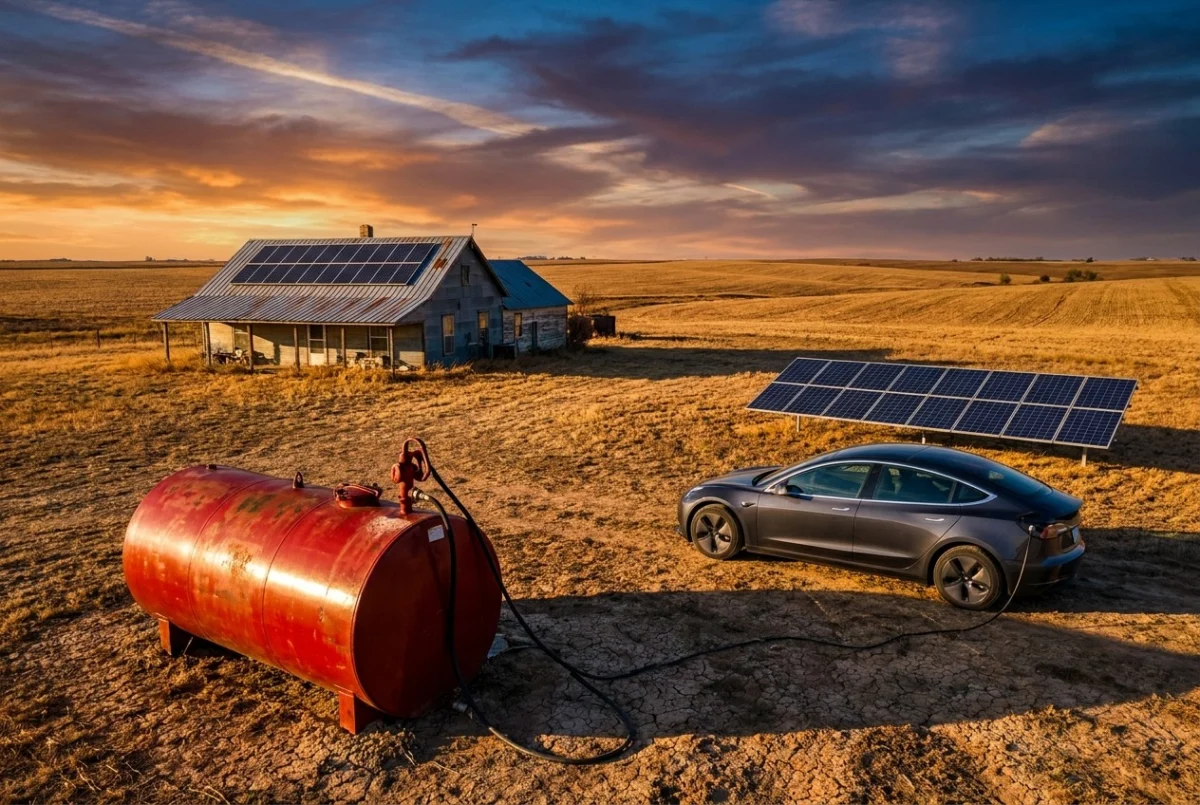
Living on a farm in rural Texas, the hum of an engine is more than just a mechanical sound; it is the heartbeat of survival. For years, I have operated under the assumption that the "just-in-time" global supply chain was a house of cards waiting for a stiff breeze. When diesel was inexpensive—back when red diesel could be secured for $2.50 a gallon—I treated my storage tanks as a retirement fund. Today, as the Texas landscape shifts under the weight of a historic diesel shortage and Governor Greg Abbott’s emergency declaration, that foresight has proven vital.
The current energy climate has placed many, including myself, in a paradoxical position: supporting the Governor’s emergency suspension of red-dye fuel regulations while simultaneously planning a permanent departure from the internal combustion engine. This transition is not born of a desire to appease environmental mandates, but from a cold, calculated necessity to achieve personal energy independence.
The Anatomy of a Diesel Emergency
The diesel market is currently facing an unprecedented convergence of supply chain failures, geopolitical instability, and a long-term erosion of refining capacity. With national prices hovering well above the $6.00-per-gallon mark, the economic shock to the agricultural and logistics sectors is severe.
Governor Abbott’s recent disaster declaration, which effectively suspends the penalties associated with using red-dyed off-road diesel in on-road vehicles, is a pragmatic move. The Texas Railroad Commission has correctly identified this as a "common-sense step" toward alleviating the immediate strangulation of the state’s supply chain. However, one must distinguish between an emergency measure and a sustainable energy policy. These proclamations are, in essence, Band-Aids applied to a systemic wound.
Chronology of the Crisis
The roots of this instability trace back years, not weeks. The current predicament is the result of a deliberate, long-term degradation of domestic refining infrastructure, compounded by recent geopolitical shocks.
- 2021: The Warning Shot: The Texas deep freeze served as a harrowing reminder of our vulnerability. During that catastrophe, the grid failed, pipes burst, and thousands were left in sub-zero temperatures. For those of us on the land, red diesel was the lifeblood of our heaters and generators. It was a lesson in the reality that self-reliance is not a hobby—it is a mandatory survival strategy.
- 2022–2023: Global Contraction: The Russian-Ukrainian conflict acted as a catalyst, further squeezing global refining capacity. This was exacerbated by ongoing instability in the Gulf, keeping the Strait of Hormuz—the world’s most critical maritime energy artery—in a state of constant, precarious tension.
- 2024–Present: The Strategic Reserve Depletion: With the Strategic Petroleum Reserve (SPR) hitting levels not seen since 1982, the federal government’s primary tool for buffering energy prices has been significantly blunted. The historic release of 172 million barrels, while intended to cool the market, did little to address the structural deficit in refining.
The Red-Dye Rule: A Tax Trap Exposed
To understand why the Governor’s order is so significant, one must understand the bureaucratic labyrinth of "red diesel." In the United States, diesel intended for off-road use (tractors, generators, irrigation pumps) is dyed red to distinguish it from taxable road diesel. The tax differential is significant, as the road tax is designed to fund infrastructure.
However, the enforcement of these rules is punitive. Being caught with red-dyed fuel in a road-going vehicle can trigger fines exceeding $20,000. In an agricultural setting, these rules often function as a tax trap rather than a public utility. During the 2021 freeze, many farmers used their agricultural fuel to keep their families and livestock warm. The law, in those moments, became an obstacle to survival.
Governor Abbott’s decision to waive these penalties acknowledges a fundamental truth: when the trucks stop, the economy stops. By allowing red-dyed fuel to enter the road market, the state has effectively expanded the supply of available energy for truckers, ranchers, and essential logistics providers. Yet, this temporary amnesty raises a glaring question: If the system is so fragile that a temporary suspension of law is required to keep the lights on, why does the punitive tax regime exist at all?
The Enforcement Paradox
There is a dark irony in the current enforcement landscape. The detection of red diesel relies on the staining of fuel filters; inspectors look for the telltale crimson hue. Following the Governor’s emergency order, thousands of trucks will essentially be "contaminated" with red-dyed fuel.
Once the emergency declaration expires, the logistical nightmare for the state will be immense. How can authorities reasonably prosecute a trucker who has been running legally on red diesel for weeks? The order has created a "plausible deniability" scenario that renders the existing tax enforcement mechanism effectively obsolete. This highlights the absurdity of a system that criminalizes citizens for utilizing the only available fuel during a crisis. We should be advocating for lower across-the-board fuel taxes, not a system that relies on the threat of massive fines to extract revenue from the very people keeping the supply chain moving.
The Pivot: Why I am Going Electric
Many assume that the move toward electric vehicles (EVs) is a sign of ideological compliance with the "climate change" narrative. For me, the motivation is the exact opposite. I do not subscribe to the belief that the current, government-led climate narrative is anything other than a tool to consolidate control over energy production. Carbon dioxide, after all, is the fundamental building block of life and essential for agriculture.
My decision to go electric is a strategic move to decouple my livelihood from the volatility of the global oil market.
The Strategy of Decentralization
The "just-in-time" model of energy delivery is failing. We have built a society that depends entirely on a fragile, centralized system of pipelines, refineries, and massive logistics networks. When that system faces a "zero-flow" event—such as a potential closure of the Strait of Hormuz—the consequences will be catastrophic.
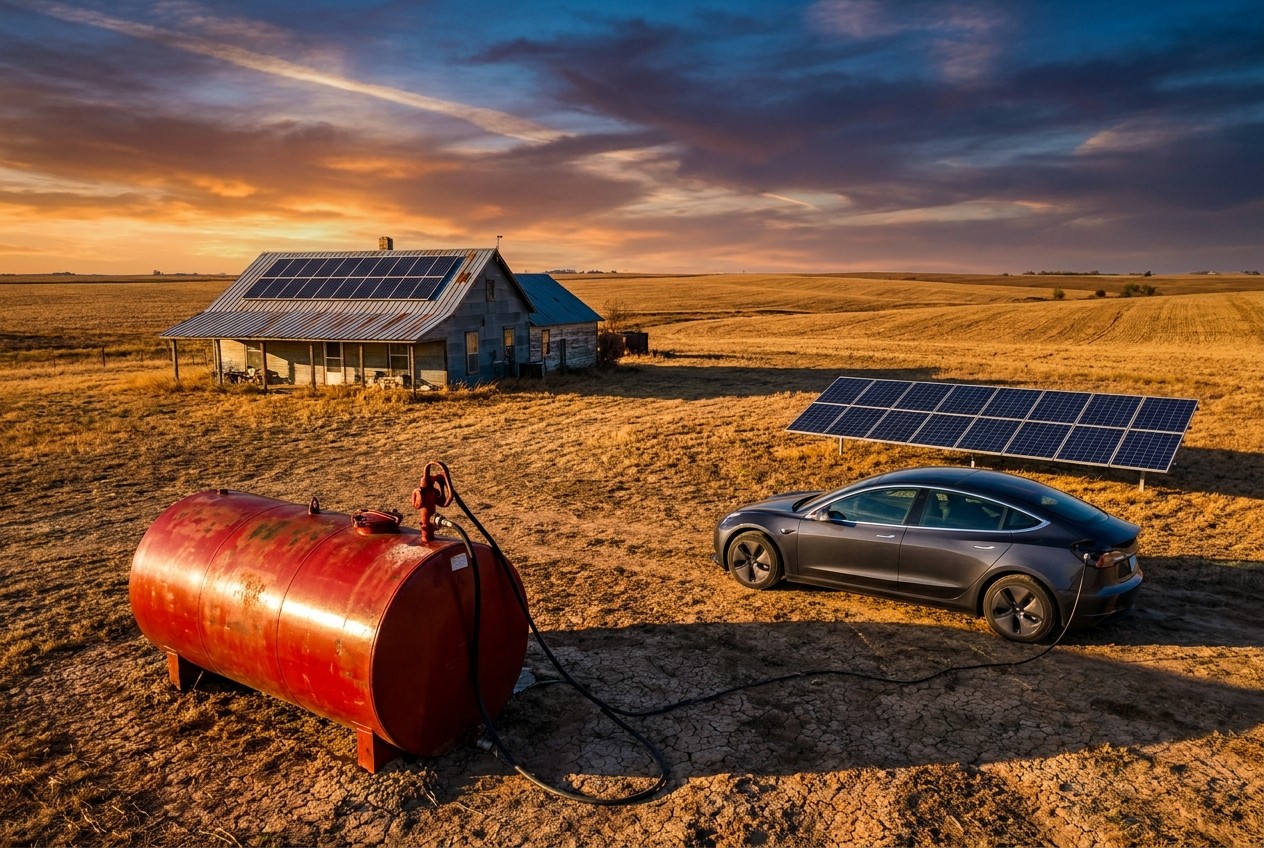
By transitioning to an electric vehicle, I am shifting my dependency from the gas pump to my own property. I am currently integrating an off-grid solar array capable of charging my vehicle. When the trucks stop rolling and the fuel stations run dry, my transport will still be functional. This is not about saving the planet; it is about saving myself and my family from the volatility that the government is clearly incapable of managing.
Conclusion: The Era of Self-Reliance
The diesel emergency in Texas is a preview of a broader, systemic collapse. While the Governor’s response was necessary to prevent a short-term breakdown of essential services, it does nothing to address the long-term reality: the centralized energy grid is no longer a reliable partner.
We are witnessing the end of an era where one could blindly trust the government or the global market to provide the necessities of life. The solution is not more regulation or more emergency mandates; it is the aggressive pursuit of personal energy independence. Whether through solar, wind, or localized storage, the only way to thrive in an era of scarcity is to stop being a consumer of a failing system and start being a producer of your own power.
The technology is ready. The batteries are available. The only thing standing between the average citizen and true energy autonomy is the lingering, dangerous delusion that the government will save us. Abandon that notion now. When the next crisis hits—and it will—you will find that the only fuel you can truly count on is the one you have secured for yourself.
For ongoing analysis of the shifting energy landscape and real-time reports on the collapse of our current systems, follow my work at NaturalNews.com and BrightVideos.com. For in-depth discussions with experts on decentralization, visit Decentralize.TV.