





Executive Summary: Bridging the Gap in CAR T-Cell Efficacy
At the Memorial Sloan Kettering Cancer Center (MSKCC), a pivotal shift is underway in the fight against Large B-cell lymphoma (LBCL). Dr. Sandeep Raj, a distinguished physician-scientist, is spearheading an ambitious research program aimed at solving one of modern oncology’s most persistent challenges: the high rate of recurrence following Chimeric Antigen Receptor (CAR) T-cell therapy.
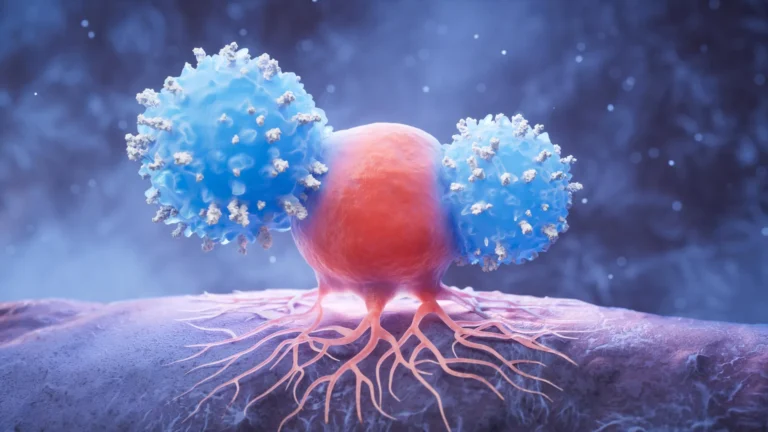
While CAR T-cell therapy—a revolutionary form of immunotherapy that genetically engineers a patient’s own immune cells to identify and destroy cancer—has saved thousands of lives, it remains an imperfect cure. Statistics indicate that approximately 50% of LBCL patients who receive this treatment eventually experience a relapse. Dr. Raj’s research is not merely observational; it is an active effort to decode the biological mechanisms that allow lymphoma cells to evade these "living drugs," aiming to transform how we treat blood cancers by re-engineering the tumor microenvironment.
The Chronology of a Calling: From Personal Experience to Clinical Innovation
Dr. Raj’s path to becoming a leader in lymphoma research is rooted in a profound personal narrative. The motivation for his career was solidified during his formative years when a close family member was diagnosed with lymphoma.
The Catalyst of Compassion
The period following the diagnosis was marked by the typical existential dread that accompanies such news. However, the trajectory of Dr. Raj’s life was forever altered by the physician who treated his relative. The oncologist’s ability to balance clinical expertise with immense compassion provided a template for the kind of doctor Dr. Raj aspired to become. Watching that family member navigate the journey to full remission sparked a lifelong commitment to the field.
Academic and Professional Evolution
Following his early inspiration, Dr. Raj pursued rigorous medical and scientific training. His career has been defined by a multidisciplinary approach, blending quantitative biology with the complexities of cancer immunology. Today, his work at MSKCC is the culmination of years of navigating the transition from clinical observation to laboratory experimentation. He describes his current role as a privilege, noting that the ability to operate at the intersection of various scientific disciplines allows him to approach the problem of cancer resistance from multiple angles simultaneously.
Supporting Data: Understanding the "Why" Behind Relapse
The clinical reality of LBCL is that, despite the initial success of immunotherapy, the tumor microenvironment (TME) often becomes a fortress against CAR T-cells.
The Mechanism of Failure
Dr. Raj’s research identifies several key factors that contribute to the failure of CAR T-cell therapies:
- Immune Exhaustion: The T-cells themselves may become dysfunctional or "exhausted" due to the chronic, high-intensity stimulation required to fight the cancer.
- Antigen Escape: Cancer cells are notoriously adaptive. Some may downregulate or completely lose the specific surface proteins (antigens) that the CAR T-cells are engineered to recognize, effectively becoming "invisible" to the immune system.
- The Suppressive Microenvironment: The area immediately surrounding the tumor is often hostile to healthy immune cells, utilizing chemical signaling to shut down or deactivate infiltrating T-cells.
Current Research Goals
Dr. Raj is currently investigating how the patient’s own baseline immune state influences the success of the treatment. His hypothesis is that by analyzing the immune signature of a patient prior to treatment, clinicians can identify those at the highest risk of failure. This would allow for a "pre-emptive" strike, using prophylactic anti-inflammatory or antiviral interventions to "prime" the immune system for success.
Official Perspectives: The Vision for a Multidisciplinary Program
Dr. Raj’s work is supported by significant institutional and foundational funding, allowing him to build a research infrastructure that bridges the gap between digital data and patient outcomes.
The "Computer to Bench to Bedside" Model
Dr. Raj emphasizes that modern cancer research cannot exist in a silo. His program at MSKCC operates on a cyclical feedback loop:
- The Computer: Using big data and computational biology to analyze patterns in patient outcomes.
- The Lab Bench: Testing hypotheses on how to modify the TME to make it more receptive to CAR T-cells.
- The Bedside: Translating these findings into clinical trials and refined protocols.
- The Feedback Loop: Analyzing clinical outcomes to refine computational models, thereby restarting the cycle.
"My work aims to identify patients with LBCL at highest risk of CAR T-cell treatment failure," Dr. Raj explains. "By understanding the role the immune system plays in either shielding cancer cells or reducing treatment efficacy, we can intervene early. Whether it is through novel prophylactic drugs or combinatorial therapies, the goal is to reshape the environment in favor of the immune system."
Implications: The Future of Lymphoma Care
The implications of Dr. Raj’s research extend far beyond the immediate treatment of LBCL. If successful, his work could fundamentally alter the standard of care for various blood cancers and potentially solid tumors as well.
A New Era of Precision Medicine
We are moving away from a "one-size-fits-all" approach to immunotherapy. Dr. Raj’s work underscores the importance of precision medicine—tailoring the treatment not just to the cancer, but to the specific immune profile of the individual patient. If physicians can identify which patients will require additional support (such as antiviral or anti-inflammatory drugs) to ensure their CAR T-cells persist, the overall survival rates for lymphoma could see a dramatic increase.
Addressing Health Disparities and Accessibility
While the current focus is on efficacy, the ultimate goal of such research is to make highly complex therapies more predictable. When a therapy fails, the emotional and financial cost to the patient is immense. By increasing the success rate of the first line of CAR T-cell treatment, Dr. Raj’s research also aims to reduce the need for multiple, high-risk salvage therapies, potentially lowering the total cost of care and reducing the physical toll on the patient.
The Human Element
Despite his deep involvement in the technical aspects of genomics and cellular engineering, Dr. Raj maintains that the "human" element of medicine remains the primary driver. His dedication to providing the same level of care that his family once received acts as a constant north star. In an era where oncology is increasingly dominated by algorithms and automated processes, his commitment to the patient experience—compassion, warmth, and clear communication—serves as a vital reminder of the doctor’s role.
Conclusion: A Collaborative Path Forward
The journey to curing Large B-cell lymphoma is a marathon, not a sprint. Dr. Sandeep Raj represents the new guard of oncology—researchers who are as comfortable analyzing a line of code as they are sitting at a patient’s bedside. With the support of the Foundation and the resources at Memorial Sloan Kettering, his work is helping to ensure that CAR T-cell therapy fulfills its promise as a transformative tool in the fight against cancer.
As his research progresses, the medical community waits with anticipation for the next phase of his trials. If he succeeds in decoding the mechanisms of resistance, the landscape of lymphoma treatment will be permanently changed, offering renewed hope to thousands of patients and their families. The bridge between the computer, the bench, and the bedside is becoming stronger, and with leaders like Dr. Raj at the helm, the path toward a cure for lymphoma has never been clearer.