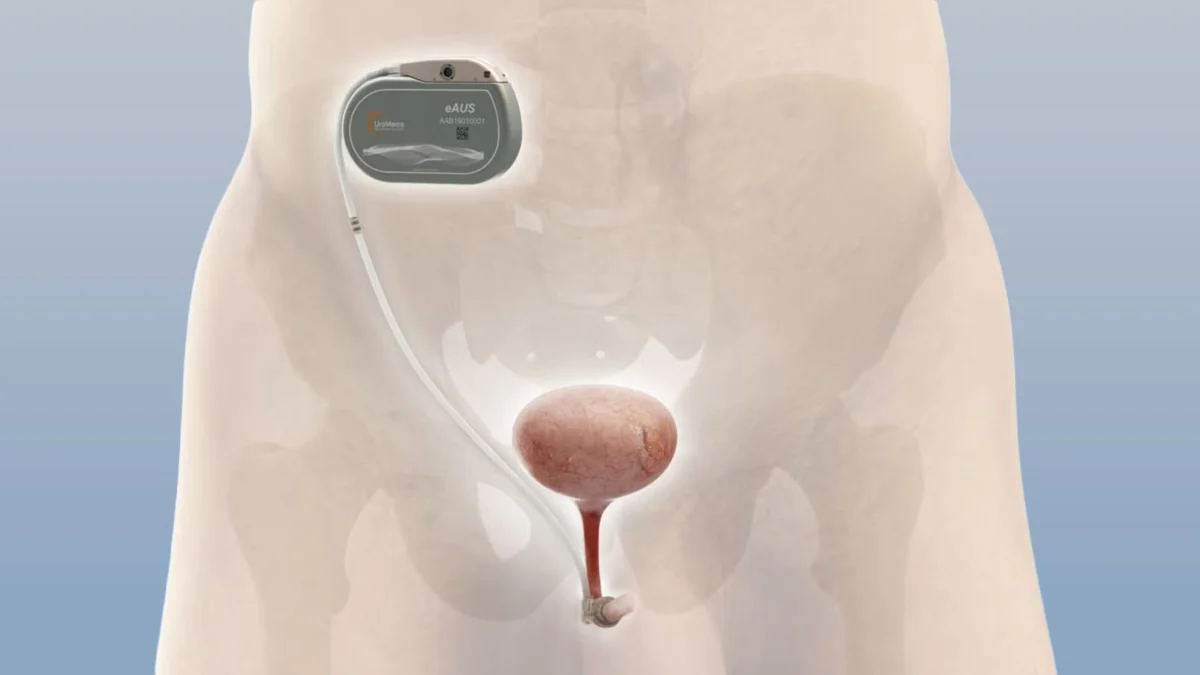
For thousands of men recovering from prostate cancer surgery, the path back to normalcy is often paved with the indignity of chronic urinary incontinence. While surgical interventions have long existed to manage this condition, the traditional solutions—artificial urinary sphincters (AUS)—have remained largely unchanged for decades, often requiring manual physical manipulation that many patients find psychologically and physically distressing.
However, a technological breakthrough is on the horizon. The UroActive system, a remote-controlled, electromechanical artificial urinary sphincter, is currently undergoing rigorous clinical evaluation. By replacing manual pumps with precision-engineered, programmable technology, researchers believe this device could fundamentally alter the landscape of urological care.
The Core Challenge: Moving Beyond Manual Manipulation
To understand the significance of the UroActive device, one must first understand the limitations of the current standard of care. Conventional AUS devices rely on a fluid-filled cuff that wraps around the urethra. To urinate, the patient must manually locate a pump—typically implanted within the scrotum—and squeeze it to open the cuff.
"Some men are really averse when you tell them about the old device and this pump that goes in the scrotum," explains Andrew Peterson, MD, a urologist at Duke University Medical Center. "They want to know whether they have to, basically, ‘mash on my junk.’"
This physical requirement creates a barrier to adoption. Many patients, particularly those with reduced manual dexterity or psychological discomfort, struggle with the mechanics of the traditional device. The UroActive system seeks to eliminate this hurdle by moving the control interface entirely external to the body.
Chronology: From Concept to Clinical Trial
The journey of the UroActive system represents a significant shift in how urologists approach the restoration of pelvic floor function.
Early Development and First-in-Human Trials
The technology originated in Europe, where developers sought to apply the principles of electromechanical engineering to the challenges of sphincter insufficiency. The initial first-in-human trial in France provided the proof-of-concept necessary to move toward larger, more diverse cohorts. These early results were highly promising, with all six participants demonstrating a 50% reduction in pad weight after one year, with five of the six achieving a 75% improvement.
The SOPHIA2 Clinical Trial
Building on the French success, the SOPHIA2 trial (NCT06968741) was launched to rigorously test the device within the U.S. healthcare infrastructure. The study, which recently completed enrollment, includes 140 participants across 14 U.S. sites, alongside data from France. The primary endpoint—a 50% reduction in 24-hour sanitary pad weight—is a high bar for clinical success. Initial results from this cohort are expected in the coming year.
Technical Innovation: The "Personalized Tesla" of Urology
The UroActive system is essentially a smart implant. Measuring roughly the size of a cardiac pacemaker, the device is surgically implanted in the abdomen. Unlike the rigid, fluid-only systems of the past, this device houses a battery designed for a decade of continuous service and an electronic chip that interfaces with a tablet computer.
Programmable Precision
The device’s most disruptive feature is its customizability. Urologists can program the sphincter’s behavior to match the unique physiological needs of the patient.
"It’s like a personalized Tesla," Dr. Peterson notes. "You can change every component of it. You can program the device to stay open for 1 minute, for 45 seconds, for 3 minutes. However long a particular man needs."
This level of control allows for a "dynamic" sphincter. Rather than a static pressure, the UroActive system uses a proprietary electromechanical mechanism to adjust internal pressure in real-time based on the patient’s physical activity. This allows the system to remain tight during high-impact activities and relax appropriately during natural voiding.
Supporting Data: Efficacy and Patient Outcomes
The clinical evidence supporting the UroActive device extends beyond mere pad-weight reduction. The SOPHIA2 protocol integrates comprehensive Patient-Reported Outcomes (PROs) that measure the psychosocial impact of the device.
Quality of Life Metrics
Recent data from the AUSCO trial, which evaluated traditional AUS devices, demonstrated that successful implantation leads to significant improvements in anxiety, depression, and overall mental health scores. The SOPHIA2 trial aims to prove that the UroActive system not only provides these same benefits but enhances them by removing the "awkward" manual aspects of the older technology.
In the initial French study, daily pad counts dropped from an average of 3.7 to 1.0. Furthermore, there were no device explanations (removals) and no requirement for revision surgeries, suggesting that the electromechanical design is robust enough to withstand the physiological stresses of the human body.
The Learning Curve
Dr. Peterson acknowledges that the shift to a digital interface requires a change in post-operative management. "Patients may need several office visits after implantation to adjust the device settings to individual patient needs," he explains. However, the trade-off is significant: "After those two or three visits, we see patients go down to no pads or just a very small liner. The improvement is quite striking."
Implications: A New Era of "Activity-Based" Continence
The potential for this device extends far beyond the basic goal of "dryness." Because the device is programmable via an electronic interface, the future of urology could involve "activity modes."
"Nerds like me get really excited about the potential for this device in the future," Dr. Peterson says. "We can imagine different modes for the device depending on a specific need or activity. For example, we might have a higher-pressure ‘tennis mode’ that can withstand the force of hitting a tennis ball. We can have golf ball-driving and putting modes, or other activities that a patient is involved in."
This concept of "precision urology" could allow men who have undergone prostatectomy to return to high-impact athletic activities without the fear of leakage, a prospect that was previously considered unattainable for many patients.
Addressing the Broader Population
While the current U.S. clinical focus is on men recovering from prostate cancer surgery—a group that faces a 20% incidence rate of chronic stress urinary incontinence (SUI)—the potential applications are broader.
Gender Neutrality
The anatomy of SUI in women is distinct, yet the core mechanism of the UroActive device—controlling urethral pressure—is highly adaptable. French investigators have already begun evaluating the device in female patients. Should these trials prove successful, the UroActive system could become a gold standard for a wide spectrum of pelvic floor disorders, regardless of the patient’s biological sex.
Future Indications
Currently, the UroActive device is being studied for primary implantation. It has not yet been formally evaluated as a replacement for failed legacy AUS devices. However, as the medical community gains confidence in the longevity of the battery and the stability of the software, it is highly probable that clinical trials will expand to include "salvage" cases—patients who have seen previous AUS devices fail or who are dissatisfied with their current mechanical systems.
Conclusion: Bridging Technology and Dignity
The development of the UroActive AUS is a reminder of how digital innovation can intersect with human dignity. By removing the need for manual, invasive manipulation and replacing it with a sophisticated, programmable, and discreet interface, the medical community is moving toward a future where prostate cancer recovery is not defined by the limitations of the patient’s device.
As the data from the SOPHIA2 trial begins to emerge in the coming year, the focus will shift from "can this device work?" to "how can we maximize its potential?" For the millions of men and women suffering from the psychological and physical weight of incontinence, the arrival of such technology promises more than just dryness—it promises the restoration of the confidence to live an active, unencumbered life.
The transition from mechanical, manual systems to digital, electromechanical systems is not merely an upgrade; it is a fundamental re-imagining of the human-machine interface in surgery. If current trends hold, the days of "mashing" on a device to manage one’s health may soon be relegated to the history books, replaced by a simple, elegant, and silent button press.