




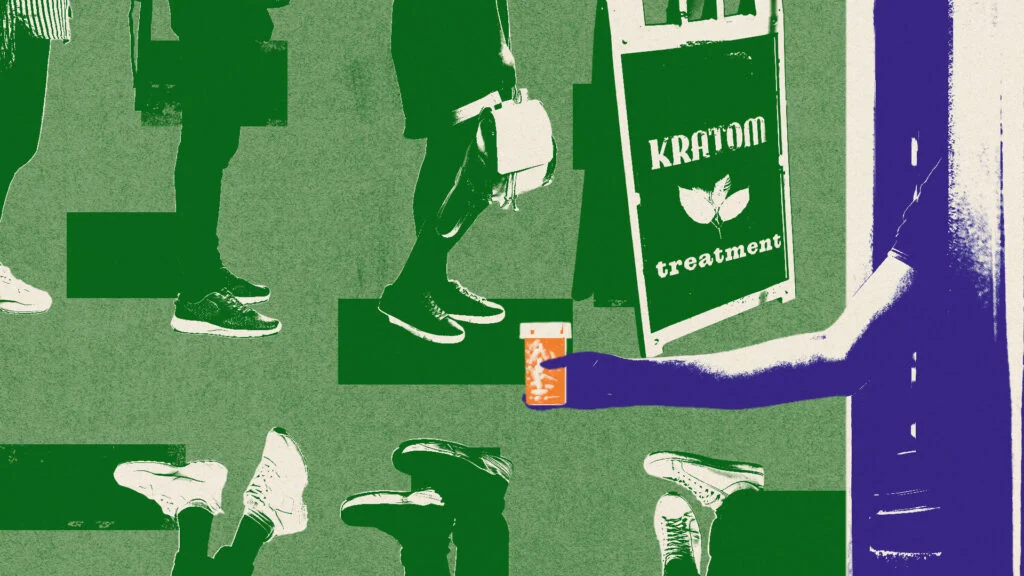
Addiction clinics across the United States are sounding a nationwide alarm: a new, potent class of products derived from the kratom leaf is driving an unprecedented surge in patients seeking emergency help. Once relegated to niche herbal shops, these substances—now often found in colorful packaging at local gas stations and convenience stores—are sparking severe physical dependence that clinicians say rivals the withdrawal profiles of traditional opioids.
The Rapid Escalation: A Statistical Explosion
The data coming out of telehealth and brick-and-mortar addiction centers paints a sobering picture of a public health crisis in motion. At Boulder Care, a prominent telehealth addiction clinic, the shift has been jarring. In September 2025, patients citing kratom products as their primary substance of concern accounted for just 3% of new intakes. By July 2026, that figure had climbed to 8%. By August 2026, the number had reached a staggering 14%.
“That really is quite an explosion,” said Ayesha Appa, head of medical affairs at Boulder Care. The trajectory suggests that what was once a relatively manageable habit for a small demographic has transformed into a high-acuity crisis for a much broader swathe of the population.
This trend is echoed in physical inpatient facilities. Myles Jen Kin, a medical director for the Recovery Centers of America in Massachusetts, reports that his clinics have seen their caseloads for kratom-related treatment balloon. “Last year, we would see maybe one patient per week,” Jen Kin noted. “Now, those same clinics see anywhere from 10 to 20 people per week who are either completely dependent on kratom or 7-OH, or those products are part of a larger substance use problem.”
The Science of the Shift: Understanding 7-OH
To understand why addiction centers are suddenly being flooded with patients, one must look at the evolution of the product itself. Kratom (Mitragyna speciosa) is a tropical tree native to Southeast Asia, where its leaves have been traditionally used for centuries as a mild stimulant and pain reliever. For decades in the U.S., it was sold as a ground powder.
However, the market has pivoted toward highly concentrated synthetic derivatives, most notably 7-hydroxymitragynine, or "7-OH." While 7-OH exists in trace amounts in the natural leaf, the new wave of commercial products features concentrated, lab-isolated versions of this compound. Unlike the more common alkaloids found in standard kratom, 7-OH acts directly and aggressively on the brain’s opioid receptors.
“We’re basically treating it as if it’s fentanyl or oxycodone or heroin,” said Jen Kin. Because these products mimic the potency of traditional opioids, they produce intense physical dependency, leaving users trapped in a cycle of escalating dosage that is difficult to break without clinical intervention.
Chronology of a Public Health Threat
- Pre-2020: Kratom exists in the U.S. as a fringe, largely unregulated herbal supplement sold as powder or tea, marketed primarily for energy and mild pain relief.
- 2019–2023: Federal survey data indicates a steady rise in usage, with the number of Americans reporting lifetime use of kratom products increasing from 4 million to 5 million.
- 2024: The emergence of 7-OH as a dominant, high-potency market force leads to the creation of dedicated online forums, such as Reddit’s "quitting 7-OH" community, signaling a shift in the nature of user struggles.
- 2025: A sharp increase in calls to U.S. poison control centers signals that the product has moved into the mainstream. Boulder Care observes a rapid rise in new patient intakes related to the substance.
- 2026: Regulatory bodies, including the FDA and DEA, begin to take decisive action, labeling 7-OH an "emerging opioid threat" and proposing restrictive legislation.
The “Potency Rabbit Hole”: Who Is Using These Products?
Clinicians report that their patients fall into two distinct buckets: those who are entirely new to the world of substance abuse, and those who have a history of opioid use and are seeking a legal alternative for pain or recovery.
Many of these individuals are lured by the "wellness" branding of the products. "The common story I get from a lot of these clients is that they didn’t know really what it was," says Phil Smyth, executive director of Milestone Treatment Center. Because the products are sold over the counter, they lack the stigma of street drugs, leading many to believe they are safe.
Steve Klein, a physician at Caron Treatment Centers, describes this as a "potency rabbit hole." A user might start with a simple tea for anxiety, find that it helps, and then—as tolerance builds rapidly—graduate to high-potency 7-OH shots or gummies. By the time they reach a facility like Caron, they are often in the throes of a severe, full-blown opioid-like addiction.
Implications: A System Under Strain
The current crisis highlights a dangerous regulatory gap. Because research into these specific concentrated compounds is in its infancy, addiction treatment centers are forced to treat patients based on observation rather than clinical protocols.
“Having kratom patients without any research—it’s just another day for us,” Jen Kin lamented. “It’s how we deal with addiction in general. It’s just sadly the truth in our country.”
The Regulatory Response
The Food and Drug Administration (FDA) has taken a hard line, officially flagging 7-OH products as an emerging threat. The Drug Enforcement Administration (DEA) has proposed a ban on 7-OH above specific concentration thresholds. However, the legislative process is slow, and the market is fast.
Ayesha Appa suggests that the very act of regulation may be fueling the crisis. As states scramble to pass their own bans, users who were maintaining a level of stability suddenly lose access to their supply, triggering abrupt withdrawal and forcing them to seek emergency care in unprecedented numbers.
The Treatment Landscape
For now, clinicians are borrowing from the playbook used for opioid use disorder. Case reports indicate that buprenorphine—often in combination with naloxone—and even methadone are showing efficacy in helping patients detox from 7-OH.
However, experts like Katherine Hill, an epidemiology Ph.D. candidate at Yale, warn that there is a "sampling bias" in what we see at clinics. While many people appear to be struggling, there is likely a segment of the population that manages to discontinue use without professional help. Because these individuals never show up in the data, the true scale of the prevalence—and the total number of users—remains shrouded in uncertainty.
The Human Cost
Behind the statistics are thousands of individuals who believed they were purchasing a safe, plant-based alternative for pain or mental health, only to find themselves chemically tethered to a potent synthetic. On online forums, the desperation is palpable. One user, writing from the transition between detox and inpatient care, summarized the experience for many: “For the first time in a very long time I can see a light at the end of the tunnel even though I just stepped into hell.”
As the U.S. awaits federal intervention, the medical community remains the primary barrier between these users and a deepening crisis, working to treat a condition that is evolving faster than the laws designed to regulate it.