From the viral corridors of TikTok to the polarizing depths of internet forums, a fierce debate has ignited over the role of vegetable and seed oils in the human diet. Once touted as the "heart-healthy" alternative to saturated fats, these oils are now being labeled as "toxic sludge," "motor oil," and the hidden architect of modern chronic disease by a growing chorus of wellness influencers and proponents of the carnivore diet.
But is the demonization of seed oils based on rigorous nutritional science, or is it another example of internet alarmism outpacing evidence? Understanding the truth requires moving beyond the memes and examining how these fats are produced, how they function in the body, and where they fit into a balanced, health-promoting diet.
The Chronology of a Controversy: From Kitchen Staples to "The Hateful Eight"
The history of vegetable oils in the modern diet is relatively short. For millennia, humans relied primarily on animal fats—lard, tallow, and butter—for cooking. The rise of industrial seed oils (such as soybean, corn, canola, and sunflower) coincided with the agricultural and industrial revolutions of the 20th century.
As food science advanced, companies began refining these oils to create shelf-stable, cost-effective products. By the late 20th century, health organizations were actively encouraging the public to swap butter for vegetable oils and margarine to lower cholesterol levels and reduce heart disease risk.
However, the tide has turned. Over the last decade, social media personalities have coined terms like "The Hateful Eight" to describe specific industrial oils, arguing that their widespread adoption is the primary culprit behind an explosion in obesity, depression, anxiety, and inflammatory conditions. This narrative posits that because these oils are "new" to the human diet, they are inherently dangerous—a classic appeal to nature fallacy that warrants a closer look at the actual manufacturing process.
The Anatomy of Production: Why Processing Matters
To understand why some experts are wary of seed oils, one must look at how they are extracted. Unlike olive or avocado oil, which can be pressed from fruits with high natural oil content, seeds like corn, soy, and canola are relatively low in fat.
To extract the oil, manufacturers must employ a rigorous, multi-step process:
- Cleaning and De-hulling: Removing foreign material and seed coats.
- Grinding and Heating: Breaking down the cell walls.
- Solvent Extraction: Using chemical solvents (typically hexane) to pull the oil from the meal.
- Refining, Bleaching, and Deodorizing: Removing impurities, color, and odors.
This process is a far cry from the cold-pressing used for extra-virgin olive oil (EVOO). During the industrial process, high heat and chemicals can degrade the delicate polyphenols and stabilizing nutrients found in the raw plant. Furthermore, if these oils are exposed to high heat during processing or subsequent deep-frying, small amounts of trans fatty acids can form—a byproduct that is universally recognized by the scientific community as harmful.

Supporting Data: The Case for Extra Virgin Olive Oil
When looking for the "gold standard" in culinary fats, the data overwhelmingly points to extra-virgin olive oil. Unlike highly refined oils, EVOO is mechanically extracted without heat, preserving its potent antioxidants and polyphenols.
Research consistently supports the health benefits of EVOO. In a notable study involving over 22,000 adults in Southern Italy, those who consumed more than two tablespoons of olive oil daily were 20 percent less likely to die over a 13-year period compared to those who consumed less than one tablespoon.
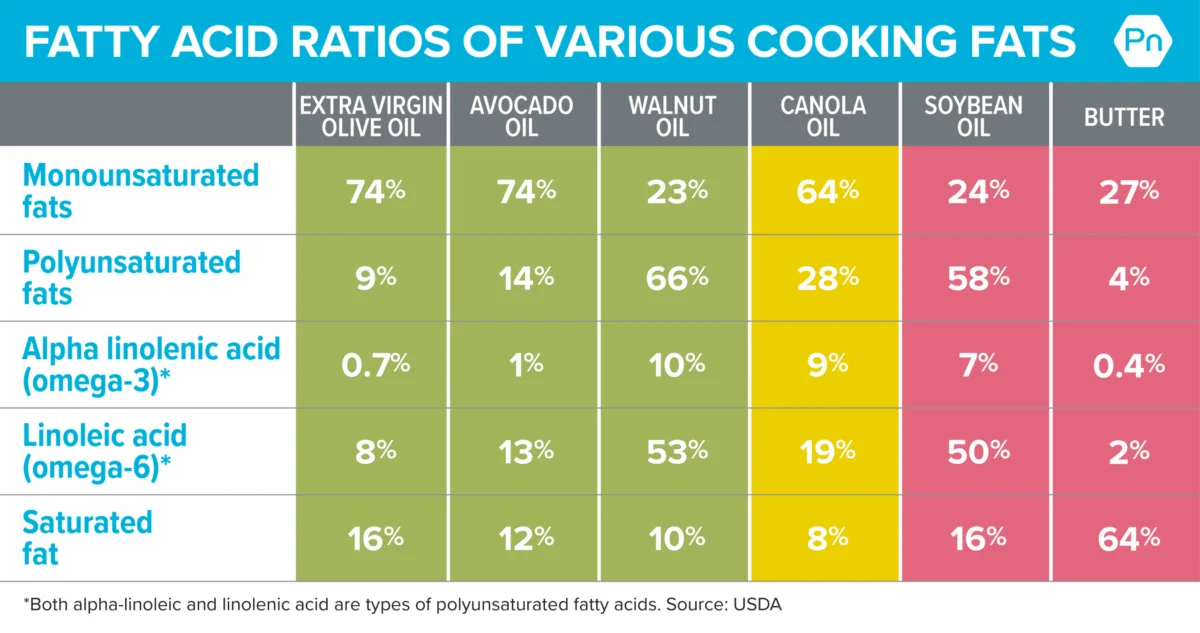
Furthermore, contrary to outdated advice that EVOO should never be heated, modern research suggests it is one of the most stable oils available. In head-to-head testing, EVOO demonstrated greater stability at high temperatures than canola or other vegetable oils, largely due to its monounsaturated fat content and protective polyphenols.
The Omega-6 "Inflammation" Debate
A central pillar of the anti-seed-oil argument is the ratio of omega-6 to omega-3 fatty acids. Critics argue that the typical Western diet contains 16 to 20 times more omega-6 than omega-3, which they claim triggers systemic inflammation.
However, nutritional science is more nuanced. While omega-6 fatty acids are pro-inflammatory in a vacuum, when consumed through whole-food sources like nuts and seeds, they are associated with improved cholesterol levels and reduced heart disease risk. The 2019 American Heart Association statement in the journal Circulation reaffirmed that omega-6 fats are not the "villains" they are often painted to be.
The disconnect lies in the delivery vehicle. Consuming omega-6s via processed chips and fried foods—where the oil is often oxidized—is vastly different from consuming them via a handful of walnuts, which come packaged with fiber, protein, and minerals.
The Refined Oil vs. Butter Face-Off
When comparing refined vegetable oils to butter, we are essentially looking at two flawed options.
Butter is a saturated fat. While the "saturated fat is bad" dogma has been tempered in recent years, excessive intake (above 10 percent of daily calories) is still linked to elevated LDL cholesterol. Furthermore, unlike some other dairy products that contain a protective "milk fat globule membrane," butter lacks this layer, making it more likely to impact cholesterol levels negatively.

On the other hand, refined vegetable oils are often stripped of their health-promoting compounds and are prone to oxidation. Yet, the primary issue with refined oils isn’t necessarily the home-cooking bottle—it’s the ultra-processed food environment.
Implications: The Real Threat is the "Ultra-Processed" Diet
The most critical takeaway from current nutrition research is that the vilification of seed oils often distracts from a larger, more pressing issue: the consumption of ultra-processed foods.
Whether an item is a snack cake, a frozen meal, or a box of crackers, these products are almost invariably formulated with refined vegetable oils, high sodium, added sugars, and low fiber. When researchers associate "seed oils" with poor health outcomes, they are frequently observing the effects of an ultra-processed diet, not necessarily the oil in isolation.
The strategy for a healthy diet is not to obsess over the type of oil used to sauté your vegetables, but to shift the composition of your intake:
- Prioritize Whole Foods: Get your fats from olives, avocados, nuts, seeds, and fatty fish.
- Limit Ultra-Processed Foods: If a product has a long ingredient list of items you wouldn’t find in a kitchen, it is likely highly processed.
- Use High-Quality Oils for Cooking: Opt for extra-virgin olive oil or avocado oil when possible.
- Moderate Deep-Fried Foods: Regardless of the oil type, deep frying degrades the nutritional profile of the fat and adds excessive calories.
Official Consensus and Recommendations
The scientific community generally agrees that replacing saturated fats with unsaturated fats (like those found in olive, avocado, and even some high-oleic seed oils) provides cardiovascular benefits. The U.S. Dietary Guidelines continue to recommend limiting saturated fats to less than 10 percent of total calories, a goal that is easily met by favoring monounsaturated fat sources.
Ultimately, the "toxic sludge" label is a sensationalist exaggeration. Nutrition is not a binary choice between "poisonous" and "perfect." It is a spectrum. By focusing on whole, minimally processed ingredients and using high-quality oils in moderation, individuals can build a sustainable and healthy diet without the need for fear-based dietary restrictions.
As the science continues to evolve, the most reliable advice remains unchanged: eat a diverse, plant-forward diet, limit your reliance on ultra-processed convenience foods, and enjoy your culinary fats as part of a balanced, mindful approach to eating.