Six years after the global health crisis that reshaped the modern world, the American political landscape is experiencing a jarring case of déjà vu. Dr. Anthony Fauci, once the face of the federal government’s pandemic response, finds himself back in the hot seat of Congressional interrogation. Meanwhile, Robert F. Kennedy Jr.—now serving as the Health and Human Services Secretary under the second Trump administration—is engaging in combative media debates over the very nature of public health mandates and the veracity of scientific discourse.
For many, the current environment feels like a return to the peak of 2020. However, this is not a simple re-run of history. It is a calculated, high-stakes campaign by the Republican-led government to re-litigate the pandemic, demanding what they term "accountability" for a scientific establishment they argue deceived the public and overstepped its constitutional bounds.
The Resurgence of Pandemic Politics
The current political fervor is anchored in a deep-seated resentment that has simmered since the first lockdowns. While the virus may have receded from the headlines, the cultural and political wounds it opened have remained raw. Republicans in power are now leveraging the full weight of the federal apparatus to pivot from policy to prosecution, targeting key figures from the previous administration.
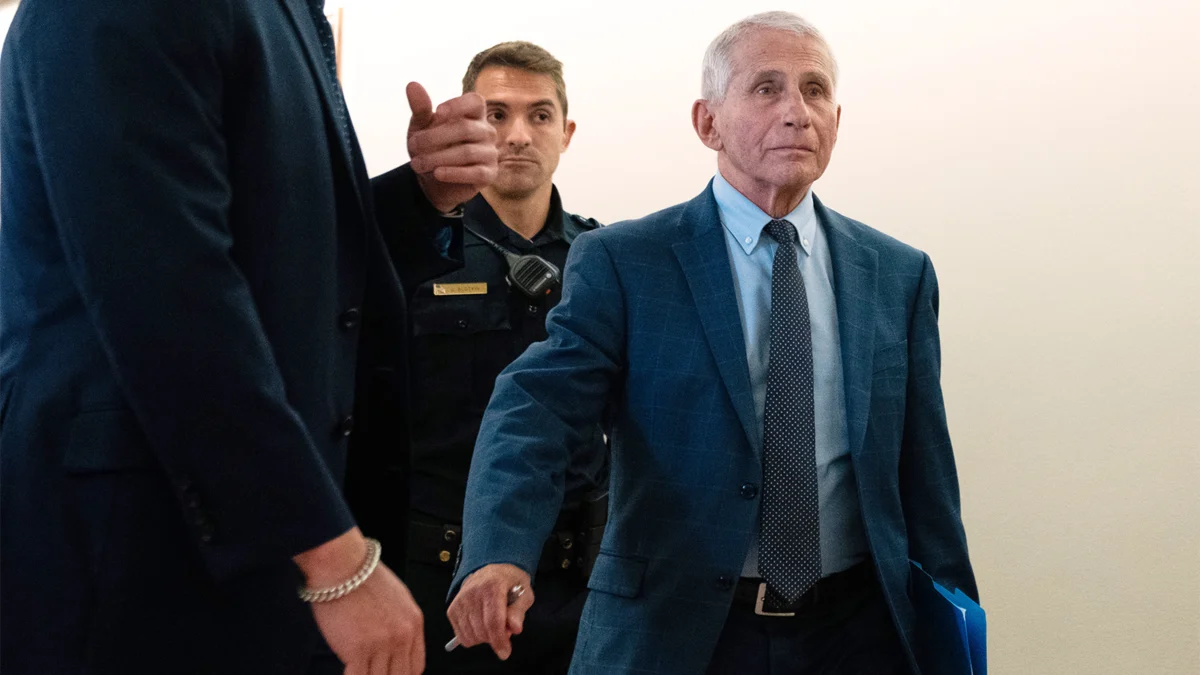
The most dramatic development occurred last week when a Senate committee, chaired by Senator Rand Paul (R-Ky.), issued a subpoena for the now-retired 85-year-old Dr. Fauci. The resulting confrontation culminated in a stunning vote to hold the former NIH immunologist in contempt of Congress after he invoked his Fifth Amendment right against self-incrimination, arguing that the committee was attempting to coerce him into perjuring himself to build a case for criminal charges.
This legislative maneuver marks a significant escalation in the ongoing "COVID wars." By moving to hold a former top public health official in contempt, the GOP is effectively signaling to its base that the pandemic era was not merely a tragedy of public health, but a period of systemic institutional corruption.
A Chronology of the Confrontation
The path to this week’s legislative showdown was paved over several years of mounting friction.
- 2020–2021: The emergence of the coronavirus under the first Trump administration sparked immediate friction regarding mask mandates, business closures, and the subsequent rollout of vaccines.
- 2022–2023: As the virus became endemic, figures like Robert F. Kennedy Jr. transitioned from the fringes of the anti-vaccine movement to influential voices within the GOP, framing federal policies as an assault on personal liberties.
- 2024: A Republican-led subcommittee conducted extensive studies into the origins of the virus, ultimately finding no evidence linking Fauci to criminal wrongdoing. Despite this, the rhetoric continued to intensify.
- 2025: With the inauguration of the second Trump administration, the focus shifted from oversight to active intervention. HHS Secretary Kennedy began using his departmental authority to shift public messaging and restrict the availability of COVID-19 vaccines.
- Current Week: The issuance of a subpoena, Fauci’s refusal to answer questions on the record, and the subsequent contempt vote by the Senate committee have turned the pandemic into a central pillar of the current legislative session.
Scientific Skepticism and the Lab Leak Theory
Central to the current inquiry is the debate over the origins of SARS-CoV-2. Senator Rand Paul has long championed the theory that the virus leaked from a laboratory in Wuhan, China, and has sought to implicate NIH-funded research in the incident.
In a strategic shift, the current White House has directed social media traffic away from traditional CDC guidelines—which emphasize the natural emergence of the virus via wildlife markets—toward federal pages promoting the lab-leak hypothesis. This move has drawn sharp criticism from the broader scientific community. Most infectious disease experts maintain that while a lab leak is a hypothesis, the weight of current evidence continues to support a natural, zoonotic jump from animals to humans.
The tension is exacerbated by the release of private diary entries from Fauci’s time in government, which were unearthed by the committee. While these entries largely reflect the chaotic, fast-moving uncertainty of the pandemic’s early weeks—a fact already documented in Fauci’s own 2024 memoir—critics are using them as "proof" of intentional obfuscation.
Official Responses and the Defense of Public Health
The response from the scientific community has been swift and largely defensive. Over 150 prominent infectious disease experts have signed letters in support of Dr. Fauci, labeling the charges against him "absurd" and "disgraceful."
Fauci’s legal counsel has characterized the proceedings as a political witch hunt designed to manufacture a narrative rather than uncover facts. Furthermore, there is growing concern among public health advocates that this performative scrutiny will have long-term, deleterious effects on the country’s ability to attract top-tier scientific talent.
"If the reward for a lifetime of public service is to be dragged before a hostile committee and threatened with criminal charges based on distorted timelines, why would any expert choose to work for the government?" asked one public health policy analyst.
The Implications for the Future
Political scientists argue that the current focus on COVID grievances serves a dual purpose. For the GOP, it satisfies a core constituency that feels ignored by the scientific establishment. As Dr. Matt Dallek of George Washington University noted, "The response to COVID has become a touchstone for Trump’s Republican Party. They are using their power now to argue they were right all along."
Conversely, Democrats and critics of the current hearings argue that the effort is a calculated distraction. By keeping the spotlight on a retired scientist, the administration can effectively steer the national conversation away from more pressing domestic issues, such as economic volatility and ongoing foreign policy conflicts.
The Erosion of Institutional Trust
The most dangerous implication of this ongoing saga is the long-term erosion of public trust in federal institutions. When scientific guidance becomes a partisan litmus test, the efficacy of future public health responses is jeopardized. As Dr. Michael Osterholm of the University of Minnesota noted, "A review of revisionist history will accomplish nothing. We won’t be any better prepared for the next pandemic."
The Next Steps: The Digital Evidence
The saga is far from over. Senator Ron Johnson (R-Wis.) has confirmed that his subcommittee has obtained a copy of a government-issued cell phone used by Fauci during his tenure. Johnson has publicly stated his intent to comb through the device for "answers" that were not provided during the recent hearing. This sets the stage for a new phase of investigation, one that will likely blur the lines between legitimate oversight and partisan surveillance.
Conclusion: A Nation Divided by Memory
The fight over the legacy of COVID-19 is ultimately a battle over the national narrative. While one side sees a necessary, albeit late, attempt to hold the powerful accountable for mandates that shuttered businesses and restricted movement, the other side sees a dangerous drift into anti-intellectualism and political retribution.
As the Justice Department considers the Senate committee’s request to investigate Dr. Fauci, the country remains caught in a stalemate. The pandemic is no longer a public health crisis to be managed; it has become a political symbol, a battlefield where the facts of the past are being rewritten to serve the interests of the present. Whether this process results in "accountability" or merely serves to alienate the scientific community remains to be seen, but one thing is certain: the shadow of 2020 will continue to loom over Washington for the foreseeable future.