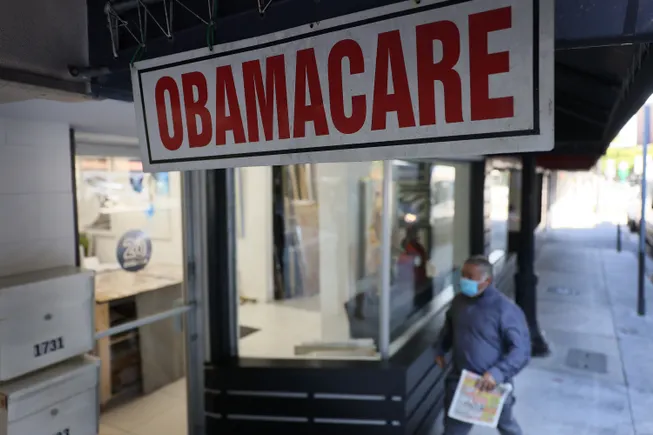
The United States healthcare landscape is currently navigating its most volatile period since the inception of the Affordable Care Act (ACA) marketplaces over a decade ago. Following the expiration of enhanced federal subsidies at the close of last year—a decision championed by the Republican-led Congress—the individual insurance market has entered a state of profound turbulence.
With premium costs doubling for many Americans, the immediate fallout has been a mass exodus from the exchanges. Over 1 million individuals have already vacated their plans, marking the largest year-to-year enrollment contraction in the history of the program. As the market shrinks and consumer behavior shifts toward lower-premium, high-deductible coverage, policy experts are warning of a potential "death spiral" that could undermine the fiscal stability of the entire system.
A Chronology of the Policy Shift
The current instability is the direct result of a calculated legislative pivot. For years, the ACA marketplaces operated under the umbrella of the American Rescue Plan and subsequent extensions, which provided enhanced premium tax credits that kept monthly costs artificially low for millions of middle- and lower-income Americans.
- Late 2024: As the legislative calendar drew to a close, the Republican-led Congress reached a consensus to allow these enhanced subsidies to lapse, prioritizing federal deficit reduction over the continuation of temporary COVID-era spending measures.
- January 2026: Upon the expiration of the subsidies, insurers were forced to reset premium pricing to account for the withdrawal of federal support. The resulting price shock was immediate, with average premiums doubling across various regions and plan tiers.
- Q1 2026: Initial reports confirmed a historic decline in enrollment. While analysts initially hoped the drop would be tempered by government interventions or consumer resilience, the attrition has proven consistent.
- Mid-2026: Current projections from health consultancy Wakely and the Kaiser Family Foundation (KFF) indicate that the loss of coverage is not a one-time event but a sustained trend that will likely continue throughout the remainder of the calendar year as grace periods expire and non-payment leads to involuntary disenrollment.
Supporting Data: The Shrinking Marketplace
The numbers behind the current ACA crisis are sobering. According to a recent deep-dive analysis by the Kaiser Family Foundation (KFF) which integrated federal enrollment data with Wakely’s actuarial projections, the individual market is facing a contraction of unprecedented proportions.
Projected Enrollment Declines
Analysts estimate that enrollment in the individual market could plummet by between 17% and 26% for the 2026 plan year. KFF’s internal modeling settles on a 21.5% decline, which would see total marketplace effectuated enrollment fall to approximately 17.5 million people.
The Shift to "Bronze" Tier Plans
As premiums have spiked, consumer behavior has shifted dramatically toward "Bronze" plans—the lowest-premium, highest-deductible tier offered on the exchanges.
- Bronze Plan Growth: Between 2025 and 2026, the share of total plan selections attributed to Bronze plans surged from 30% to 40%. In raw numbers, this represents an increase from 7.3 million to 9.2 million enrollees.
- Silver Plan Decline: Conversely, Silver plans—which historically provided the best balance of cost-sharing and premiums—have cratered. Their share of the market dropped from 57% to a record low of 43%, representing a loss of nearly 4 million enrollees.
The Deductible Surge
The migration toward Bronze plans has hit consumers where it hurts most: out-of-pocket costs. The average ACA deductible spiked from $2,759 in 2025 to $3,786 in 2026—a record-breaking single-year increase of $1,027. This shift fundamentally alters the value proposition of the ACA for the average family, forcing them to assume significantly more financial risk before their insurance benefits actually trigger.
Official Responses and Political Friction
The discourse surrounding these figures has become a flashpoint for political conflict in Washington. Republicans in Congress have largely downplayed the impact of the subsidy expiration, arguing that the enrollment figures are not a result of increased costs, but rather a long-overdue correction.
Administration officials have posited that a significant portion of the enrollment losses can be attributed to heightened scrutiny and anti-fraud measures implemented by the Trump administration. They argue that the previous system was bloated with "improper" or fraudulent sign-ups and that the current trend reflects the removal of ineligible beneficiaries from the federal rolls.
However, health policy experts and Democratic critics suggest this is a convenient narrative that ignores the clear link between cost and accessibility. They point out that even if there was some level of fraud, the sheer scale of the 1-million-person exodus correlates too perfectly with the timing of the premium spikes to be dismissed as mere administrative housekeeping.
Economic and Clinical Implications
The broader implications of these trends extend far beyond monthly premiums. The transition toward high-deductible plans is widely viewed by medical experts as a public health hazard.
The Risk of Care Avoidance
When a patient faces a $3,700 deductible, the "insurance" they hold often functions only as catastrophic coverage. This leads to a dangerous behavioral cycle:
- Deferred Care: Individuals prioritize immediate financial liquidity over health, delaying routine screenings, chronic disease management, and mental health consultations.
- Medical Debt: When a health emergency eventually occurs, the resulting bill often far exceeds the patient’s liquid savings, leading to bankruptcy and systemic medical debt.
- Cost Shifting: As individuals cut corners on healthcare, the long-term cost to the system increases, as preventable conditions progress into emergency, high-cost hospitalizations.
The "Death Spiral" Threat
Perhaps the most concerning prospect for the long-term viability of the ACA is the potential for an adverse selection "death spiral."
Policy experts observe that younger, healthier individuals—who may feel they have a lower immediate need for healthcare—are dropping their coverage at higher rates because the new premium costs do not justify the risk. This leaves a "sicker" pool of enrollees in the marketplace. As the risk profile of the remaining pool increases, insurers are forced to raise premiums further to compensate for the higher utilization of medical services. This leads to another round of healthy individuals exiting the market, further concentrating the risk. If this cycle accelerates, the ACA marketplaces could become fiscally unsustainable, potentially leading to insurer exits and a collapse of competition in specific geographic regions.
Future Outlook: Reform or Retrenchment?
As the public continues to demand solutions for the escalating costs of care, the political response remains divided. The current Republican strategy involves pushing for reforms that rely heavily on tax-advantaged savings vehicles, such as Health Savings Accounts (HSAs), linked to these high-deductible Bronze plans.
Proponents of this approach argue that it empowers consumers to take control of their healthcare spending. However, critics—including many non-partisan policy analysts—warn that this strategy effectively "de-insures" the population by providing a veneer of coverage that is virtually useless during minor-to-moderate medical incidents.
Furthermore, recent CMS proposals to allow more consumers to opt for "catastrophic" coverage tiers suggest that the federal government is moving toward a deregulated model. Whether this shift will stabilize the market or leave millions of Americans underinsured remains the defining question for the 2027 plan year and beyond.
The ACA, which for over a decade served as a stabilizing force for millions of Americans, now stands at a precarious crossroads. Without a meaningful intervention to address the premium-deductible paradox, the marketplace is trending toward a future that prioritizes financial protection for the insurance industry over the health outcomes of the American public.