

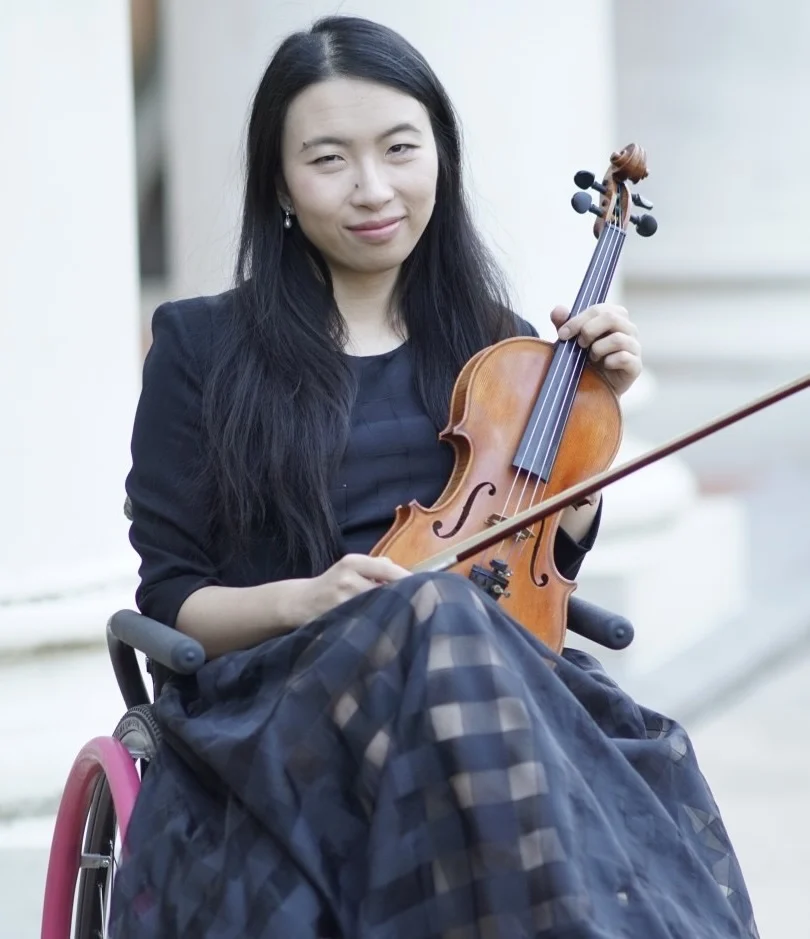
In the world of classical music, the violin is often seen as an extension of the performer’s soul—a delicate instrument that demands precision, grace, and physical endurance. For Amy Wang-Hiller, a professional violinist and dedicated educator, the violin has been the constant heartbeat of her life since she was three years old. However, her journey has been far from conventional. Today, Wang-Hiller navigates a life defined by the complex realities of quadriplegia, hypermobile Ehlers-Danlos syndrome (hEDS), and a collection of neuro-connective tissue conditions that have fundamentally altered her trajectory.
More than just a musician, Wang-Hiller has emerged as a potent voice in the disability community. As the founder of the InclusiVibe Foundation and host of The Hidden Diagnoses Impact podcast, she is dismantling the systemic barriers that often leave patients with invisible, complex, and rare conditions feeling isolated, misdiagnosed, and unheard.
The Early Years: A Foundation in Melody
Amy Wang-Hiller’s relationship with the violin began as a practical decision by her parents, but it quickly blossomed into a profound, lifelong devotion.
"I started learning at three and a half," Wang-Hiller recalls. "It wasn’t initially my choice, but the violin was portable and accessible. What truly hooked me was watching the older students at our annual recitals. I was mesmerized by their technique and the maturity of their sound. I wanted that for myself."
Even in childhood, when bouts of illness—ranging from high fevers to mysterious joint pain—kept her bedridden, her primary motivation for recovery was the ability to return to her practice. This rigorous habit of discipline, paired with a clear-eyed understanding of the gap between an amateur and a master, solidified her identity as a professional musician early on.
A Chronology of Uncertainty: The Diagnostic Odyssey
For many living with connective tissue disorders, the path to a diagnosis is rarely linear. For Wang-Hiller, the signs were present in childhood but remained disparate and disconnected.
- Childhood (The Pre-Diagnostic Phase): Wang-Hiller experienced chronic tonsillitis, persistent fevers, jaw pain, and vision disturbances. These symptoms were treated in isolation, never viewed through the lens of a systemic condition.
- 2012–2015 (The Turning Point): Following a move to the United States and a series of physical traumas—including a car accident and a significant fall—her health began a downward trajectory. She began suffering from unexplained balance issues, difficulty swallowing, and "weird" physical sensations that she lacked the clinical vocabulary to describe.
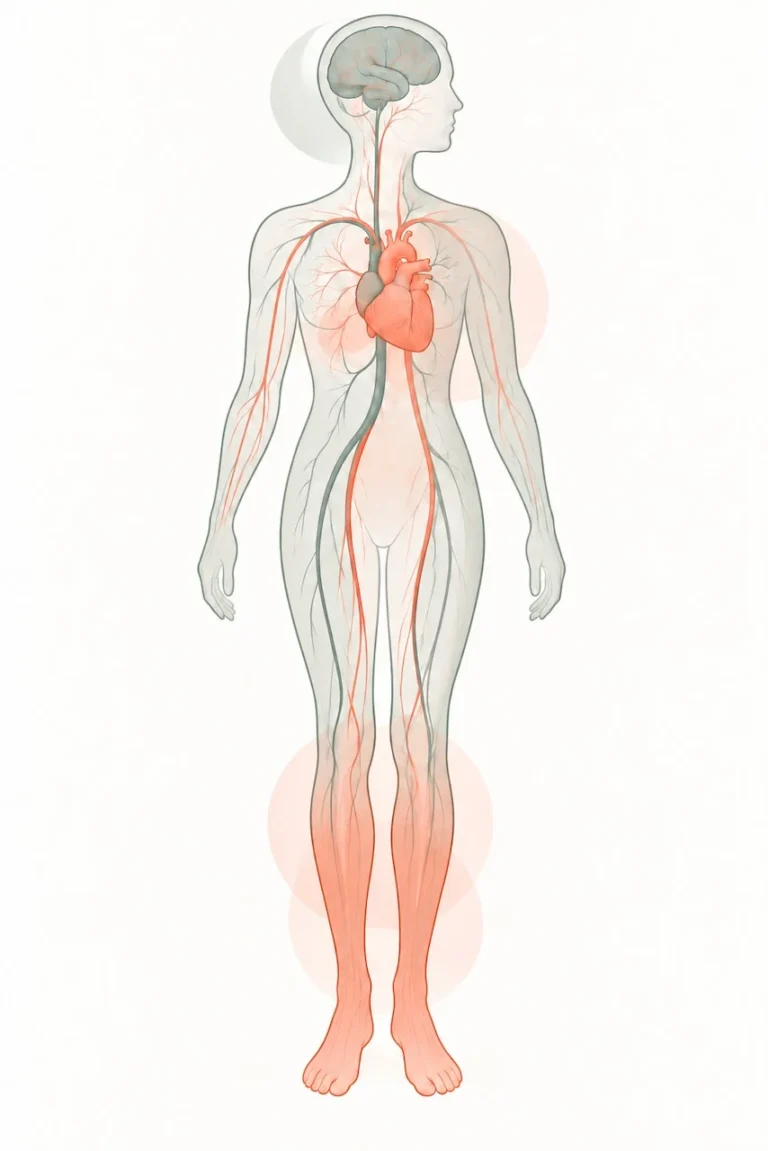
- 2020–2022 (The Acceleration): A neck hyperextension injury served as a catalyst for a rapid decline. Within two years, she faced a cascade of life-altering symptoms: POTS (Postural Orthostatic Tachycardia Syndrome), dystonia, fainting, temporary paralysis, and a progressive loss of motor function.
- Post-2022: After years of searching, the puzzle pieces finally aligned. She received a diagnosis of hEDS, accompanied by secondary findings such as occult tethered cord and craniocervical instability.
Understanding the Spectrum of Paralysis
One of the most persistent misconceptions Wang-Hiller encounters is the public and medical perception of quadriplegia. While the term is often colloquially equated with complete, total immobility, Wang-Hiller’s experience serves as a vital reminder that paralysis exists on a nuanced spectrum.
"I am classified as AIS B—sensory incomplete," she explains. "People imagine someone who feels nothing and moves nothing, but for me, it is like being encased in cement. I know exactly what I want my body to do, but the signals simply cannot bypass the injured segments of my spinal cord."
This discrepancy between her internal intent and external movement often creates "performative" traps. Because she can exhibit small, intentional movements, healthcare providers have, at times, underestimated the extent of her disability. This leads to a profound reliance on caregivers for basic activities of daily living, from nutrition to hygiene, 24 hours a day.
The Institutional Failure: The Harm of Misattribution
Perhaps the most damaging aspect of Wang-Hiller’s journey has been the frequency with which her physical symptoms were mislabeled as psychological or functional.
In 2022, a breakdown in her care occurred when a neurologist referred her to a clinic for Functional Neurological Disorder (FND). Her ability to play the violin—a feat she managed through immense physical strain—was used as "evidence" that her weakness was inconsistent or psychogenic. This pattern repeated in 2024, when her paralysis was again initially dismissed, only to be taken seriously once her dependence on a ventilator made the physical reality undeniable.
The impact of such labels is more than a clerical error; it is a form of medical trauma. "Once those labels are attached to a patient, they shape how every future clinician interprets new symptoms," Wang-Hiller notes. "It creates a cycle of gaslighting that forces the patient to fight for their own reality while simultaneously battling a deteriorating body."
Cultural Silences in Rare Disease
As a Chinese-born patient, Wang-Hiller is acutely aware of the lack of ethnic and cultural diversity in the literature surrounding connective tissue disorders. The "typical" patient profile often excludes those of Asian descent, which Wang-Hiller believes leads to delayed diagnoses and a lack of specialized research into how these conditions manifest across different demographics.
"We deserve to be seen," she asserts. "When the medical community only recognizes one archetype of a patient with EDS, those who fall outside that narrow definition—including many Asian patients with severe spinal manifestations—are left behind."
The InclusiVibe Foundation: Turning Pain into Purpose
In response to the systemic failures she experienced, Wang-Hiller founded the InclusiVibe Foundation. The organization was created to fill the void where fragmented care meets the need for patient-centered advocacy.
"The common thread wasn’t that we all had the same diagnosis," she explains. "It was that we were all navigating the same gaps in the system. InclusiVibe is built on the belief that lived experience is a valid form of expertise."
The foundation acts as a bridge, connecting patients with researchers, artists, and clinicians to foster a more compassionate, informed model of healthcare. Through storytelling and advocacy, the organization works to ensure that patients are not merely subjects of study, but active participants in the design of their own care pathways.
Implications for the Future of Medicine
Wang-Hiller’s story is a call to action for the medical establishment. Her experiences highlight several critical areas for improvement:
- Diagnostic Literacy: There is an urgent need for clinicians to recognize the systemic nature of connective tissue disorders rather than treating symptoms in silos.
- Addressing Medical Gaslighting: Psychiatric misattributions of physical symptoms must be audited and corrected. The "functional" label should not be used as a default when a cause is not immediately apparent.
- Holistic Patient Advocacy: Organizations like InclusiVibe prove that patients require multidisciplinary care teams that include specialists who understand the intersection of neurology, orthopedics, and rheumatology.
- Equity in Representation: Medical research must broaden its data sets to include patients of all ethnic and cultural backgrounds to prevent bias in diagnostic criteria.
Conclusion: The Interdependence of Fortune and Misfortune
Reflecting on the Chinese proverb "Fortune and misfortune are interdependent" (fú huò xiāng yī), Wang-Hiller offers a poignant message to those in the thick of their own health struggles.
"It doesn’t mean that suffering is good, or that everything happens for a reason," she says. "It means that we cannot see the whole story while we are living in the middle of it. Healing does not always look like physical recovery. Sometimes, it looks like finding new meaning and connection in a life that looks very different from what you once imagined."
For Amy Wang-Hiller, the music has not stopped. It has simply changed key. Through her advocacy and her willingness to share her journey, she is ensuring that those who follow in her footsteps will not have to navigate the silence alone. By challenging the status quo, she is not just advocating for herself; she is composing a new, more inclusive future for the entire patient community.
To learn more about Amy Wang-Hiller’s work, listen to her podcast, or explore the mission of the InclusiVibe Foundation, visit their official resources. Her journey remains a testament to the power of the human spirit to find harmony, even amidst the most complex of circumstances.