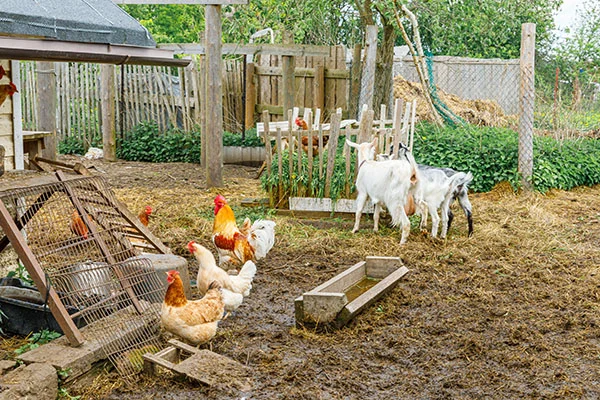
In the modern movement toward self-reliance and local food sovereignty, the homestead has become a symbol of independence. For thousands, it represents an escape from industrial food chains and a return to the soil. Yet, beneath the idyllic veneer of thriving vegetable patches and wandering livestock lies a harsh reality: many homesteaders are running businesses that are bleeding capital without realizing it.
Brighteon University (BrightU) is aiming to bridge the gap between passion and profitability with its latest streaming series, Foundations in Farming and Homesteading + Pastured Laying Hens. Featuring the legendary, award-winning farmer Joel Salatin, the nine-episode series serves as both a manual for land management and a sobering audit of the homesteading lifestyle. The series is currently streaming, with a structured release schedule running through October 7, providing a roadmap for those looking to transform their hobby farms into resilient, self-sustaining financial assets.
The Illusion of Productivity: When Your Farm is Your Biggest Liability
The fundamental premise of Salatin’s instruction is that visual abundance is not synonymous with fiscal health. A homestead can appear to be firing on all cylinders—chickens are laying, the compost is steaming, and the local market is buzzing—while the owner’s bank account is quietly draining.
Salatin emphasizes that the "hodgepodge" nature of the homestead, while aesthetically and nutritionally rewarding, is a breeding ground for financial opacity. Because homesteaders often manage multiple, disparate enterprises simultaneously—such as timber, poultry, horticulture, and animal husbandry—it is all too easy for a "star" enterprise to mask the hemorrhaging of another.
"By definition, homesteads tend to be kind of an eclectic hodgepodge of interests," Salatin notes. While this diversity is the hallmark of a resilient system, it becomes a liability when the entrepreneur fails to account for the labor, infrastructure, and overhead costs of each individual project. Without granular bookkeeping, the farmer essentially subsidizes their own failures using the profits from their successes, often without ever knowing which is which.
Chronology of the Course: A Deep Dive into Sustainable Systems
For those interested in the logistical and educational breakdown of the Foundations in Farming and Homesteading series, BrightU has established a rigorous release schedule designed for maximum assimilation of the material:
- September 26 – October 4: The daily streaming of Episodes 1 through 9. Each day provides a specific look at the pillars of homesteading, from soil health and infrastructure design to the nuances of pastured poultry management.
- October 5: A dedicated replay day for Episodes 1 through 4, allowing viewers to revisit the foundational lessons on land design and the "profitability audit."
- October 6: A replay of Episodes 5 through 9, focusing on the tactical aspects of flock health, seasonal production, and marketing strategies.
- October 7: The grand marathon. BrightU will host a complete viewing of the entire course, providing a comprehensive, start-to-finish experience for those looking to implement these strategies on their own land.
Registration is currently open via the BrightU portal, offering participants the chance to transition from "hobbyist" to "steward of a productive asset."
The Pheasant Experiment: A Case Study in Hidden Costs
To illustrate the danger of chasing trends without proper financial scrutiny, Salatin shares a cautionary tale from his own experience: the "pheasant experiment."
When local chefs began expressing a strong demand for pheasants, Salatin’s farm saw an opportunity. The market was there, the interest was piqued, and the idea seemed like a natural extension of their existing poultry operation. However, the reality of the operation proved to be a masterclass in mismanagement.
The farm invested in specialized aviaries and dedicated infrastructure, but the birds were temperamentally ill-suited to the farm’s management style. Unlike the docile, mobile, and productive chickens and turkeys they were accustomed to, the pheasants were difficult to manage, prone to injury, and labor-intensive.
The result was not merely a logistical nightmare; it was a financial anchor. The enterprise was not paying for its own existence. This anecdote serves as a pivotal lesson for all homesteaders: just because a product can be produced doesn’t mean it should be. Every new enterprise is a "resource sink" that demands time, capital, and mental energy. When the numbers aren’t tracked, these "attractive ideas" can drain the vitality of the entire farm.
Strategic Thinking: The Role of the "Gateway Product"
Despite his warnings against unprofitable enterprises, Salatin offers a nuanced perspective on "low-margin" goods. He points specifically to eggs. While he admits that maintaining a strong profit margin on pastured eggs can be notoriously difficult due to feed costs and labor, he cautions against abandoning them entirely.
Salatin classifies the egg as a "gateway product." A customer may travel to the farm for a dozen eggs, but while they are there, they discover the farm’s high-quality beef, pork, or seasonal produce. The egg, while perhaps not the most profitable item on the spreadsheet, acts as the primary marketing tool that secures the "large sale."
This is the financial puzzle that Salatin encourages his students to solve. A successful homestead does not necessarily need every single component to be a massive profit driver. However, it does require the owner to understand the role each component plays. If a product isn’t making money, it must be fulfilling a strategic purpose—such as soil fertility or customer acquisition. If it is doing neither, it is a liability that must be pruned.
Implications for the Future of Homesteading
The implications of Salatin’s teachings are profound. In an era of economic instability, the allure of self-sufficiency has never been stronger. Yet, for the homestead to be truly "resilient," it must be financially solvent.
Salatin argues that profitability is governed by two immutable levers: raising prices or lowering costs. To pull these levers, however, one must first be able to see the numbers. For many, this is the most uncomfortable part of the homesteading journey—moving from the emotional, romanticized view of farming to the analytical, business-minded reality.
Key Takeaways for the Aspiring Homesteader:
- Separate the Accounts: Treat each enterprise as its own business unit. Track the labor and input costs for vegetables, poultry, and meat separately to see what is truly profitable.
- Infrastructure Efficiency: Invest in mobile infrastructure. Salatin’s curriculum emphasizes moving animals frequently to improve soil health and reduce the cost of feed, which is often the highest expense on a farm.
- Prioritize Management: The best-looking field in the world is useless if the management system behind it is chaotic. Focus on the foundational systems—fencing, water access, and rotational grazing—before expanding into new, untested markets.
- Embrace the Pivot: Be willing to kill an enterprise that isn’t working, even if you are personally attached to it. The "pheasant experiment" proved that emotional commitment to a product is not a substitute for financial viability.
Accessing the Wisdom: The Full Course Package
For those serious about auditing their homestead and building a more professional operation, the Foundations in Farming and Homesteading + Pastured Laying Hens package is available through Brighteon University.
This isn’t just a collection of videos; it is a comprehensive curriculum. The package includes:
- 32 Video Sessions: Over nine hours of in-depth, expert instruction.
- Actionable Documentation: Homework PDFs that force the student to apply the financial and management lessons to their own specific land.
- Transcript Access: Full documentation of the course for long-term reference and study.
- Lifetime Access: Allowing the student to return to the material as they scale their homestead from a single garden plot to a multi-enterprise system.
By turning the focus toward systematic, data-driven farming, Joel Salatin and BrightU are providing the tools necessary to move homesteading from a high-labor, high-risk hobby to a sustainable, productive, and truly resilient lifestyle. As the current economic climate continues to shift, the ability to manage a farm as a business is no longer a luxury—it is a necessity for those who wish to thrive in the years to come.