








Published: July 23, 2026
The scene is familiar to millions of practitioners: you have finally cleared enough floor space to unroll your mat, you have dimmed the lights, and you have queued up that bookmarked YouTube flow. You are ready to drop into your practice. But three minutes in, the digital instructor delivers a command that shatters the moment of zen: “Grab a couple of blocks.”
For the home practitioner without a dedicated studio setup, this is a universal point of friction. The search for a strap or a block often necessitates leaving the mat, breaking the meditative bubble, and inviting the distractions of a chaotic living room—the chime of a notification, the hum of the refrigerator, or the sudden realization that the floor needs vacuuming. However, a growing movement within the yoga community suggests that you don’t need to invest in expensive, specialized equipment to deepen your practice. In fact, the most effective yoga props might already be cluttering your hallway.
The Evolution of Accessibility: Why Props Matter
In the history of modern postural yoga, props were once considered "cheats" by purists. That perspective has shifted dramatically over the last two decades. Today, teachers view props as essential tools for anatomical alignment and accessibility. By shortening the distance between the body and the floor, or by providing structural support for joints, props allow practitioners to experience the intended benefits of a pose regardless of their current flexibility or physical limitations.
The challenge, however, has always been the "barrier to entry." Professional-grade cork blocks and high-tension cotton straps represent an investment in both money and storage space—two things that are increasingly scarce in modern urban living. This has led to an uptick in "improvisational yoga," where practitioners are turning to their immediate surroundings to bridge the gap between their bodies and their goals.
Chronology of a Practice Interrupted
The "interruption cycle" is a well-documented phenomenon among at-home yogis. Research into home-fitness habits suggests that the average person loses their state of "flow" within 45 seconds of leaving their mat.
- The Intent Phase: The practitioner sets the mood, clears the space, and initiates the video.
- The Prop Requirement: The instructor calls for equipment that the user does not have.
- The Disruption: The user stands up, scans the room, and spends time hunting for a substitute.
- The Loss of Focus: During the search, the user encounters household tasks (the laundry, the mail, the pet), effectively ending the meditative state.
- The Abandonment: The practice is either shortened or abandoned entirely, leading to feelings of guilt and a decrease in consistency.
By pre-positioning household items, practitioners can bypass the disruption phase, maintaining their focus and increasing the likelihood of finishing a full session.
Supporting Data: The Utility of Common Objects
According to a 2026 survey of home-based fitness enthusiasts, nearly 65% of regular yoga practitioners report that they do not own a complete set of professional props. Of those, 80% reported that they would practice more frequently if they felt "prepared" to handle prop-heavy sequences.
The following items have been identified by experts as the most versatile household substitutes for standard yoga gear.
1. The Grocery Bag (The Strap Substitute)
Reusable or plastic shopping bags serve as excellent alternatives to traditional yoga straps. By rolling a bag into a rope-like configuration, practitioners can create a custom-length extension for hamstring stretches or overhead shoulder openers. The handles are particularly useful for hooking around the feet, providing a tactile grip that is often more comfortable than a thin nylon strap.
2. The Backpack (The Structural Bolster)
Purses, luggage, and backpacks offer varying degrees of density. Placing a backpack under the hip during Pigeon Pose provides the necessary lift to square the pelvis, while two balanced backpacks can act as stable pedestals under the knees in Bound Angle Pose. The key is ensuring that the bags are of equal weight and volume to maintain symmetry.
3. The Kitchen Table (The Standing Support)
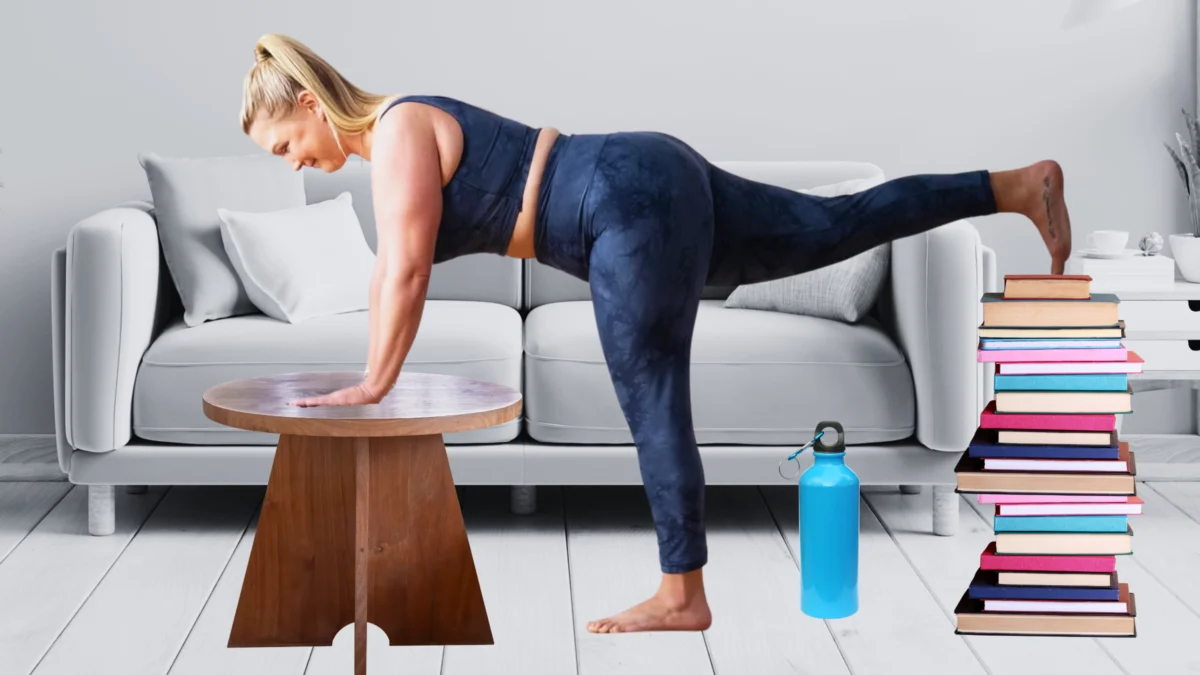
For those struggling with the intensity of Standing Forward Bends, the kitchen table offers a sturdy, elevated surface for the hands or the entire upper torso. This modification transforms a strenuous, hamstring-heavy pose into a restorative, spinal-release stretch, effectively reducing the strain on the lower back.
4. Dirty Laundry (The Custom Cushion)
While it may seem unorthodox, a pile of soft laundry is arguably one of the most effective tools for restorative yoga. Because clothing is malleable, it can be shoved into specific gaps—under the knees in wide-legged folds or behind the lower back—to provide tailored support that a rigid, store-bought bolster cannot match.
5. Water Bottles and Sturdy Containers
For poses like Warrior III or Half Moon, height is everything. A sturdy, wide-based water bottle—specifically stainless steel versions—can function as a makeshift block. Because they have a smaller surface area than traditional blocks, they also serve as a "proprioceptive challenge," forcing the practitioner to engage their core and stabilizer muscles more effectively.
Official Perspectives: What the Experts Say
Yoga instructors and physical therapists generally support the use of household items, provided safety remains the priority.
"The goal of yoga is not to possess the right gear; it is to explore the capacity of your own body," says Sarah Jenkins, a certified yoga therapist based in Chicago. "If a stack of books helps a student align their spine in a way that prevents injury, then that stack of books is a legitimate yoga prop. My only caveat is stability. Ensure that whatever you are using—be it a chair or a stack of novels—is non-slip and secure."
The rise of "DIY Yoga" has also been reflected in online communities. Forums like Reddit and Discord are flooded with "hack" photos—from zip-tying book stacks to using couch cushions for head support in inversions. This trend suggests that the democratisation of yoga is well underway, moving away from the "curated aesthetic" of the studio and into the functional, messy reality of the living room.
The Implications for Future Practice
The shift toward using household objects as props has significant implications for the wellness industry. First, it lowers the financial barrier, allowing individuals from all socioeconomic backgrounds to engage in guided practice without the "hidden costs" of equipment.
Second, it changes the relationship between the practitioner and their home environment. When a coffee table or a pile of laundry is reframed as a tool for health, the living space itself becomes a site of potential rather than a collection of chores.
However, there is a psychological component to consider. The "professionalization" of yoga, often fueled by social media, encourages the purchase of matching sets and aesthetic equipment. By opting for a water bottle or a backpack, the practitioner is making a statement: the practice is about the internal experience, not the external appearance.
Conclusion: Crafting Your Own "Prop Kit"
The next time you roll out your mat, do not be deterred by a lack of equipment. Take a moment to survey your surroundings before you begin. A sweatshirt can be folded into a bolster; a dog can, if temperament permits, provide warmth and weight for a grounding Savasana; a sturdy cardboard box can become a foundation for your restorative practice.
Yoga is not found in the props you buy, but in the attention you bring to your body. By turning your home into a makeshift studio, you aren’t just practicing yoga—you are cultivating a resourceful, adaptable mindset that extends far beyond the edges of your mat. The next time the video calls for a block, don’t leave the room. Reach for that stack of books, settle into your pose, and keep your practice—and your focus—perfectly intact.