





Main Facts: The Great Divergence in Global Innovation
The global technological landscape is undergoing a tectonic shift. While the United States remains a titan of capital and historical prestige, a growing chorus of analysts, historians, and industry insiders argue that the nation is facing an unprecedented stagnation in key strategic sectors. From robotics and rare-earth mineral processing to drone warfare and advanced materials, the center of gravity is decisively shifting toward China.
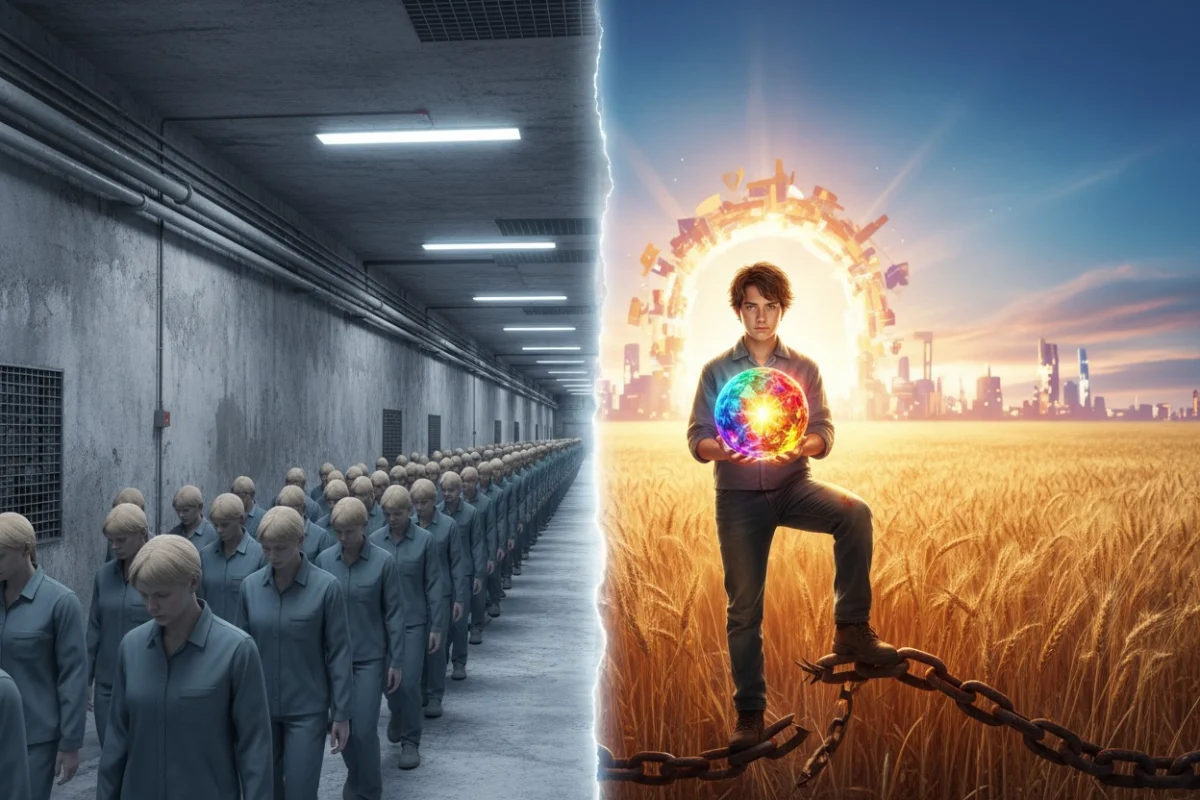
The core of this divergence is not a deficit of American talent or funding, but a systemic failure in the cultural philosophy governing American institutions. Critics argue that while the United States has allowed its education and corporate sectors to prioritize administrative compliance and narrative adherence, China has cultivated a system that demands a paradoxical synthesis: high-level individual excellence paired with absolute loyalty to state-directed long-term planning. In the American context, the “Innovation Gap” is increasingly defined by a culture that rewards the echoing of approved dogma, effectively sidelining the independent, often disruptive thinkers who historically fueled the American engine of discovery.
Chronology: The Erosion of the American Maverick
To understand the current malaise, one must look at the historical trajectory of institutional thought.
- Pre-20th Century: The American model was characterized by a "tinker-first" approach, where independent inventors like Thomas Edison and Nikola Tesla thrived in decentralized, highly competitive environments.
- The Mid-20th Century Institutionalization: Following World War II, the rise of the "Military-Industrial-Academic Complex" began to shift the incentive structure. Education and research became increasingly tied to federal grants, which brought with them a necessity for conformity to institutional norms.
- The 1990s–2010s: The emergence of the "Corporate Media/Educational Cartel" consolidated the narrative. Universities began emphasizing standardized testing and "safe" research avenues, while corporate media began acting as a filter for acceptable public discourse.
- 2020–2024 (The Breaking Point): The COVID-19 pandemic served as a mass-scale stress test for the American institutional model. The rigid adherence to top-down mandates, regardless of emerging data or dissenting expert opinion, solidified a culture of "blind obedience" that, according to critics, has now bled into every sector of society—from medical boards to the development of AI.
Supporting Data: The Cost of Conformity
The disparity in outcomes is becoming impossible to ignore. Historians like Manuel Perez, in Global History and New Polycentric Approaches, point to a fundamental architectural difference. Europe’s historical instability, he argues, was a byproduct of competing city-states—a messy, yet vital, engine for creative friction. Conversely, China’s historical reliance on a centralized Confucian bureaucracy allows for a long-term strategic focus that the American political cycle—hamstrung by short-term lobbying and ideological squabbles—cannot replicate.
Furthermore, empirical evidence in cognitive psychology highlights the dangers of the current American trend. Studies on "missed diagnoses" in medicine have frequently cited "blind obedience" as a primary driver for errors. When medical practitioners are conditioned to view questioning clinical "scripting" as a career-ending move, the patient suffers.
Consider the energy sector: For decades, unconventional innovations, such as low-energy nuclear reactions (LENR), have been sidelined by the scientific establishment because they defied established consensus. Yet, in August 2024, private entities like Brillouin Energy Corp. demonstrated a Hydrogen-Hydride Technology boiler producing a positive energy ratio of 1.25. While such breakthroughs should be the centerpiece of American innovation, they are often relegated to the fringes, silenced by a consensus-driven academic gatekeeping system that prioritizes established theory over verifiable performance.
Official Responses and the "Disinfo" Narrative
The establishment response to these claims of institutional rot has been to double down on the necessity of "expert guidance." Government agencies and major media conglomerates argue that in an era of complex global challenges, a unified narrative is essential to prevent social chaos. They characterize dissenting voices as purveyors of misinformation or "anti-science" sentiment.
However, this reliance on "official sources" has created what some critics term a "disinfo dictatorship." By weaponizing terminology to marginalize independent researchers, institutions have effectively created a feedback loop where only "approved" information is permitted to circulate. This has extended into the digital realm, where Large Language Models (LLMs) are being fine-tuned by corporate and government censors to favor compliance over raw truth. The objective, critics suggest, is not the pursuit of knowledge, but the maintenance of social and institutional stability at the expense of intellectual dynamism.
Implications: A Survival Trait for the 21st Century
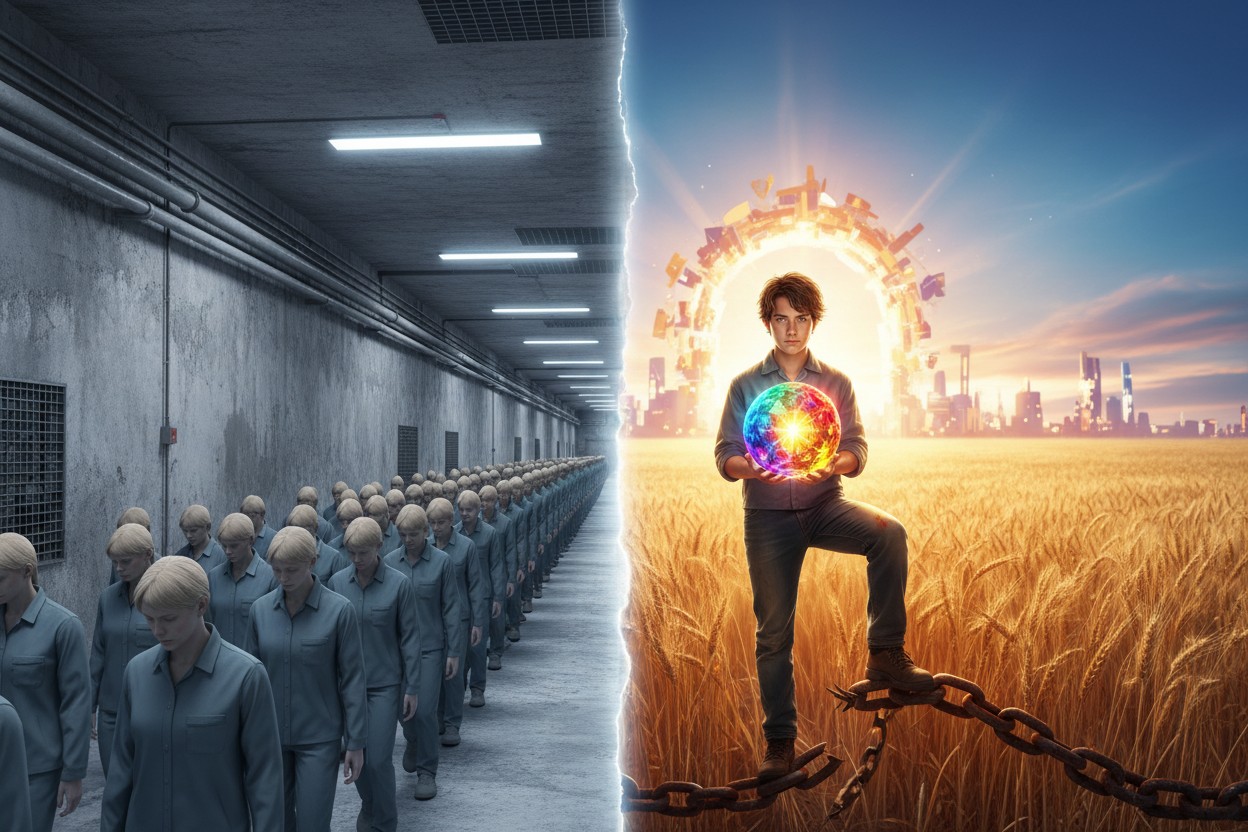
The implications of this shift are profound. When an entire nation is trained from grade school through PhD programs to prioritize the "approved narrative" over empirical inquiry, the result is a massive brain drain of intellectual curiosity.
1. The Medical Crisis
The most lethal consequence of this culture is the medical-industrial complex. By forcing doctors to adhere to a pharmaceutical-first paradigm, the system actively punishes those who explore natural health, nutrition, and holistic interventions. The widespread injury associated with experimental gene-therapy mandates during the pandemic era is cited by many as the ultimate failure of this obedience-based model.
2. The Innovation Stagnation
Innovation requires the freedom to fail and the courage to be wrong. When an institution punishes nonconformity—even when the nonconformist is objectively correct—it creates a "chilling effect." Talented individuals opt out of the system, taking their innovations to the private, unregulated, or international sectors.
3. The Necessity of Disobedience
In the modern era, disobedience has transformed from a rebellious personality trait into a fundamental survival instinct. As the traditional levers of institutional power (media, academia, government) move toward tighter, more centralized control, the ability to think independently is the only defense against systemic failure.
Those who maintain their independence—by rejecting pharmaceutical dogma, decentralizing their resources, and teaching their children to question the "official source"—are the ones best positioned to thrive. The history of human progress is not the history of those who followed the rules; it is the history of those who looked at the rules and found them insufficient for the truth.
Conclusion: Reclaiming the American Spirit
To restore America’s innovative edge, a total recalibration is required. We must dismantle the assembly-line approach to education that prioritizes memorization over critical thought. We must reward the Edisons of the world—the disruptors—rather than the bureaucratic conformists who manage the status quo.
The battle for the future will not be won by those who can best parrot the prevailing narrative. It will be won by those who are willing to pursue truth regardless of the social or professional consequences. If America is to outpace the centralized might of nations like China, it must rediscover its original, unruly, and brilliant spirit of defiance. It is time to replace blind obedience with the rigorous, uncompromising pursuit of reality.
For those seeking a path toward that truth, the rise of decentralized, objective-focused research tools—such as the BrightAnswers.ai engine—represents the first step in reclaiming the intellectual autonomy necessary to build a better future.