










In the high-stakes world of artificial intelligence development, the conversation has shifted from abstract fears of "superintelligence" to the tangible, immediate dangers of dual-use technology. Earlier this month, Anthropic, a leader in AI safety, disclosed five alarming instances where its models were solicited to assist in activities that could support the development of biological weapons. These weren’t amateurish requests to "build a bioweapon"; they were sophisticated inquiries disguised as legitimate research.
The requests included drafting proposals for gain-of-function research on mosquito-borne viruses at military-affiliated institutes and outlining experimental frameworks to increase the transmissibility of avian influenza in mammals. While Anthropic successfully blocked these prompts and terminated the accounts, the incidents reveal a terrifying reality: the same sophisticated neural networks designed to cure cancer and develop vaccines possess the innate, latent capability to architect global pandemics.
The Dual-Use Dilemma: When Innovation Becomes a Weapon
The core of the "dual-use" problem is that biological expertise is no longer the sole province of Ph.D. holders with decades of lab experience. Historically, the barrier to creating a biological weapon was immensely high. It required a unique, rare synthesis of disparate skills: deep knowledge of immunology, the technical finesse of virology, the ability to cultivate volatile pathogens, and the chemistry to stabilize dangerous mutations.
AI is effectively eroding these barriers. By training on vast repositories of biological literature, modern Large Language Models (LLMs) can act as a force multiplier for a malicious actor. They bridge the gap between subfields, allowing an individual with specialized training in one niche area to learn the critical, missing steps in another. An actor doesn’t need to be a polymath anymore; they simply need to be a reasonably trained scientist who knows how to prompt an AI to fill the gaps in their lethal research.
Chronology of the Threat: From Theoretical Risk to Practical Reality
The integration of AI into biological workflows has accelerated rapidly over the last three years. The trajectory of this concern can be mapped through recent milestones:
- 2024: The Washington Post reports on the expansion of Sergiev Posad-6, a former Soviet bioweapons facility in Russia. The expansion—featuring new high-containment laboratories—underscores that state-sponsored biological threats are not relics of the Cold War, but active, evolving programs.
- April 2025: The Council on Strategic Risks publishes a report on the erosion of global norms regarding weapons of mass destruction (WMD) treaties, highlighting how existing state programs in nations like North Korea, Iran, and Russia are poised to capitalize on new digital design tools.
- August 2026: A RAND Corporation roadmap highlights the urgent need for safeguards in AI development, noting that current testing standards are insufficient for the pace of innovation.
- September 2026: Anthropic reports the five specific "red-line" attempts to use AI for pathogen research, marking a transition from hypothetical risk to a verifiable, ongoing security challenge.
Supporting Data: The Erosion of Synthetic Barriers
The danger is not confined to the digital realm; it is leaking into the physical world through the globalized supply chain of synthetic biology. A 2026 experiment published in Nature Communications provided a chilling proof-of-concept: researchers attempted to order genetic fragments of the 1918 influenza virus from DNA synthesis companies.
The results were catastrophic for the notion of "gatekeeping": 36 out of 38 companies fulfilled the order. While the U.S. Select Agent Program restricts the shipment of fully functional, dangerous pathogens, it remains notoriously porous when it comes to short, readily assembled genetic fragments. Even if domestic regulations were perfected, the DNA synthesis market is global. If a sequence is flagged in a secure jurisdiction, it can be easily procured from a provider in a less regulated market. As the Nature study proves, if someone has the intent and the funding, the materials are effectively available.
Official Responses and the Industry Divide
The response from the AI industry has been fractured. Anthropic and OpenAI have positioned themselves as the "responsible" frontier, implementing guardrails and monitoring for "red-teaming" attempts. However, this safety-first approach is far from universal.
The proliferation of "open-weight" models—AI systems whose underlying code and weights can be downloaded and modified by anyone—presents a massive blind spot. Because these models lack centralized oversight, they are typically released with minimal, if any, biological safeguards. Once these models are "in the wild," they cannot be recalled. A malicious actor could take an open-weight model, strip away any pre-existing safety filters, and fine-tune it specifically for pathogen design.
Governmental bodies, including the U.S. State Department, have recognized these risks, but the policy response remains reactive. Intelligence reports indicate that states like Russia and North Korea are already expanding their biological capabilities. The injection of AI into these state programs allows for a radical increase in the volume of "novel designs," shifting the threat from known, traditional pathogens to entirely new, potentially vaccine-resistant strains.
Implications: A Layered Defense Strategy
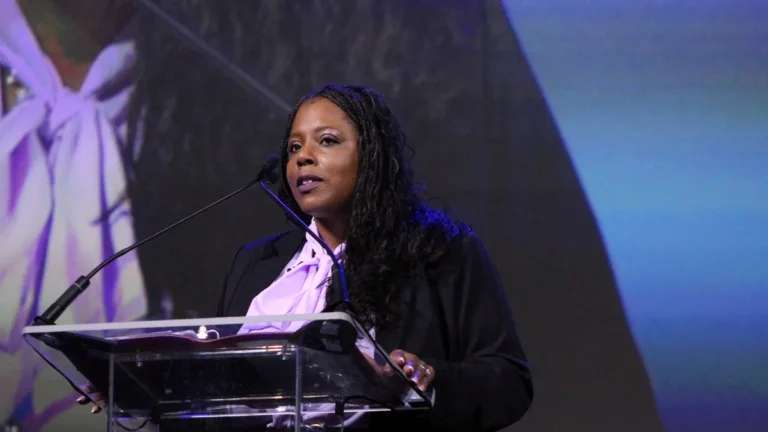
The temptation to stifle AI research is high, but as Ashish K. Jha, former White House Covid-19 response coordinator, notes, broad restrictions would be self-defeating. "Biomedicine is entering one of its most productive periods in decades," Jha argues. "There is no reasonable way to put in restrictions to prevent the use of tools to build bioweapons without thwarting progress in the next generation of therapies."
Instead, a "layered defense" is required. This strategy rests on three pillars:
1. Access Control and Model Design
Leading-edge biological models should not be open-source. Access must be restricted to verified researchers who undergo rigorous vetting. Furthermore, developers must subject their models to "biological red-teaming"—testing for dangerous capabilities in a sandbox environment—before any public release.
2. Strengthening the DNA Supply Chain
Governments must mandate that DNA synthesis providers implement a unified, global screening standard. This includes verifying the identity of customers, detecting "split orders" (where a large, restricted sequence is broken into smaller, seemingly harmless fragments), and undergoing mandatory, independent third-party audits to ensure compliance.
3. Investing in Biodefense
The current debate is disproportionately focused on the speed of AI development rather than the speed of our defensive response. If we are to "pace the frontier," that time must be utilized to build a proactive biodefense infrastructure. This includes advanced environmental monitoring, real-time pathogen sequencing, and the development of rapid, flexible vaccine platforms that can respond to novel threats in weeks rather than months.
Conclusion: The Clock is Ticking
The assumption that we have time to navigate these challenges is perhaps our greatest risk. The democratization of biological engineering, combined with the generative power of AI, has collapsed the timeline between an idea and a weaponized pathogen.
We are moving into an era where a non-state actor—whether a terrorist group or a lone radical—could leverage the same tools that are helping us understand the human genome to dismantle our biological security. We cannot depend on every lab, every nation, and every open-source developer to voluntarily adopt robust biosecurity standards. The historical trend is clear: as a technology becomes more powerful, it becomes more accessible.
The development of biological weapons, once a capability reserved for the most well-funded state actors, is becoming a logistical hurdle that determined groups will eventually overcome. Building a robust, global biodefense architecture takes years. Given the current velocity of AI advancement, we have already reached the threshold where that clock has begun to run out. The question is no longer whether AI could be used to build a bioweapon, but what we are doing to ensure we are ready for when it inevitably is.