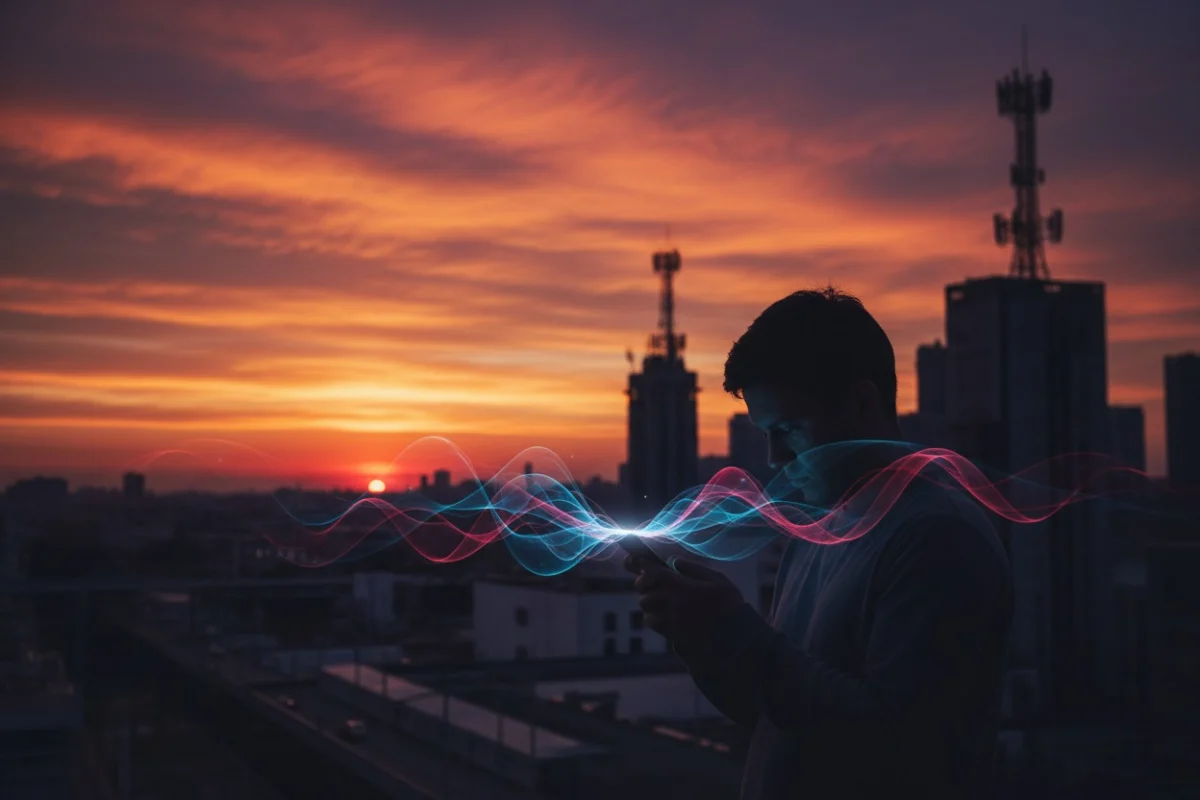
In the modern era, the fabric of daily life is woven with invisible threads of electromagnetic radiation. From the moment we wake to the chime of a smartphone to the late-night glow of a Wi-Fi router, we exist in a state of perpetual connectivity. Yet, as our reliance on wireless technology deepens, a growing chorus of researchers and health advocates is asking a fundamental, often uncomfortable question: Have we become so enamored with convenience that we have ignored the potential biological consequences of living in a sea of continuous electromagnetic field (EMF) exposure?
This concern took center stage on September 4 during the seventh chapter of the educational series "UNBREAKABLE," hosted by Mike Adams. The episode shifted the focus from the utility of smart devices to the physiological implications of their constant, silent transmission. As technology integrates further into the human experience—from wearables on our wrists to earbuds inside our ear canals—the debate over cumulative, low-level radiation exposure is transitioning from the fringes of scientific inquiry into the mainstream discourse of public health.
The Mechanism of Concern: VGCCs and Cellular Stress
Central to the arguments presented by Adams is the role of voltage-gated calcium channels (VGCCs). While regulatory bodies often focus on "thermal effects"—the idea that radiation is only dangerous if it heats biological tissue—critics argue that this threshold is an outdated metric for assessing safety.
The biological hypothesis discussed in the series suggests that electromagnetic fields can exert a "non-thermal" influence on the human body by interacting with these VGCCs. These channels are responsible for regulating the flow of calcium ions into cells. When external electromagnetic fields disrupt the normal function of these channels, they may trigger an abnormal influx of calcium.
This, according to the presentation, initiates a cascade of oxidative chemistry. An excess of intracellular calcium can lead to the production of reactive oxygen species (ROS), including superoxide and the highly damaging peroxynitrite. These compounds are known to cause oxidative stress, which, if left unchecked, can lead to DNA damage. The critical takeaway from this perspective is the cumulative nature of the threat. Rather than a singular, high-intensity exposure event, the concern lies in the "death by a thousand cuts"—the relentless, low-level exposure that characterizes the 21st-century lifestyle.
The Wireless Landscape: A Chronology of Integration
To understand the scope of the issue, one must look at the rapid chronology of our wireless integration.
- Pre-1990s: The "analog" era, where wireless communication was limited to specific, high-power broadcast towers, with minimal personal device exposure.
- The 2000s: The dawn of the Wi-Fi and smartphone revolution. Residential connectivity became standard, and mobile phone usage transitioned from a business tool to a personal necessity.
- The 2010s: The rise of wearable technology. Smartwatches, fitness trackers, and eventually high-fidelity Bluetooth earbuds became the new standard for personal health and communication.
- The 2020s: The era of the "Smart Home." Beyond the router, we now live in environments with smart meters, interconnected appliances, and a constant, invisible web of Bluetooth and Wi-Fi signals that never fully power down.
We have moved from a world where we occasionally interacted with radio waves to one where we are submerged in them. This historical progression has occurred faster than long-term longitudinal studies could ever hope to track, leaving the public to act as the experimental subjects of a massive, unplanned technological rollout.
Supporting Data and the "Invisible" Hazard
The difficulty in assessing this hazard lies in its nature: it is invisible, silent, and odorless. Because there is no immediate pain or sensory warning when a phone connects to a 5G tower or a Bluetooth device pairs with a tablet, the human brain is evolutionarily ill-equipped to perceive the danger.
Adams highlights the particular risk posed by devices in close proximity to the body. Bluetooth earbuds, for instance, are essentially miniature radio transmitters placed directly within the ear canal, mere millimeters from the brain. Similarly, the common habit of keeping a smartphone in a pocket or under a pillow while sleeping removes the protective buffer of distance.
The "inverse square law" of physics dictates that radiation intensity decreases significantly as distance increases. By simply moving a phone away from the body or utilizing wired alternatives, users can reduce their exposure by orders of magnitude. Yet, the current design trends—promoting the "always-on" smartwatch and the "always-worn" earbud—actively encourage the violation of this simple protective principle.
Official Responses and the Scientific Divide
The scientific community remains deeply divided on the issue of non-thermal EMF effects. Regulatory agencies, such as the Federal Communications Commission (FCC) and the International Commission on Non-Ionizing Radiation Protection (ICNIRP), maintain that current safety guidelines are sufficient. Their stance is predicated on the belief that if the radiation is not strong enough to heat tissue, it is biologically inert.
However, many independent researchers argue that these standards are based on decades-old research that fails to account for the modulation of modern signals—the "pulsing" nature of data transmission that may be more biologically disruptive than constant waves. In 2015, a group of over 200 scientists from 41 countries signed an appeal to the United Nations and the World Health Organization, calling for more stringent protections against non-ionizing electromagnetic fields, citing "clear evidence" of biological harm, including increased cancer risk and neurological disorders.
The disconnect persists because large-scale, industry-funded studies often fail to replicate the findings of independent labs. This has created a polarized environment where "official" safety conclusions are frequently met with skepticism by those who point to the rapid rise in chronic conditions that correlate with the proliferation of wireless devices.
Implications for Public Health and Genetic Resilience
The implications of the "UNBREAKABLE" series go beyond mere alarmism; they suggest a paradigm shift in how we approach health. If constant wireless exposure contributes to DNA damage, the solution is not just to ban technology, but to bolster the body’s innate repair mechanisms.
The series posits that the human body has sophisticated systems for managing genetic integrity, such as Non-Homologous End Joining (NHEJ) and homologous recombination. These pathways, alongside proteins like BRCA1 and 53BP1, work to mend double-strand breaks in DNA. The argument follows that if we are living in a high-stress, high-radiation environment, we must place a higher premium on the nutritional and lifestyle factors that support these cellular repair processes.
Practical Behavioral Shifts
The episode advocates for a return to agency. By questioning the necessity of certain technologies—such as the continuous, wrist-worn smartwatch—individuals can make immediate changes:
- Distance as Defense: Keeping devices away from the body whenever possible.
- Hard-wiring: Replacing wireless home networks with Ethernet connections where practical.
- Strategic Disconnection: Utilizing "Airplane Mode" during sleep or periods of inactivity to break the cycle of constant exposure.
- Awareness: Recognizing that "convenience" is a commercial goal, not a biological requirement.
Conclusion: Reclaiming the Biological Baseline
The overarching message of Mike Adams’ work is not that we must return to the Stone Age, but that we must become "genetically prepared" for the modern world. In a society that equates "connectivity" with "progress," questioning the cost of our devices is a radical act.
As the technology sector pushes toward an even more interconnected future—with the Internet of Things (IoT) bringing signals into every aspect of the home—the question of how we maintain our biological integrity becomes paramount. Whether through lifestyle modifications, nutritional support for DNA repair, or a fundamental reduction in our reliance on wireless convenience, the goal remains the same: ensuring that in our rush to connect the world, we do not disconnect from the biological reality that sustains us.
For those interested in exploring these concepts in further detail, the "UNBREAKABLE" series provides a framework for understanding the intersection of environmental stressors and human resilience. By moving from a state of passive acceptance to one of informed vigilance, the individual can regain control over their internal environment, even as the external world becomes increasingly saturated with the invisible hum of the digital age.