In the golden age of iron, the philosophy of physical culture was defined by an elegant, almost brutal simplicity: lift heavy, recover, and repeat. It was a formula that carved the legendary physiques of the 20th century—from the granite-hewn chests of the Sandow era to the massive, aesthetic lines of the Golden Era bodybuilders. Yet, in the contemporary landscape of high-tech gyms and social media-driven fitness, this foundational truth has been obscured by a thicket of gimmickry, complex "systems," and performative training methods.
As we navigate an era where the fitness industry generates billions in revenue annually, it is time to reassess whether the modern obsession with complexity is actually serving our physiological needs or merely stalling our progress.
The Core Premise: A History of Heavy Lifting
To understand where we are, we must look at the lineage of the "Iron Game." For decades, the pillars of strength were non-negotiable: the squat, the deadlift, the bench press, the overhead press, and the row. These compound movements, which recruit multiple muscle groups and tax the central nervous system, were the bread and butter of every garage gym and dungeon-style facility across the globe.
Chronology of the Fitness Shift
- The Pre-Commercial Era (1900–1970): Fitness was largely solitary or communal in small, equipment-sparse gyms. Training was defined by progressive overload—the practice of gradually increasing the resistance applied to the body.
- The Commercial Explosion (1980–2000): The advent of large, franchised fitness centers introduced the need to cater to a broader demographic. With this came the birth of the modern personal training industry.
- The "Methodology" Era (2000–2015): To distinguish themselves in a crowded marketplace, trainers began branding "systems." This era birthed the reliance on proprietary training protocols that often prioritized novelty over proven biomechanical efficiency.
- The Social Media Era (2015–Present): The influencer economy shifted the goal of training from "strength and health" to "aesthetic spectacle." Movements became increasingly performative, often favoring instability (Bosu balls, resistance bands on unstable surfaces) over the structural integrity provided by heavy, grounded compound lifts.
Supporting Data: Complexity vs. Efficiency
The modern fitness industry often markets instability as a superior training stimulus, claiming that balancing on equipment forces "core activation." However, clinical exercise physiology data suggests a different story.
Studies published in the Journal of Strength and Conditioning Research consistently demonstrate that maximum force production—the primary driver of hypertrophy and neurological strength gains—is significantly inhibited when the body is not in a stable environment. When a lifter stands on a balance board to perform an overhead press, the nervous system throttles the amount of force the prime movers (the deltoids and triceps) can produce because it is preoccupied with the secondary task of maintaining equilibrium.
Conversely, the "Big Five" compound movements allow for maximum tension application. By removing the need to balance, the athlete can focus entirely on moving the maximum amount of weight through a full range of motion. This is the definition of progressive overload: the only scientifically validated way to force the body to adapt by building more contractile tissue.
Official Perspectives: What the Experts Say
While the industry continues to push the latest "revolutionary" equipment, many elite strength coaches and exercise scientists are pushing back, advocating for a "back-to-basics" approach.
"The industry has a vested interest in making you think you need a complex solution to a simple problem," says a veteran strength coach with thirty years of experience in the field. "If they tell you that you just need to squat and deadlift, they can’t sell you the proprietary bands, the balance balls, or the subscription app that tracks your ‘metabolic variability.’ They need you to believe that there is a secret, and that they are the ones holding the key."
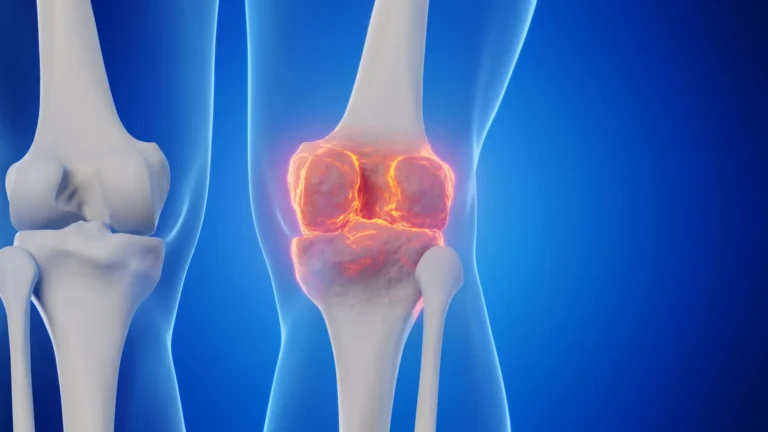
Biomechanists often point to the rise of "explosive" but uncontrolled training—often popularized in high-intensity functional training circles—as a leading cause of non-contact gym injuries. "There is a distinct difference between power training, which requires absolute precision and control, and simply throwing weights around to see what happens," notes a consultant in sports medicine. "When you lose control of the eccentric (lowering) phase of a lift, you lose the primary mechanism for muscle growth and invite significant stress on connective tissues like the ACL and rotator cuff."
The Implications: Why We Must Simplify
The consequences of over-complicating fitness are two-fold: mental burnout and physical stagnation.
The Psychological Hurdle
For the average individual, the barrier to entry is already high. When the industry presents fitness as a labyrinthine puzzle of "protocols" and "systems," it creates an intimidating environment that encourages procrastination. The "Monday" trap—where individuals delay their start date indefinitely—is exacerbated by the false belief that one needs to master a complicated, high-tech routine before stepping into the gym.
The Physiological Plateau
When a trainee spends their limited time in the gym performing movements that do not facilitate progressive overload, their results plateau. They may feel "tired" after a workout, but they are not necessarily becoming stronger or more muscular. By focusing on the "circus" of gym equipment, they miss the opportunity to stress the muscles in a way that triggers systemic adaptation.
A Practical Framework for Success
To move forward, we must abandon the cult of complexity. Here is the revised, evidence-based manual for building a better physique:
- Prioritize Presence: The gym is a place of work. Consistency is the only variable that truly matters. If you are not in the gym, you are not building.
- Education Over Ego: Before touching a weight, study the biomechanics of the movement. Understanding the path of a barbell during a deadlift is more valuable than any "hack" or "trick" found on social media.
- Strategic Mentorship: Hire a trainer to teach you the language of movement—the "how" and "why." Once you possess the technical competence to lift safely, transition to independent training. Do not rely on a trainer to act as a glorified cheerleader.
- The Mastery of Control: Every repetition should be a demonstration of mastery over the load. Momentum is the enemy of growth. If you cannot control the weight on the way down, you are not lifting it; you are merely holding onto it while gravity does the work.
- The Anti-Ego Policy: Leave the one-rep max testing for the competitive powerlifter. For the average trainee, time under tension and consistent volume are the keys to long-term progress.
- Respect the Warm-Up: Do not treat your warm-up as an optional task. It is the physiological bridge between inactivity and peak performance. A proactive approach to joint mobilization is the best insurance policy against long-term injury.
Conclusion: The Timelessness of Iron
Ultimately, the goal of physical training has not changed since the first man picked up a heavy stone and hoisted it over his head. We are biological organisms designed to adapt to stress. We thrive when that stress is applied systematically, safely, and progressively.
We have spent the last few decades turning fitness into a spectacle, distracting ourselves with shiny objects and complex theories. But beneath the neon lights and the expensive, proprietary equipment, the truth remains: the body does not know the difference between a high-end commercial gym and a basement with a rack and a barbell. It only knows tension, recovery, and adaptation.
Stop overcomplicating the process. Pick up the heavy thing. Put the heavy thing down. Repeat. It worked a hundred years ago, it works today, and it will work for the next hundred years to come. The iron does not lie, and it does not care for your methods—it only responds to the work.