






For millions of adults over the age of 60, the quest for better balance is often synonymous with increasing daily step counts. While walking is undeniably a cornerstone of cardiovascular health and general longevity, it is not a panacea for the complex neurological requirements of maintaining upright stability. If your goal is to reduce your risk of falls and move with the confidence of your younger years, the answer may not be found on the pavement, but rather on an exercise ball.
This shift in perspective moves the focus from muscle size to nervous system efficiency. To improve balance as you age, you must stop treating it as a muscular problem and start treating it as a communication problem.
The Neurology of Stability: The "Conductor" of Your Body
We often fall into the trap of believing that balance is a binary trait—either you have it or you don’t—and that it is derived primarily from the strength of our quadriceps or glutes. However, strength is merely the delivery mechanism. The true "conductor" of the physical orchestra is the nervous system.
Every microsecond you spend standing, your brain is engaged in a high-speed data processing operation. It is synthesizing constant streams of information from your visual system, your vestibular system (the inner ear), the proprioceptors in your joints, and the mechanical feedback from the soles of your feet. Once this data is aggregated, the brain executes a split-second calculation, determining which muscles to fire, which to dampen, and exactly how much force is required to keep you upright.

True balance is not the strength of the muscle; it is the speed and accuracy of the communication between the brain and the body.
Why Walking is "Autopilot" Training
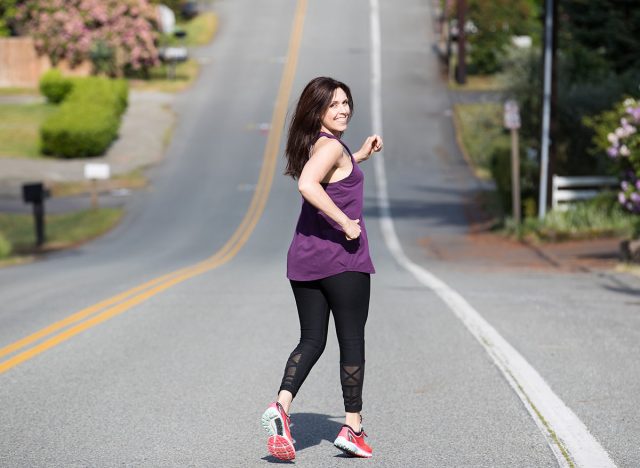
Walking is one of the most natural, healthy activities a human can perform. However, it is also highly predictable. Because the movement pattern of walking is cyclical and repetitive, the brain eventually moves into a state of "autopilot."
When you walk, you aren’t necessarily solving new movement problems; you are relying on well-worn neural pathways. An exercise ball, by contrast, creates an environment of constant instability. When you sit or kneel on a Swiss ball, your body is forced to make hundreds of tiny, reactive adjustments per minute. The ball never presents the same challenge twice. This creates a high-demand environment for the nervous system, forcing it to "wake up" and sharpen its problem-solving capabilities.
Sensory-Motor Amnesia: Reconnecting the Signal
A critical concept in geriatric physical therapy is "sensory-motor amnesia." This occurs after periods of prolonged inactivity, surgery, or chronic pain. The brain essentially loses the "map" for certain muscle groups. It’s not that the muscles have atrophied to the point of uselessness; rather, the neural signal is garbled.
Think of it like a poor cellular connection. You are trying to make a call, but the signal keeps cutting out. The muscles aren’t "forgetting" how to work; the nervous system has forgotten how to recruit them efficiently. By utilizing a Swiss ball, you force the brain to re-establish these connections, tapping into smaller, often-neglected stabilizing muscles that are essential for preventing falls.
Two Types of Balance: Righting and Equilibrium
To build a functional, resilient body, we must train two distinct types of balance reflexes:
- Righting Reflexes: These are the automatic, rapid-fire responses that keep you upright when the ground is stable but your body is in motion. Think of catching yourself when you trip over a curb or maintaining your posture when bumped in a crowded room.
- Equilibrium Reflexes (Tilting): These are the responses triggered when the surface beneath you becomes unstable. This is the skill you need when you step on a patch of ice, stand on a moving train, or your center of gravity is suddenly shifted.
The exercise ball is a unique training tool because it challenges both reflex types simultaneously, preparing the body for the chaos of the real world rather than the predictability of a gym treadmill.
Chronology of an Effective Balance Session
Experts in biomechanics often emphasize that the order of operations matters. The most neurologically demanding exercises should be performed at the start of your workout, while the brain is fresh. If you wait until the end of your session, your nervous system may be fatigued, leading to poor form and decreased benefit.

Phase 1: Sensory Priming (The Pre-Game)
Before touching the ball, you should stimulate the sensory system. Using self-massage techniques on the soles of the feet improves proprioceptive awareness. By increasing blood flow and neural stimulation to the feet, you ensure that the brain has a "clearer signal" to work with once you transition to the ball.
Phase 2: The Core Drills
Once primed, move into the exercise ball series. The goal here is not to become a professional acrobat; it is to build a nervous system that responds automatically to external stressors.
- The Seated March: Focus on the "gravity line"—keeping your ear, shoulder, and hip in perfect vertical alignment. When the ball shifts, your goal is to actively return to this line.
- Two-Point Prone Balance: By lying on your belly and lifting the opposite arm and leg, you force the left and right hemispheres of your brain to coordinate, creating symmetry in strength and stability.
- The Swiss Ball Twister: This dynamic exercise focuses on equilibrium. By moving the ball while maintaining your posture, you train your body to react to the speed and direction of the movement.
- Kneeling Balance: The most advanced stage of the series. If you are a beginner, use a wall or a spotter to ensure safety as you master the ability to balance on your knees.
Supporting Data: Why Modern Approaches Focus on Variability
Recent research into neuroplasticity suggests that the brain remains capable of developing new neural pathways well into late adulthood. However, this development requires "variable practice."
In studies involving elderly participants, those who practiced balance on unstable surfaces (like foam pads or stability balls) showed significantly higher improvements in functional independence than those who only engaged in standard resistance training. The data suggests that the "cognitive load" of balancing on an unstable surface is exactly what triggers the neural growth required to prevent falls.

Official Perspectives: The Role of the Big Toe
It is easy to overlook the foundation of our stability: the feet. The "Great Toe" is a vital, often ignored component of the gait cycle. Under the big toe sit two sesamoid bones that act as a lever. During the "toe-off" phase of walking, these bones allow for the windlass mechanism—a biological pulley system that creates the propulsion needed for a stable stride. If your big toe lacks mobility, your entire kinetic chain is compromised. Incorporating "Great Toe Mobilization" into your routine is not just about foot health; it is about ensuring your body’s foundation can support your neurological efforts.
Implications for Longevity and Independence
The implications of this training are profound. By shifting the focus from "working out" to "training the nervous system," you are effectively lowering your biological age.
When you train your nervous system to be adaptable, you are building an "insurance policy" against the unexpected. Whether you are navigating an uneven sidewalk, reaching for a high shelf, or reacting to a sudden change in terrain, a well-trained nervous system acts in milliseconds.
Conclusion: Keep walking. It remains an essential activity for metabolic and cardiovascular health. But recognize that walking is not enough to maintain the structural and neurological integrity of your balance. Dedicate just a few minutes a day to the unpredictability of the exercise ball. Your brain—and your feet—will thank you for it in the decades to come.