A decades-long investigation published today in the American Heart Association’s flagship journal, Circulation, has unveiled a sobering reality for public health: the dietary habits established during childhood cast a long shadow over cardiovascular health in adulthood. The research, which tracked over 25,000 participants for up to 25 years, suggests that consistent consumption of sugar-sweetened beverages and fruit juices from an early age significantly elevates the risk of developing high blood pressure later in life.
This study arrives at a critical juncture, as hypertension—once considered a condition exclusive to the elderly—is increasingly diagnosed among younger adults, adolescents, and children. By pinpointing the specific impact of liquid sugar intake, the findings offer a vital window for early intervention and preventative care.
The Foundations of Heart Health: A 25-Year Longitudinal Study
The study, utilizing data from the "Growing Up Today Study" (GUTS), monitored participants from their youth into their mid-thirties. By following subjects from ages 9 to 16 through their adult lives, researchers were able to establish a clear timeline between dietary patterns and the eventual diagnosis of hypertension.
The Chronology of Data Collection
The research design was robust, spanning a quarter-century of dietary monitoring.
- 1996–2004: Recruitment phases (GUTS I and GUTS II) enrolled children of participants from the Nurses’ Health Study II, creating a nationwide cohort of 25,749 individuals.
- Annual and Periodic Assessments: Participants completed comprehensive 132-item food frequency questionnaires. These check-ins occurred annually between 1996 and 1998, followed by systematic intervals in 2001, 2004, 2006, 2008, 2011, and 2015.
- Outcome Reporting: From 2010 through 2021, participants reported whether a medical professional had formally diagnosed them with high blood pressure, allowing researchers to correlate long-term intake with clinical outcomes.
By excluding participants who entered the study with pre-existing hypertension or missing dietary data, the researchers ensured a "clean" look at how lifestyle behaviors influenced the development of the condition over time.
Decoding the Data: The 52% Risk Factor
The statistical findings are stark. Researchers categorized participants based on their daily intake of sugary liquids, defining a serving as a 12-ounce glass for sugar-sweetened beverages (SSBs) and an 8-ounce glass for fruit juice.
Quantifying the Risk
The correlation between consumption frequency and health outcomes was linear and significant. Participants who consumed two or more servings of sugar-sweetened beverages daily faced a 52% higher risk of developing high blood pressure compared to those who drank fewer than three servings per week.
Breaking down the beverage categories revealed varying degrees of danger:
- Soda: Each daily serving was linked to a 23% increase in hypertension risk.
- Sports Drinks: Each daily serving was associated with a 36% higher risk.
- Fruit Juice: Consuming 1.5 or more servings of fruit juice per day was tied to a 35% higher risk of hypertension.
Notably, the study found that while apple juice and other varieties did not show the same level of association, orange juice was specifically linked to a 20% higher risk per daily serving. Researchers offered a caveat, however: it is possible that some orange-flavored beverages, which are often heavily sweetened, were misclassified by participants as "orange juice."
The "Source" Paradox: Why Whole Fruit Outperforms Juice
A significant portion of the research focused on substitution models—the idea of swapping one harmful habit for a healthier one. The results provide a clear directive for nutritionists and parents alike.
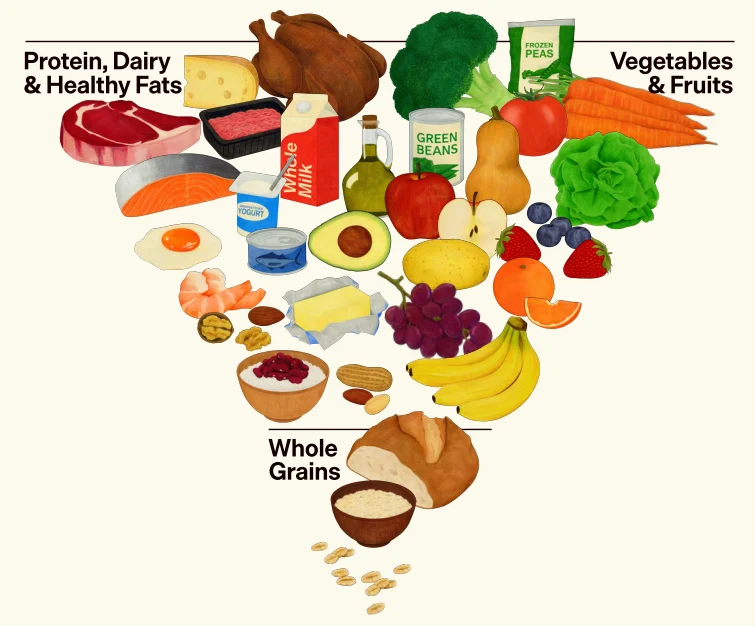
Replacing a single daily serving of a sugary beverage with whole fruit was associated with a 22% lower risk of hypertension. Similarly, swapping a daily serving of fruit juice for whole fruit lowered the risk by 19%.
"There has been a misconception about fructose in general being harmful for cardiovascular health regardless of the source, and that fruit juices are beneficial for health," said Dr. Amit Khera, director of preventive cardiology at the University of Texas Southwestern Medical Center. "This study demonstrates that neither seems to be correct."
The study indicates that the matrix of the food—the fiber and structural composition of whole fruit—modulates how the body processes sugar. In contrast, the rapid absorption of liquid fructose found in juices and sodas triggers metabolic pathways that are more likely to result in blood pressure elevation.
Official Responses and Expert Analysis
The medical community has received these findings as a "critical opportunity for prevention." Dr. Vasanti Malik, the study’s senior author and an associate professor at the University of Toronto, emphasized that the "health halo" surrounding certain beverages is a dangerous myth.
"Sugar-sweetened beverages, such as soda and sports drinks, which are often marketed as somewhat healthy, should be limited," Dr. Malik stated. "Fruit juice intake may be harmless at low levels yet harmful at higher intake levels. They should always be 100% fruit juice, and even so, consumed only in moderation. Whole fruit should be emphasized over sugary beverages."
Dr. Khera noted that the study’s focus on the childhood-to-adulthood trajectory is revolutionary. "As has been seen in adults, the total amount of fructose seems less important for the development of hypertension than the type of food where it is consumed," Khera explained. "Sugar-sweetened beverages and fruit juice relate to increased risk, while whole fruit does not."
He also addressed the demographics of the study, noting that while the cohort was predominantly White, the findings are likely even more critical for other populations. "Non-Hispanic Black and Hispanic American populations have the highest sugar-sweetened beverage intake, so these findings may be even more relevant for those groups," Khera observed.
Implications for Public Health Policy
The American Heart Association has long advocated for systemic change to address the sugar epidemic. Given the findings of this study, the Association is reinforcing its support for science-based policies designed to curb the consumption of sugary drinks.
Proposed Policy Directions:
- Fiscal Disincentives: The implementation of excise taxes on sugar-sweetened beverages to discourage frequent consumption.
- Educational Reform: Strengthening nutrition standards for school-provided meals to ensure children are not regularly exposed to high-sugar liquid diets.
- Informed Dining: Mandating clearer nutritional labeling in restaurants and fast-food chains to improve consumer transparency.
- SNAP Reform: Enhancing the nutritional quality standards within the Supplemental Nutrition Assistance Program to prioritize whole foods over caloric, nutrient-poor beverages.
Limitations and Future Considerations
While the study is the largest of its kind, the researchers were careful to acknowledge its limitations. Because the study relied on self-reported questionnaires, the results demonstrate a strong association rather than definitive causation. Furthermore, the reliance on self-reported clinical diagnoses means that cases of undiagnosed hypertension—which is common in younger populations—may have been missed.
Additionally, the demographic skew toward non-Hispanic White participants means that the findings may not perfectly mirror the physiological responses of more diverse populations. Future research is required to explore these dietary patterns across broader, more inclusive socioeconomic and ethnic backgrounds.
Conclusion: A Shift in Dietary Paradigm
As we look toward the future of cardiovascular health, the message of this study is clear: liquid calories represent a distinct and dangerous category of dietary risk. By the time a child reaches their teen years, their beverage preferences are already influencing their long-term health trajectory.
The transition from sodas and juices to water, milk, or whole fruit is more than a simple dietary tweak; it is a long-term investment in cardiovascular longevity. As the prevalence of early-onset hypertension continues to rise, the emphasis on replacing liquid sugars with nutrient-dense, fiber-rich whole fruits may be one of the most effective tools we have to secure a healthier future for the next generation.