The structural integrity of the American healthcare delivery system is currently under intense scrutiny on Capitol Hill. During a pivotal hearing before the House Energy and Commerce Health Subcommittee this week, lawmakers and medical experts convened to address a growing consensus: the current Medicare Physician Fee Schedule (MPFS) is failing both the clinicians who provide care and the 70 million beneficiaries who rely on it.
While the hearing succeeded in aligning diverse stakeholders on the urgency of the problem, a tangible legislative path toward a comprehensive solution remains elusive. The discourse highlighted a volatile mix of inflationary pressures, outdated valuation methodologies, and a Medicare Access and CHIP Reauthorization Act (MACRA) framework that has largely failed to incentivize the transition to value-based care.
The Core Dilemma: A System Out of Sync with Reality
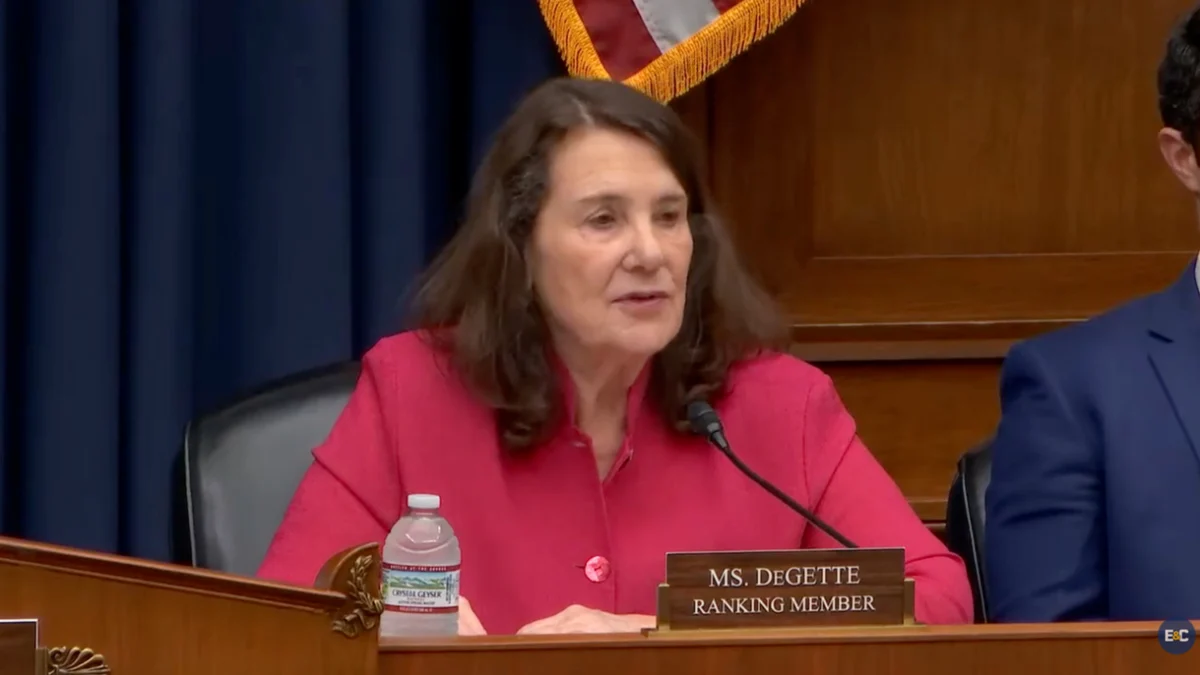
The hearing opened with a stark assessment from Rep. Diana DeGette (D-Colo.), the subcommittee’s ranking member. DeGette emphasized that Medicare’s payment policies serve as the bedrock for the entire U.S. healthcare economy, as more than 95% of clinicians derive some portion of their income from the program.
"These payments aren’t keeping up with inflation, which means that America’s physicians are paid less and less every year," DeGette stated. The data presented was sobering: in real terms, Medicare physician payments have plummeted by 33% since 2011. This decline has created a precarious environment for private practices, many of which are struggling to cover the rising costs of medical supplies, administrative overhead, and specialized staffing.
The Medicare Payment Advisory Commission (MedPAC)—an independent congressional agency rarely accused of lobbying for increased federal spending—has formally called for an inflationary update to physician payments. This rare alignment between fiscal hawks and medical advocates underscores the severity of the current trajectory.
Chronology of a Policy Breakdown
The current crisis did not emerge overnight. To understand the frustration expressed by lawmakers, one must look at the evolution of Medicare policy over the last decade:
- The Pre-MACRA Era: For years, the Sustainable Growth Rate (SGR) formula threatened massive, arbitrary cuts to physician payments, creating a "cliff" that Congress had to avert annually.
- 2015 – The MACRA Milestone: The Medicare Access and CHIP Reauthorization Act was passed with bipartisan support, aiming to end the SGR "cliff" and transition the system toward value-based care through two tracks: the Merit-Based Incentive Payment System (MIPS) and Advanced Alternative Payment Models (AAPMs).
- The Implementation Gap (2017–2024): As the rules were finalized and implemented, the promise of MACRA began to unravel. AAPMs failed to gain the expected traction, and MIPS became a "check-the-box" administrative burden rather than a catalyst for clinical improvement.
- The Post-Pandemic Reality: High inflation in 2022 and 2023 exacerbated the gap between Medicare’s static reimbursement rates and the surging costs of practice management, leading to the current push for reform.
Supporting Data: Why the Current Model Is Strained
The Budget Neutrality Trap
A major focal point of the hearing was the concept of "budget neutrality." Under current law, any increase in spending on a specific service must be offset by a cut elsewhere in the fee schedule. This effectively turns medical specialties against one another in a zero-sum game.
"End Physician Fee Schedule budget neutrality and create stable and predictable annual physician reimbursement updates linked to the Medicare Economic Index (MEI)," urged William Fox, MD, an internist and former board chair of the American College of Physicians. His testimony was echoed by Steven Furr, MD, of the American Academy of Family Physicians, who argued that without decoupling payments from this rigid neutrality requirement, the system will continue to stifle innovation and patient access.
The "Magic Elevator" Phenomenon
Cardiologist Rick Snyder, MD, provided a visceral example of how site-of-service disparities distort the market. Describing his practice in Dallas, Snyder noted that an echocardiogram performed in his office carries a technical fee of approximately $123, with a patient copay of $24. If that same patient walks to a hospital outpatient lab in the same building, the costs to Medicare and the patient quadruple. This "site-neutral" discrepancy incentivizes hospitals to acquire independent practices, contributing to a rapid wave of consolidation that many fear is reducing competition and increasing total health spending.
Official Responses and Stakeholder Perspectives
The MACRA Failure
Farzad Mostashari, MD, former head of the Office of the National Coordinator for Health Information Technology and current CEO of Aledade, offered a candid critique of why MACRA has underperformed. "The purpose of the original MACRA framework was to provide both carrots and sticks to encourage practices to join AAPMs," Mostashari testified. "Unfortunately, the implementation has played out differently. CMS has been reluctant to significantly penalize lower-performing practices, so MIPS has neither driven care improvements nor provided an incentive for practices to leave fee-for-service."
The Call for Modernization
The RBRVS Update Committee (RUC)—the AMA-convened body responsible for assigning relative values to billing codes—faced heavy scrutiny. Rep. Lori Trahan (D-Mass.) questioned the validity of the RUC’s reliance on 40-year-old methodology. Dr. Fox agreed, noting that the low return rate on physician surveys makes the current system prone to inaccuracy. He proposed a transition toward modern data collection, such as interrogating Electronic Health Records (EHRs) and utilizing time-motion studies to accurately reflect the actual effort required for modern medical procedures.
Implications: The Path Toward Legislative Reform
The Legislative Push
Rep. Raul Ruiz (D-Calif.) is currently cosponsoring legislation with Rep. Gus Bilirakis (R-Fla.) that would mandate an inflationary update linked to the MEI. The goal is to provide a "predictable floor" for physicians, allowing them to plan their budgets without the looming threat of annual reimbursement cuts.
Addressing Consolidation
The hearing also touched upon the broader antitrust concerns regarding healthcare consolidation. Rep. Buddy Carter (R-Ga.) voiced a sentiment shared by many of his colleagues on both sides of the aisle: the current regulatory environment is inadvertently driving independent physicians into the arms of large health systems. Carter’s invocation of Theodore Roosevelt’s "trust-busting" spirit highlights a growing appetite in Congress to examine whether federal payment policies are effectively subsidizing the destruction of independent private practice.
Clinical Relevance and Administrative Burden
Dana Smetherman, MD, CEO of the American College of Radiology, emphasized that the "one-size-fits-all" approach of current value-based models is ill-suited for consultative, referral-based specialties. Her testimony suggests that the next generation of reform must move away from generic quality metrics and toward specialty-specific outcomes that are clinically meaningful.
Conclusion: The Long Road Ahead
The House Energy and Commerce hearing served as a definitive recognition that the Medicare physician payment framework is in a state of decay. The consensus on the need for an MEI-linked inflationary update is a significant start, but it is only a single piece of a much larger, more complex puzzle.
For Congress, the challenge will be to balance the immediate need for physician financial stability with the long-term goal of shifting toward a high-value, efficient care model. The failure of MACRA serves as a cautionary tale: simply creating new payment tracks is not enough. Without addressing the underlying valuation methodologies, the site-of-service payment disparities, and the "budget neutrality" shackles, the system will remain trapped in a cycle of administrative complexity and declining provider morale.
As the subcommittee moves forward, the focus must shift from identifying the symptoms—which are now well-documented—to the difficult work of legislative surgery. Whether Congress has the political will to enact such fundamental reforms remains the defining question of the current session. For the millions of patients and providers awaiting clarity, the stakes could not be higher.