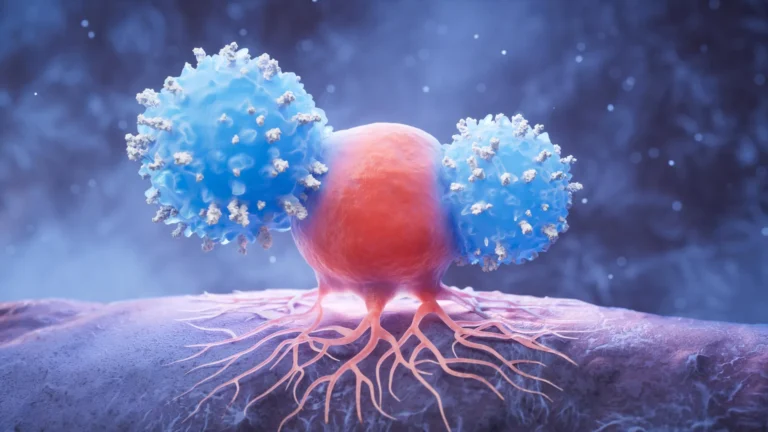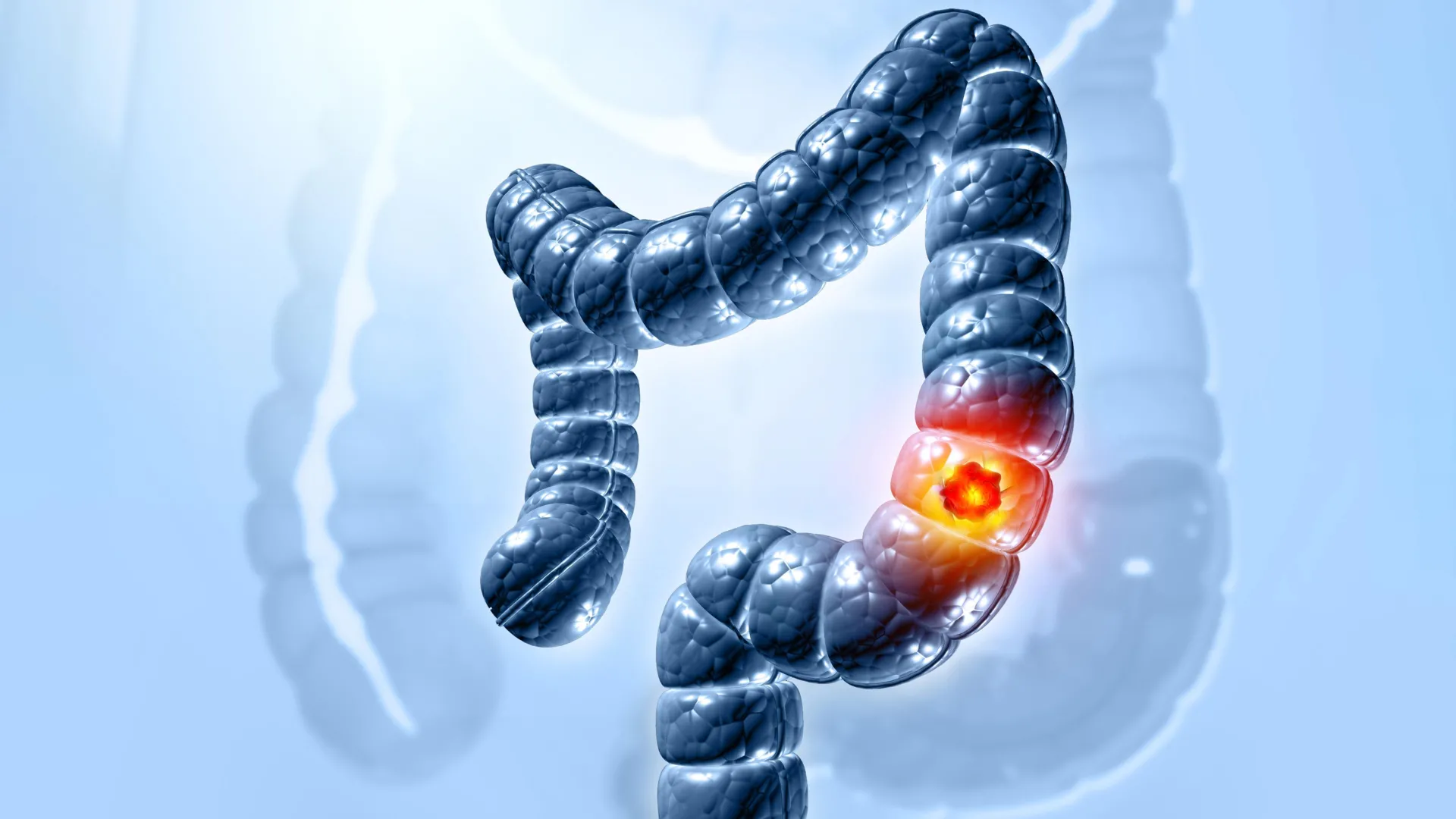
For over 15 years, the scientific community has been haunted by a microscopic puzzle: how does a specific toxin produced by the common gut bacterium Bacteroides fragilis bypass the body’s natural defenses to inflict damage on colon cells? Today, that mystery has finally been unraveled. A multi-institutional team, led by researchers at the Johns Hopkins Kimmel Cancer Center and the Bloomberg-Kimmel Institute for Cancer Immunotherapy, has identified the "gateway" protein that allows the Bacteroides fragilis toxin (BFT) to infiltrate the protective lining of the human colon.
This discovery, published in the journal Nature, not only completes a long-standing biological narrative but also introduces a groundbreaking therapeutic strategy: the use of molecular decoys to neutralize the toxin before it can trigger the chronic inflammation often linked to colorectal cancer.
The Main Facts: Unmasking the Gatekeeper
The research identifies a protein called claudin-4 as the essential docking station for BFT. While Bacteroides fragilis is a common resident of the human gut, present in roughly 20% of the healthy population, specific strains possess the genetic machinery to produce BFT.
For years, it was known that BFT causes cellular damage by cleaving a vital protein known as E-cadherin, which acts as a "glue" holding the colon’s protective epithelial barrier together. However, the mechanism of how the toxin found its target remained elusive. Scientists hypothesized that BFT did not bind directly to E-cadherin, but rather relied on a secondary, intermediate receptor to gain access to the cell membrane. The discovery of claudin-4 as this receptor explains the sequence of infection: BFT first anchors itself to claudin-4, positioning it perfectly to dismantle E-cadherin and compromise the integrity of the colon.
Chronology of a Scientific Breakthrough
The path to this discovery was neither short nor linear. It required over a decade of persistence and the integration of diverse scientific disciplines, from genetic screening to structural biology.
The Foundation (2008–2020)
Earlier work from the laboratory of Dr. Cynthia Sears, a senior author of the current study, established the link between BFT-producing bacteria and chronic inflammation. That research, published in Nature Medicine, proved that BFT’s destruction of E-cadherin was a catalyst for tumor formation in mouse models. Yet, the "how" remained an open question. Despite numerous attempts to pinpoint the receptor, the elusive molecule remained hidden.
The CRISPR Screen (2021–2022)
The breakthrough arrived when Maxwell White, an M.D./Ph.D. candidate in the Sears lab, spearheaded a genome-wide CRISPR screening effort. In collaboration with the laboratory of Matthew Waldor at Harvard Medical School, the team systematically disabled individual genes within colon epithelial cells. Their goal was simple: find which gene, when removed, rendered the cells "immune" to the toxin.
"It took a while to get the assay working and validate the approach, but once we were able to do the screen, claudin-4 was a clear, resounding top hit," White explained.
Biophysical Verification (2023)
To confirm that claudin-4 wasn’t just an accidental bystander, the Hopkins team partnered with structural biologists F. Xavier Gomis-Rüth and Ulrich Eckhard at the Molecular Biology Institute of Barcelona. Using advanced biophysical techniques, they observed a one-to-one binding complex between BFT and claudin-4, providing the first physical evidence of the toxin’s docking mechanism.
Supporting Data and Methodology
The strength of the study lies in its multi-layered validation. The researchers did not rely on a single experimental approach but utilized a combination of genetic deletion, structural imaging, and in vivo animal testing.
- Genomic Precision: By using CRISPR to knock out claudin-4, researchers observed that BFT could no longer attach to the colon cells. Consequently, E-cadherin remained intact, confirming that claudin-4 is the requisite "gateway."
- Structural Binding: The collaboration with the Barcelona team utilized high-resolution techniques to prove the binding affinity between the toxin and the receptor. This interaction is unique; most protease toxins bind directly to their targets, whereas BFT’s reliance on a separate receptor class makes it a biological outlier.
- Animal Models: Collaborating with Min Dong and Kang Wang at Harvard Medical School, the team tested their hypothesis in mice. By introducing a soluble "decoy" version of claudin-4—essentially a piece of the receptor that floats freely—they successfully intercepted the BFT before it reached the gut wall. The decoy acted as a molecular sponge, binding the toxin harmlessly in the extracellular space and preventing it from damaging the colon.
Official Responses: A New Horizon for Therapy
Dr. Cynthia Sears, the Bloomberg-Kimmel Professor of Cancer Immunotherapy, expressed relief and excitement regarding the finding. "We’ve made several attempts over time to identify the receptor, so this is an exciting moment," she stated. "Understanding how bacterial toxins work can open doors to new approaches for detection and therapy for associated diseases, including diarrhea, colorectal cancer and bloodstream infections."
The implications are far-reaching. By shifting the focus from simply killing the bacteria—which can disrupt the healthy microbiome—to blocking the toxin’s ability to "dock," researchers are looking toward a more refined form of precision medicine.
Maxwell White, reflecting on the potential for future treatments, noted, "This approach could be iterated upon with small molecules or other biologics that have better pharmacological properties." The team is currently exploring how to refine these decoys to make them viable for human clinical trials.
Implications: Changing the Landscape of Colorectal Health
The identification of the BFT-claudin-4 interaction marks a shift in how we view gut-related carcinogenesis.
Redefining Bacterial Pathogenesis
The study challenges the conventional understanding of how toxins interact with cells. By identifying that BFT behaves differently from other proteases, researchers have opened a new area of study regarding how bacteria evolve specialized mechanisms to hijack host proteins. This discovery may lead to the identification of similar receptors for other poorly understood bacterial toxins.
New Avenues for Cancer Prevention
Colorectal cancer is often the result of years of cumulative, low-level inflammation. If clinicians can identify patients colonized by BFT-producing Bacteroides fragilis and intervene early with a decoy-based therapy, they may be able to break the chain of events that leads from chronic inflammation to tumor growth. This could effectively turn a potential carcinogen into a harmless commensal bacterium.
The Unsolved Mystery: A Call to Future Research
Despite the success, the study underscores that science is an iterative process. While the team successfully proved the binding interaction, they have not yet captured a high-resolution 3D structure showing exactly how the toxin and claudin-4 fit together.
Even with the use of state-of-the-art artificial intelligence modeling tools like AlphaFold, the precise molecular orientation remains partially obscured. This "missing puzzle piece" serves as the next frontier for structural biologists. As White and his colleagues move forward, the focus will shift toward refining the decoy molecules for therapeutic use and solving the final structural riddle of the toxin-receptor complex.
Conclusion
The discovery of the claudin-4 receptor is more than just a footnote in a textbook; it is a vital step toward better gut health. By solving a 15-year-old mystery, the researchers at Johns Hopkins and their partners have provided a blueprint for future cancer prevention. As the medical community turns its attention toward the gut microbiome as a key determinant of overall health, findings like these serve as a reminder that understanding the microscopic interactions between our cells and our bacterial residents is essential for conquering some of the most stubborn diseases of the modern era.
Funding and Acknowledgments:
The research was supported by the Bloomberg~Kimmel Institute for Cancer Immunotherapy, Janssen Research and Development, Cancer Research UK, the National Institutes of Health (grant numbers R01 AI042347, R01 NS080833, R01 NS117626, R01 AI170835 and R01 AI189789), and the Howard Hughes Medical Institute.
The study included contributions from Jason Chen, Shaoguang Wu, Abby L. Geis, and Jessica Queen at Johns Hopkins, alongside Hailong Zhang, Karthik Hullahalli, and Jie Zhang at Harvard Medical School.