






The global medical technology sector experienced a seismic shift last week when Johnson & Johnson (J&J) announced that it had received U.S. Food and Drug Administration (FDA) de novo authorization for its long-awaited surgical robotics platform, Ottava. The approval, which arrived earlier than many industry analysts had anticipated, positions J&J as the most formidable challenger yet to Intuitive Surgical—the pioneer that has dominated the robotic surgery market for the past quarter-century.
Coming on the eve of a major industry conference, the announcement has set the medical community abuzz. With the de novo designation, the FDA has acknowledged that Ottava is not merely an iteration of existing technology, but a novel system that introduces an entirely new architectural paradigm to the operating room.
The Architectural Breakthrough: Moving Beyond the "Boom and Cart"
For years, the robotic surgery market has been defined by "cart-based" systems. Whether it is Intuitive’s iconic da Vinci or Medtronic’s Hugo, these platforms typically rely on bulky, standalone mobile carts that must be wheeled into position, calibrated, and connected to the operating table. These systems often require extensive room modifications, significant floor space, and time-consuming setup procedures.
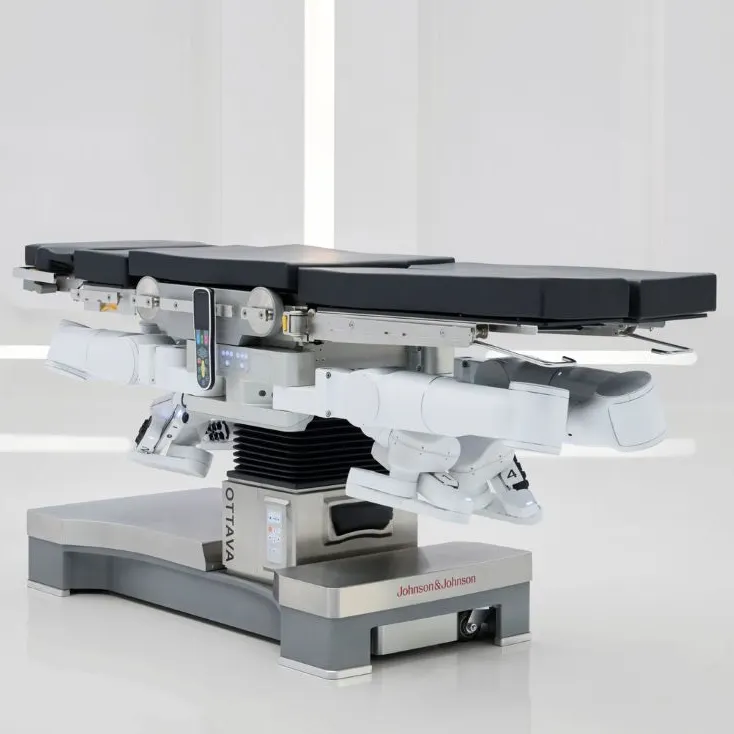
Ottava fundamentally rejects this model. As Rocco De Bernardis, global president of Ottava, explains, the system integrates four "intelligent" robotic arms directly into a standard-size surgical table.
"We took a very complex engineering problem to give simplicity back to the surgeons and the surgical teams," De Bernardis said in an interview with MedTech Dive. "By removing the booms and carts that today all other robotic systems use to host robotic arms, we have created a system that is 30% to 50% smaller than any other leading robotic platform. It can fit into virtually any operating room around the world without the need for facility expansion or costly refurbishment."
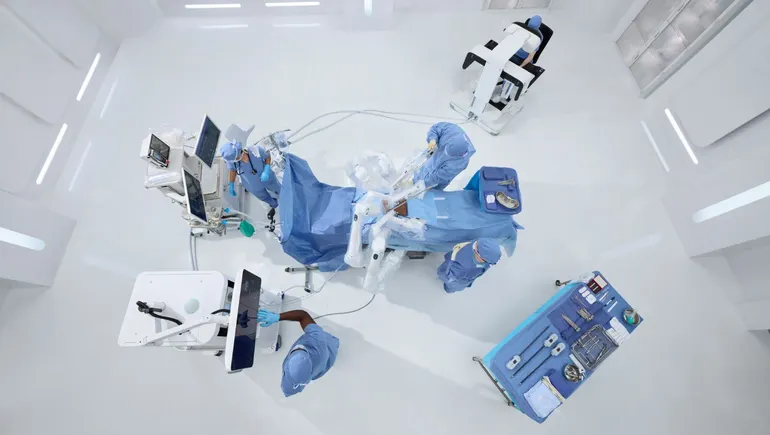
When not in use, the arms stow discreetly beneath the table, allowing the surgical team to perform open or traditional laparoscopic procedures without the robot obstructing the workspace. This flexibility effectively transforms every operating room into a potential robotic suite, a scalability feature that hospital administrators have long desired.
Chronology of a Decade-Long Development
The journey to Ottava’s FDA authorization has been a decade-long exercise in precision engineering and strategic integration.
- 2014-2015: J&J signals its intent to enter the robotics space by forming the Verb Surgical joint venture with Verily (Alphabet’s life sciences arm), aiming to merge robotics with digital data and AI.
- 2019: J&J acquires Auris Health, the company founded by robotic surgery pioneer Fred Moll. This acquisition brings the Monarch platform and critical robotic expertise into the J&J fold.
- 2020-2022: Development of the "Ottava" system accelerates. J&J shifts focus toward integrating its proprietary Ethicon instrumentation—the gold standard in tissue management—into a next-generation platform.
- 2023: The company begins final clinical validation and prepares its regulatory filings, emphasizing a "surgeon-first" design philosophy.
- 2024: The FDA grants de novo authorization for general abdominal surgical procedures, marking the official launch of the platform.
Supporting Data: Why Design Matters
The surgical robotics market is no longer a niche; it is a multi-billion-dollar global industry. However, the adoption of robotics has been hampered by three primary factors: the physical footprint, the complexity of setup, and the high cost of implementation.
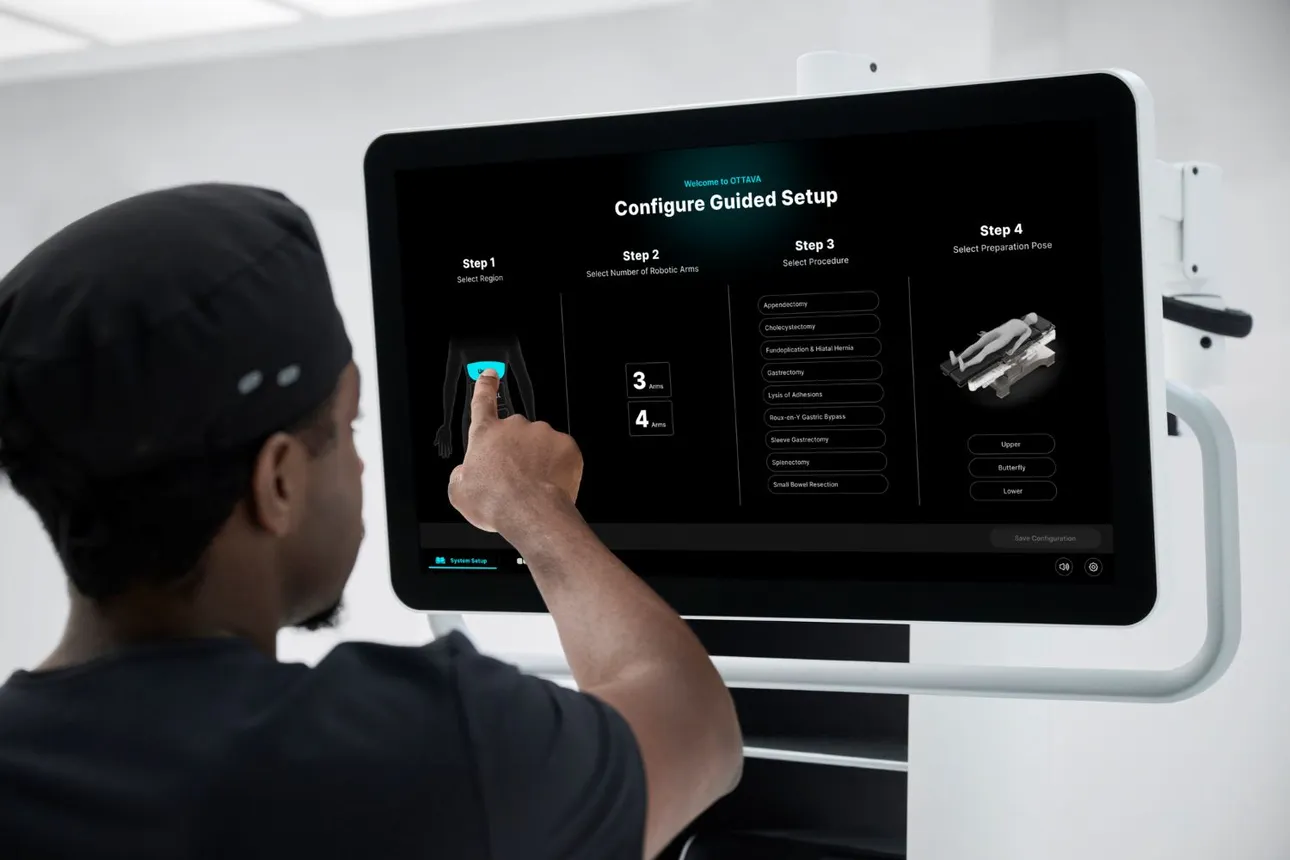
J&J’s market strategy rests on the data-driven belief that hospital efficiency is the key to widespread adoption. According to De Bernardis, the "intelligent" nature of the Ottava arms includes automated procedure poses. A surgeon can select a specific surgery—such as a Roux-en-Y gastric bypass or a cholecystectomy—on a touchscreen, and the system automatically docks the arms in the optimal position for that procedure. This reduces "docking time," which is a significant pain point in current robotic workflows.
Furthermore, the system leverages "synchronized table motion." In traditional laparoscopy, surgeons rely on gravity to expose anatomical structures by tilting the patient. When robotic systems were first introduced, this became difficult or impossible, often requiring surgeons to reset the entire system. Ottava allows for native, seamless table motion, enabling surgeons to utilize gravity to expose tissues without pausing the procedure. This is a critical feature that directly addresses feedback from the surgical community.

The Power of the Ecosystem: Polyphonic Integration
Beyond the mechanics, Ottava is designed to be the centerpiece of J&J’s broader digital ecosystem, known as Polyphonic. This platform is intended to be an open, secure digital environment that aggregates surgical data, video, and AI-driven insights to facilitate surgical training and continuous performance improvement.
"Fifty percent of all hospital complications are related to surgery," De Bernardis notes. "If you think about leakages, infections, or bleeding instances postoperatively, this is where the wealth of Johnson & Johnson’s Ethicon instrumentation comes into play." By marrying its legacy in advanced instrumentation with the precision of the Ottava robot, J&J aims to do more than just facilitate surgery—it aims to reduce post-operative complications and improve patient recovery rates.
Official Responses and Strategic Implications
Industry analysts view the early FDA approval as a massive win for J&J. By securing a de novo classification, the company has effectively bypassed the "me-too" competition, forcing rivals to justify why their legacy systems are superior to an integrated, table-based platform.
"Our approach at the beginning is to work with leading institutions—the experts in robotic surgery," De Bernardis said. "These institutions have used existing robotic systems for years and understand the limitations. We want to partner with them to deliver evidence that confirms our value proposition."
The company is being measured in its rollout. The initial focus is on general surgery in the U.S., but the roadmap is aggressive. Over the next 12 to 18 months, J&J plans to expand Ottava into multiple surgical specialties and seek regulatory approvals in international markets. The goal is to turn the system into a truly global, multi-specialty platform.
Market Implications: The Battle for the OR
The arrival of Ottava changes the calculus for hospital CEOs and OR directors. For years, the barrier to entry for robotic surgery was the massive upfront capital investment and the "tax" on space. If J&J can prove that Ottava provides a superior return on investment—by increasing patient throughput, reducing setup times, and integrating with the hospital’s existing IT infrastructure—it could trigger a wave of facility upgrades.
For Intuitive Surgical, the pioneer of the field, the competition is no longer just about who has the better robotic arm; it is about who has the better ecosystem. J&J’s massive existing footprint in operating rooms via its sutures, staplers, and energy devices gives it a unique "foot-in-the-door" advantage. Surgeons who have trusted J&J instruments for decades may find it easier to transition to a robotic system that incorporates the same trusted technology.
Conclusion: A New Standard?
The de novo authorization of the Ottava system is a testament to the fact that, in medical technology, innovation is not a straight line. It is a process of identifying the friction points in the surgical experience and eliminating them through engineering. By moving the robot under the table, automating the setup, and integrating the digital workflow, J&J has set a high bar for its competitors.
As the industry looks toward the next decade, the question is no longer whether robotic surgery will become the standard of care, but which platform will provide the most seamless, data-driven, and patient-centric experience. With Ottava, Johnson & Johnson has made it clear that they intend to define that future. The battle for the operating room has just entered a new, more sophisticated phase.