











Reviewed by Brian St. Pierre, MS, RD
In the halls of fitness centers and the private offices of nutrition coaches, a quiet revolution took place between 2017 and 2026. What began as a ripple of anxiety—a professional existential crisis phrased as the question, "Is this drug going to steal my job?"—has matured into a cornerstone of modern health management.
As of 2026, over 1 in 10 US adults are currently prescribed a GLP-1 medication. For the fitness professional, the initial fear that these medications would render coaching obsolete has evaporated. In its place, a more nuanced reality has emerged: coaches are no longer competing with pharmacology; they are essential partners in the patient’s long-term health journey.
The Evolution of the Coaching Paradigm
When semaglutide (Ozempic) first hit the mass market, it was a theoretical threat. Most coaches heard of it, but few saw its impact in their daily sessions. By 2026, the landscape has shifted. The drug is no longer a niche curiosity; it is a ubiquity.
The initial defensive posture of the fitness industry has softened into a collaborative model. Coaches now recognize that while medication can alter physiology, it cannot automate behavioral change. As Kate Solovieva, Super Coach and Precision Nutrition’s Director of Community, aptly puts it: "As a coach, you’re not in the GLP-1 world; you’re in the GLP-1 support world."
The modern coach’s market is not simply "everyone on a GLP-1," but rather "people on GLP-1s who want support." By filtering their practice to focus on those ready for behavioral integration, coaches are finding that their services are more vital than ever.
Chronology: From Fear to Integration
- 2017–2020: The introduction of GLP-1s. Initial concerns center on "lazy" weight loss and the loss of personal agency.
- 2021–2023: Early reports of muscle mass loss and nutritional deficiencies begin to surface. Coaches start identifying a need for structural support.
- 2024–2025: Research confirms that lifestyle intervention—specifically resistance training and protein prioritization—mitigates the metabolic risks of rapid weight loss.
- 2026: The industry standard shifts. Coaching is now viewed as the "safety net" that allows patients to maintain weight loss and metabolic health after the initial medication phase.
Supporting Data: The Risks of the "Band-Aid" Approach
The data is clear: relying solely on medication without behavioral intervention creates a precarious foundation. Studies indicate that without protective strategies, up to 40 percent of weight lost from GLP-1 medications can come from lean mass, the majority of which is muscle.
Furthermore, the cessation of these drugs often leads to rapid weight regain if the underlying habits have not been addressed. However, the outlook is not bleak. Individuals who integrate consistent nutritional and resistance training behaviors while on medication are four times more likely to maintain a 10 percent or higher weight loss when they eventually taper off the drug.
The 7 Types of GLP-1 Clients
Coaching is dynamic, and client readiness is not a fixed trait. Coaches must listen for cues to determine which of the seven primary "types" they are working with at any given moment.
1. The Honeymooner
This client is experiencing success and loves it. They are seeing the scale drop with minimal effort. Their readiness for intensive coaching is currently very low.
- Coaching Move: Respect their progress. Do not use the "righting reflex" to push them toward deeper changes they aren’t ready for. Simply plant the seed: "If you ever feel like you want to work on resistance training or optimizing nutrition, I’m here."
2. The Ambivalent Candidate
They are frozen at the starting line, caught between the desire for health and the fear of medication.
- Coaching Move: Use the "4 Crazy Questions" exercise. Help them articulate what is driving their hesitation. Remember: this is not a medical decision for the coach, but a psychological one for the client.
3. The Ready-to-Quitter
They are suffering from side effects like nausea and exhaustion and are ready to abandon the protocol.

- Coaching Move: Depersonalize the experience with education. Suggest experiments, such as smaller, more frequent meals, and encourage them to consult their doctor about potential dose adjustments.
4. The Muscle-Loss Risk
The scale is moving, but the body composition is shifting in the wrong direction.
- Coaching Move: Bring awareness to the invisible. Use DEXA scans or functional performance markers (like stair climbing or carrying groceries) to highlight the need for protein and resistance training.
5. The Under-Fueler
Appetite suppression has become so severe that the client is barely eating, putting their health at risk.
- Coaching Move: Screen for disordered eating. If absent, focus on an "eating schedule." The goal is to move from eating based on hunger cues to eating based on metabolic necessity.
6. The Graduate
They have reached their goal and are choosing to wean off the medication.
- Coaching Move: This is the most critical phase. They are transitioning from "medication-assisted" to "behavior-sustained." Focus on reinforcing the "ruts in the trail"—the habits that will hold them up when the drug’s effects fade.
7. The Priced-Out
They are being forced off the medication due to insurance changes or costs.
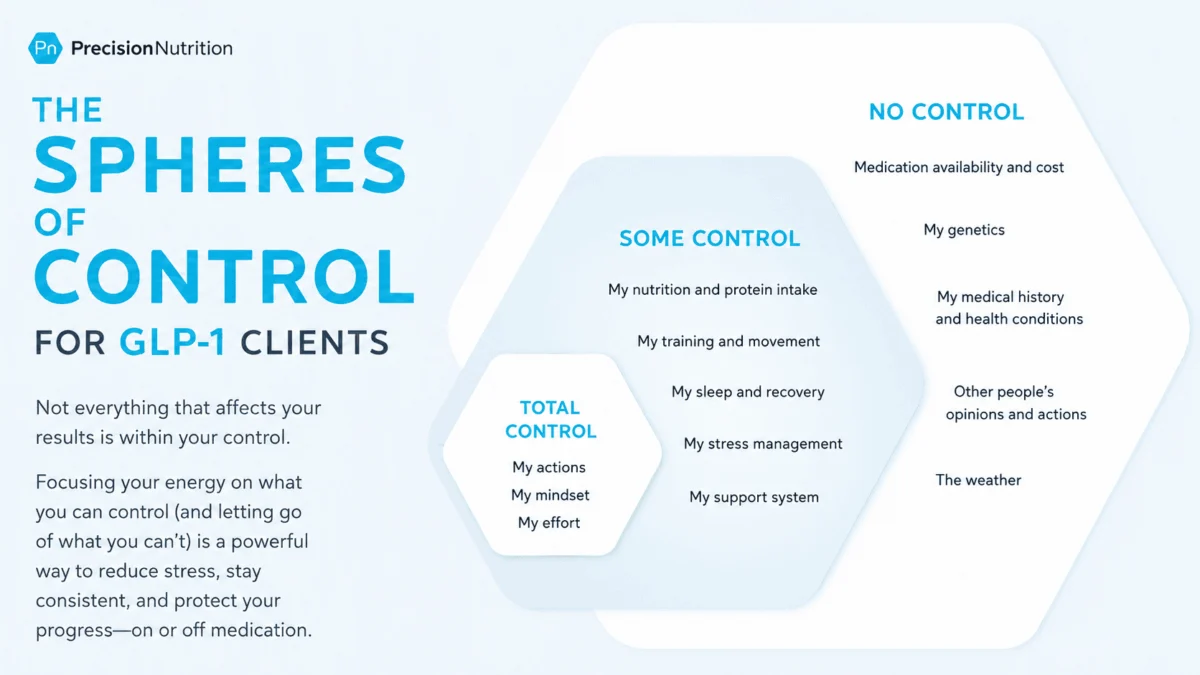
- Coaching Move: Address the systemic frustration. Use the "Spheres of Control" exercise to move them from feelings of defeat to focusing on what they can influence: protein, movement, sleep, and mindset.
Official Responses and Ethical Boundaries
The coaching community is increasingly aligning with medical experts on the necessity of a multidisciplinary approach. The consensus is clear: coaches must stay within their scope of practice. They should never adjust doses or contradict medical advice. Instead, they must act as a bridge, ensuring the client communicates effectively with their medical provider.
Red flags—such as persistent vomiting, severe abdominal pain, or symptoms of depression—must always be referred back to a medical professional. Coaches are not replacements for doctors; they are the architects of the habits that make the medical treatment sustainable.
Implications for the Future of Fitness
The rise of GLP-1s has fundamentally changed the "why" of fitness coaching. For years, the industry focused on the "how" of weight loss. Now, the focus has shifted to the "how" of identity maintenance.
The goal of the modern coach is to help the client build a new self-concept. As Coach Toni Bauer notes, the successful client is the one who says, "I am the person who eats protein at every meal. I am the person who does resistance training because it builds the tissue I need to age well."
This identity-based approach is the ultimate insurance policy. When a client deeply ingrains these behaviors, they aren’t just riding the wave of a medication—they are building the "ruts in the trail" that will guide them long after the medication is discontinued.
For the coaching professional, this is a golden era. It is an opportunity to move beyond vanity metrics and into the realm of true, long-term, functional health. By supporting clients through the complexities of pharmacological intervention, coaches are not losing their jobs; they are solidifying their roles as indispensable architects of human health.
If you are a professional looking to navigate this new terrain, the path forward is through education, empathy, and an unwavering commitment to the foundational habits that define a high quality of life. The medication may change the chemistry, but the habits change the person.