









Reviewed by Brian St. Pierre, MS, RD
The "Job-Killer" Panic
When GLP-1 receptor agonists—the class of medications including semaglutide (Ozempic) and tirzepatide (Mounjaro)—first reached the mass market, a wave of existential dread swept through the health and fitness industry. Coaches across the globe were struck by a singular, unsettling question: "Is this drug going to steal my job?"
In 2017, the threat felt theoretical. Prescriptions were sparse, and the medication felt like a niche medical intervention. Fast forward to 2026, and the landscape has shifted seismically. With over 1 in 10 US adults currently prescribed a GLP-1 medication, the stigma has largely evaporated, replaced by a widespread, normalized reliance on these drugs for weight management and metabolic health.
For the modern fitness professional, the initial fear has matured into a pragmatic reality. Most coaches no longer view these medications as a threat, but rather as a powerful, albeit complex, tool that requires a sophisticated support system to be used effectively.
Chronology: From Resistance to Integration
The trajectory of the fitness industry’s relationship with GLP-1s can be categorized into three distinct phases:
- The Era of Skepticism (2017–2021): Early adoption was limited. Coaches largely ignored the trend, viewing it as a "quick fix" that bypassed the "hard work" of traditional diet and exercise.
- The Reality Check (2022–2024): As prescription rates surged, the unintended consequences became impossible to ignore. Reports of muscle atrophy, nutrient deficiencies, and severe gastrointestinal distress became common. The industry realized that medicine alone was not a panacea.
- The Era of Support (2025–Present): A new paradigm has emerged. The leading professional consensus is that coaching is not merely an "additive" to GLP-1s; it is a clinical necessity for long-term health. The goal has shifted from "coaching against the drug" to "coaching through the drug."
Supporting Data: The Case for Coaching
The need for specialized guidance is supported by stark clinical data. Research indicates that without intentional, resistance-based interventions, up to 40% of the weight lost while on GLP-1s can come from lean mass—specifically muscle.
Furthermore, data suggests that the "rebound" effect is significant. Individuals who rely solely on medication without behavioral modification face a high probability of weight regain once the drug is discontinued. Conversely, those who integrate strategic resistance training and protein-focused nutrition while on the medication demonstrate a fourfold increase in the likelihood of maintaining at least 10% weight loss after cessation.
The Strategic Shift: Redefining the Market
For coaches struggling to find their place, the solution lies in a fundamental reframe. Your market is not "people on GLP-1s." Your market is "people on GLP-1s who want support."
As Kate Solovieva, Director of Community at Precision Nutrition, notes: "As a coach, you’re not in the GLP-1 world; you’re in the GLP-1 support world."
Trying to reach every person on a GLP-1 is a strategic error. Some users are not interested in behavioral change, and attempting to force coaching on them is an exercise in futility. Instead, professional success lies in identifying the subgroup of users who are ready to optimize their results, mitigate side effects, and build a sustainable identity beyond the medication.
7 Archetypes of the GLP-1 Client
Understanding the "readiness" of a client is the cornerstone of effective coaching. Here are the seven types of clients a coach will encounter, organized by their psychological and physical journey.
1. The Honeymooner (Low Readiness)
These clients are seeing results on the scale without changing their habits. They feel great and see no reason to invest in coaching.
- Coaching Move: Avoid the "righting reflex." Do not lecture them on muscle loss. Simply celebrate their progress and keep your door open for when they inevitably reach a plateau or encounter metabolic hurdles.
2. The Ambivalent Candidate (Low-to-Moderate Readiness)
This individual is teetering on the edge of starting medication. They are plagued by questions of morality ("Am I weak?") and fear of the unknown.

- Coaching Move: Use the "4 Crazy Questions" framework to help them explore their fears. Remember: you cannot decide for them, but you can provide the clarity they need to make an informed decision with their physician.
3. The Ready-to-Quitter (Moderate Readiness)
They are losing weight but suffering from severe side effects like nausea and exhaustion. They are on the verge of stopping the medication entirely.
- Coaching Move: Offer neutral education. Explain that side effects are common and often dose-dependent. Suggest experiments—like smaller, more frequent meals—rather than prescribing solutions.
4. The Muscle-Loss Risk (Moderate Readiness)
The scale looks good, but their body composition is suffering. They are likely sedentary and under-protein-fed.
- Coaching Move: Shift their focus from the scale to the DEXA scan. Bringing awareness to the "invisible" loss of muscle is often the catalyst required to get them to adopt resistance training.
5. The Under-Fueler (Moderate-to-High Readiness)
The medication has suppressed their appetite to the point of danger. They aren’t just eating less; they are starving.
- Coaching Move: Prioritize safety. If disordered eating is suspected, refer out immediately. If not, focus on creating a mandatory eating schedule to ensure they meet basic caloric and nutrient requirements.
6. The Graduate (High Readiness)
They have reached their goal and are now tapering off the medication. They are terrified of the "rebound."
- Coaching Move: Temper their expectations. Focus on maintaining the "ruts" of their habits—the neural pathways formed during their time on the medication—to ensure they don’t lose their progress when the drug’s appetite-suppressing effects wear off.
7. The Priced-Out (High Readiness)
They were successful, but lost access to the medication due to insurance changes or financial constraints. They are often angry and demoralized.
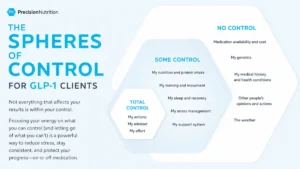
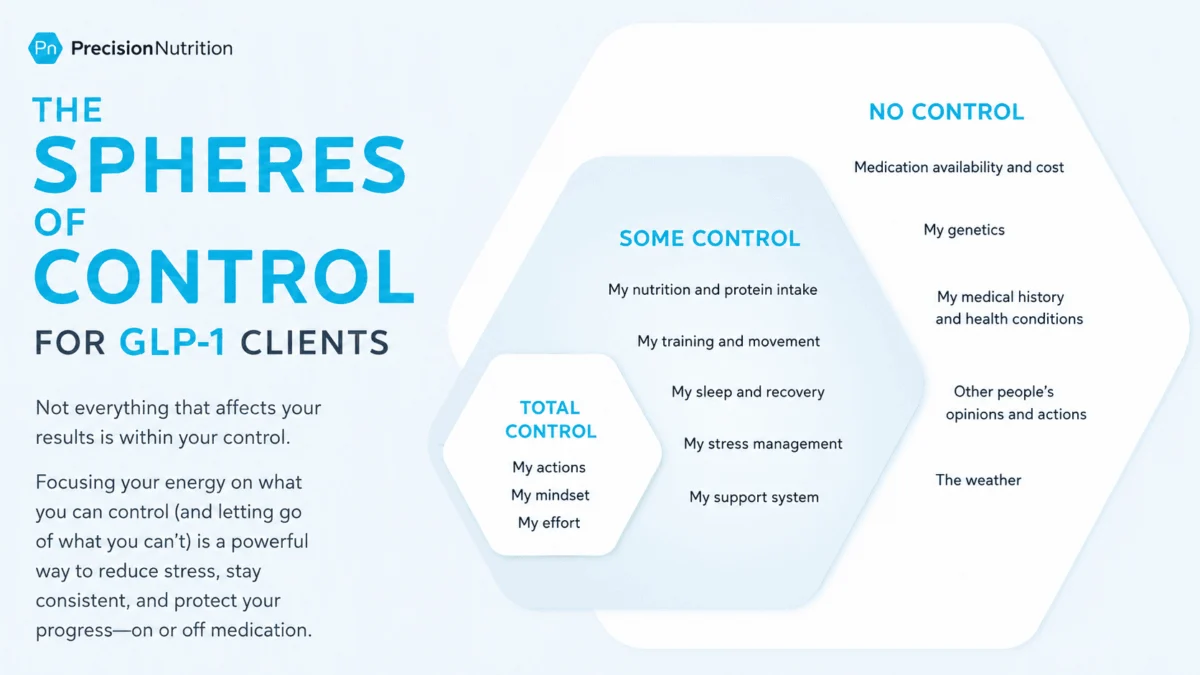
- Coaching Move: Reframe the situation. This is a system failure, not a personal one. Use the "Spheres of Control" exercise to help them focus on what they can change—nutrition, movement, and mindset—rather than what they cannot.
Implications for the Industry
The rise of GLP-1s has forced the fitness industry to grow up. The era of "calories in, calories out" as the sole pillar of fitness is insufficient when medical interventions fundamentally alter the biological signals of hunger and satiety.
The New Promise
Coaches must stop promising "weight loss" and start promising "habit architecture." The goal is not just to reach a destination, but to ensure that when the medication is eventually removed, the client has the internal framework to remain who they have become.
"Think about the Oregon Trail," says Coach Toni Bauer. "Wagon wheels made ruts in the trail by hitting the same ground over and over. If you lay down those neural pathways and reinforce them while the client is on the medication, they’ll have a better chance of continuing on the same path even when the medication is gone."
The Path Forward: Professional Certification
Because of the complexity involved in managing these clients—where nausea, fatigue, and muscle loss often intersect—specialized education is no longer optional. The GLP Coaching Institute Certification, developed in partnership with Precision Nutrition, is leading the way in providing a structured framework for this new reality.
By teaching coaches to prioritize five core areas—Strength, Fuel, Fitness, Recovery, and Results—the industry is finally moving toward a standard of care that addresses the whole person, not just the biological effects of a drug.
For the coach of 2026, the job hasn’t been stolen. It has been elevated. By becoming a partner in their client’s metabolic and behavioral journey, the coach remains the most important tool in the box.
For more information on navigating this evolving landscape, consider joining the waitlist for the upcoming GLP Coaching Institute Certification. Ensure your practice is prepared to support the next generation of clients.
References
(Click here to view the information sources referenced in this article.)