The landscape of the National Health Service is on the cusp of its most significant upheaval since its inception. Following the King’s Speech on 13 May 2026, the government unveiled the NHS Modernisation Bill, a legislative package that seeks to fundamentally dismantle the existing administrative architecture of the health service while simultaneously ushering in a new era of digital integration.
At the heart of the reforms is the proposed abolition of NHS England, with its core functions set to be absorbed directly into the Department of Health and Social Care (DHSC). This pivot toward centralized departmental control is coupled with a mandate that promises to reshape clinical practice: the implementation of a national Single Patient Record (SPR). As the sector digests these radical proposals, the voices of digital health leaders, clinical experts, and patient advocacy groups are emerging, painting a picture of both immense potential and significant operational risk.
The Chronology of Reform: From Policy to Legislation
The journey toward the current Modernisation Bill has been long, marked by years of debate over efficiency, data silos, and the efficacy of the arm’s-length body model.
- March 2025: Prime Minister Keir Starmer first signals the government’s intent to abolish NHS England, aiming to streamline the bureaucracy that critics argue has created a disconnect between policy and frontline delivery.
- July 2025: The government publishes its "10-Year Health Plan," setting a "digital-by-default" ambition for the NHS. This document served as the blueprint for the current legislative efforts.
- October 2025: Digital Health Network chairs begin preliminary discussions regarding the impact of proposed structural changes on clinical digital maturity.
- 13 May 2026: The King’s Speech officially announces the NHS Modernisation Bill, confirming the legislative path for the dissolution of NHS England and the mandatory creation of the SPR.
Structural Overhaul: Abolishing the Middleman
The abolition of NHS England represents a massive shift in the governance of the NHS. By moving functions directly into the DHSC, the government intends to end the "perpetual reorganization" that has plagued the health service for decades. However, this move has met with skepticism from those who manage the NHS’s technical infrastructure.
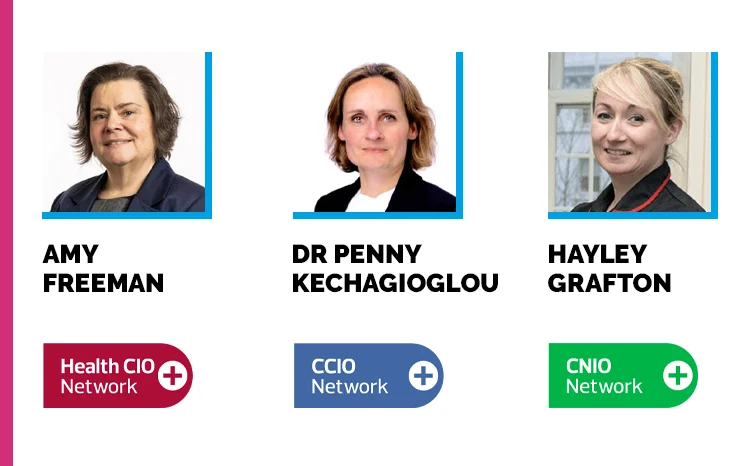
Amy Freeman, chair of the Chief Information Officer (CIO) Advisory Panel, highlighted the "pedigree" gap between the two organizations. "NHS England currently operates a number of critical live digital services for the NHS, and historically the DHSC has focused more on policy and strategy," Freeman noted. The concern is that in transitioning these services to a department unaccustomed to frontline delivery, the stability of critical systems could be compromised. The transition, she argues, must be navigated with extreme caution to ensure that "delivery at pace" does not come at the cost of operational continuity.
The Single Patient Record (SPR): The Digital Holy Grail
The most ambitious element of the Bill is the requirement for all NHS providers to share data to create a unified Single Patient Record. For decades, the NHS has struggled with "fragmented data," where clinical information is siloed across hospitals, GP surgeries, and community care providers.
The Clinical Perspective
Dr. Penny Kechagioglou, chair of the CCIO Advisory Panel, views the SPR as a clinical imperative. "If executed well and safely, it shall improve care experiences and reduce the admin load for NHS staff by having data all in one place," she said. Beyond simple efficiency, she points to the potential for "prevention education and lifestyle behaviour change," where integrated data can provide a longitudinal view of a patient’s health trajectory, enabling earlier, more proactive interventions.
Hayley Grafton, CNIO Advisory Panel chair, echoed this sentiment but emphasized the importance of design. "I have long advocated for a ‘Patient Record’ rather than a profession- or specialty-specific record," she stated. For Grafton, the success of the SPR lies in its ability to support joined-up care, provided the governance is strong enough to maintain public trust.
The Technical and Practical Hurdles
While the vision is universally praised, the reality of implementation is daunting. CIO Amy Freeman pointed out that many NHS trusts still rely on "hundreds" of disparate clinical systems, and some remain tethered to legacy paper records. "Progressing digital maturity and reducing paper-based processes will be essential before a comprehensive SPR can be realized," she warned.
Steve Wightman, managing director of healthcare at The Access Group, added a cautionary note regarding the history of such initiatives. Drawing parallels to the failed National Programme for IT (NPfIT), he urged the government to focus on "safe and effective information integration" rather than getting bogged down in the complexity of a monolithic national database. He suggests that building on the success of existing shared care records might be a more pragmatic approach than a top-down, "all-at-once" implementation.
Implications for the Sector: A Double-Edged Sword
The Bill is not just a digital mandate; it is a structural redesign of how healthcare is commissioned and delivered.
Empowering Local Care
Nick Lansman, chief executive of the Health Tech Alliance, sees a silver lining in the reform of Integrated Care Boards (ICBs). By empowering ICBs as strategic commissioners, the government may be creating a more fertile ground for HealthTech suppliers to embed solutions directly into communities. "Fragmented data has long been one of the biggest practical barriers," Lansman noted, arguing that the SPR provides the "structural foundation" necessary for digital health solutions to scale.
The Social Care Gap
Gerard Crofton-Martin of the Social Care Institute for Excellence provided a vital reminder: the SPR will only succeed if it is truly integrated. "People shouldn’t have to repeat their story at every point of contact," he said. However, he warned that for this to be a success, social care must be "built in from the start," with investment not just in technology, but in the digital skills and connectivity required for local authorities and community providers to participate effectively.
The Patient Voice
For the Patients Association, the Bill is a mix of long-awaited progress and significant risk. CEO Rachel Power welcomed the SPR but voiced concerns about the timeline. With the initial commitment limited to maternity and frailty care by 2028, patients are looking for clarity on the path forward. "It must be designed with patients, it must work for people who find digital technology difficult, and patients must stay in control of their own information," Power asserted.
Conclusion: The Risk of Centralization
Perhaps the most poignant critique came from Sarah Woolnough of The King’s Fund, who warned that the Bill operates against a backdrop of "political instability." The centralization of power in Whitehall—coupled with the potential dilution of independent voices like Healthwatch—creates a paradox.
"The Bill centralises more power in Whitehall and the hands of the Secretary of State, and may weaken independent patient voice at the very time ministers say they want to devolve more to local organisations," Woolnough observed.
The NHS Modernisation Bill is, by all accounts, a bold attempt to drag the NHS into the digital age. It promises to end the "decades of frustration" associated with fragmented information. However, as industry leaders and clinical chairs have noted, the success of this reform will not be determined by the legislation itself, but by the government’s ability to support local organizations, protect patient data, and prove that a more centralized structure can actually deliver a better, more responsive experience for the patient.
As the Bill moves through Parliament, the eyes of the digital health community will be fixed on the details of the SPR implementation and the transition of NHS England’s functions. The promise of "one version of the truth" for patient data is a prize worth winning, but the path to achieving it remains fraught with technical, cultural, and political complexity.