









"I want to know I’m doing absolutely everything I can to preserve my health for as long as possible."

It is a sentiment echoed in modern clinics, high-end gyms, and the comment sections of popular health podcasts. We live in an era where the quest for longevity has shifted from simple wellness to "optimization." From the biohacking protocols of Silicon Valley executives to the rigorous regimens touted by social media influencers, the message is clear: if you aren’t tracking your biomarkers, ice-bathing, and supplementing with expensive compounds, you are falling behind.

But is this obsession with "optimal" health actually serving us? Or has the pursuit of the perfect longevity protocol created a new source of stress that undermines the very vitality it promises to protect?

The Myth of the "Perfect" Protocol
The modern health landscape is dominated by figureheads like Dr. Peter Attia, Dr. Andrew Huberman, and biohacker Bryan Johnson. Their influence has been immense, sparking a cultural movement that views the human body as a machine to be tuned. While their intent—to extend healthspan and lifespan—is noble, the "optimal" lifestyle they promote is rarely realistic for the average person.

The most pervasive myth in this space is that the "basics" are no longer sufficient. There is a prevailing anxiety that unless you are utilizing cutting-edge strategies—such as continuous glucose monitoring, hyperbaric oxygen therapy, or bespoke supplement stacks—you are failing to outlive your potential.

In reality, the foundational pillars of health—regular exercise, a nutrient-dense diet, restorative sleep, stress management, and social connection—remain the most powerful levers for longevity. Data from coaching organizations, including Precision Nutrition, suggests that consistent, modest effort yields far superior results than an intense, "optimized" protocol that is abandoned after three months due to burnout.

Chronology of the "Optimization" Trend
The shift toward extreme health optimization did not happen overnight. It is the result of a convergence of three major factors:

- The Wearable Tech Boom (2010–2015): The introduction of affordable fitness trackers gave individuals unprecedented access to their own biological data. Suddenly, "what gets measured gets managed" became the mantra for everything from step counts to REM sleep cycles.
- The Rise of the "Expert" Influencer (2015–2020): As long-form podcasts gained popularity, health experts and biohackers found a platform to disseminate complex, often theoretical research to the general public. This democratized information but also removed the nuance of clinical context.
- The "Biohacking" Mainstream (2020–Present): With the post-pandemic focus on immune health and personal control, high-cost interventions (like IV drips and longevity supplements) shifted from elite athletic circles to the mainstream, creating a "pay-to-play" culture of wellness.
Supporting Data: The Law of Diminishing Returns
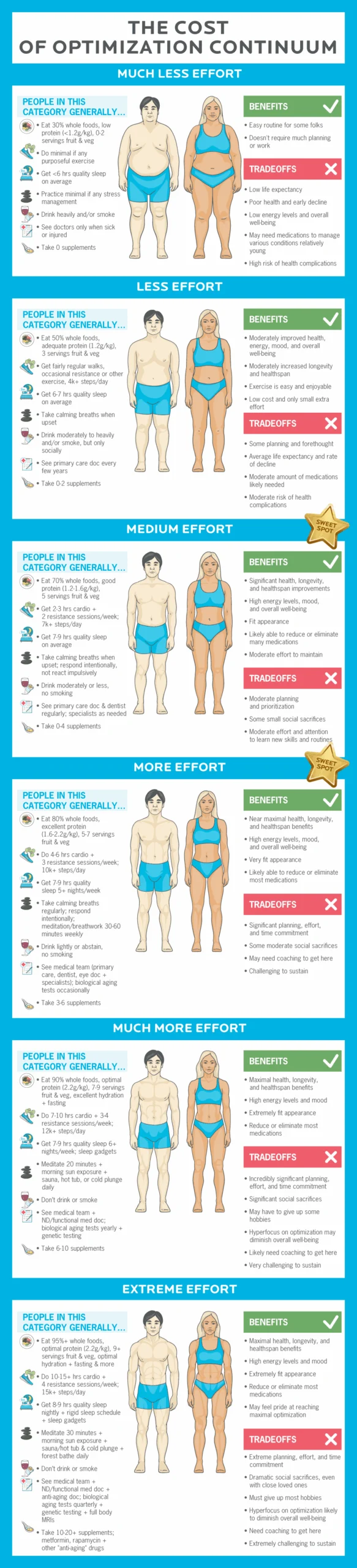
The core problem with the "more is better" philosophy is the law of diminishing returns. Scientific evidence indicates that the most significant health gains occur when moving from a sedentary lifestyle to a moderately active one. As effort increases, the marginal health benefit per hour of effort invested drops significantly.

For example, studies on exercise mortality show a "U-shaped" curve. Risk of death is highest among the inactive. As physical activity increases, the risk drops precipitously, leveling off at moderate-to-high levels of exercise. However, engaging in extreme volumes of training—sometimes called the "Extreme Exercise Hypothesis"—can actually increase the risk of cardiac issues, such as atrial fibrillation or coronary artery calcification.

Similarly, nutritional data suggests that the benefits of a whole-food diet plateau once you reach roughly 80-90% consistency. The "final 10%" of perfection often requires 100% of the effort, creating a trade-off that may not be worth the cost to one’s mental health or social life.

Official Stances and Clinical Realities
Health authorities and researchers consistently emphasize that longevity is not found in a pill or a niche recovery hack.

- Exercise: Recommendations typically suggest 150–300 minutes of moderate-intensity aerobic activity per week, paired with two to three resistance training sessions. The goal is to build bone density and muscle mass—the two greatest predictors of survival after age 65.
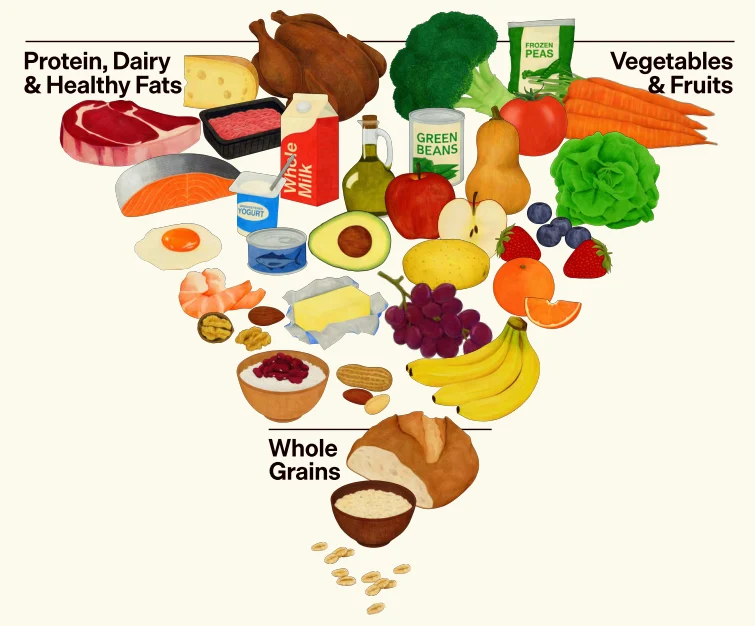
- Nutrition: The "five-a-day" rule for fruits and vegetables remains a gold standard. While the supplement industry generates billions, most research indicates that vitamins and minerals are most effective when derived from whole foods, with supplements serving only to address specific, diagnosed deficiencies.
- Social Connection: Often ignored by the "optimizer" crowd, the Harvard Study of Adult Development—the longest-running study on human happiness—consistently ranks strong social relationships as the #1 predictor of longevity, outperforming wealth, genetics, and even blood pressure management.
The Cost of Optimization: A Triple Threat
When we look at the "optimizer" lifestyle compared to a "healthy" lifestyle, the differences in investment are stark:

- Financial: An optimizer might spend thousands annually on specialized blood panels, non-prescription supplements, and recovery technologies. A "healthy" person focuses on whole foods and standard gym access, saving significant capital.
- Temporal: Optimization requires hours of weekly planning, tracking, and recovery rituals. For many, this time-sink creates a "second job" that encroaches on family time and professional productivity.
- Psychological: Perhaps the most dangerous implication is the risk of orthorexia—an obsession with "correct" eating—or general health anxiety. When a person becomes so hyper-focused on their health that they cannot enjoy a meal with a friend or miss a workout without guilt, they have arguably compromised their "Deep Health."
Implications for the Future
The path forward is not to abandon health goals, but to redefine them. We must move away from the "all or nothing" mentality that characterizes current optimization culture.

Research shows that even individuals who practice foundational habits with only 40–50% consistency achieve measurable, life-extending results. This is empowering: it means that life’s inevitable disruptions—a busy work week, a vacation, or a family emergency—do not "ruin" your progress.

The ultimate goal of longevity is not to live in a state of clinical perfection; it is to maximize your "healthspan"—the number of years you spend in good health—so that you can participate fully in the life you have.

If you are currently feeling overwhelmed by the noise of the wellness industry, take a step back. Audit your routine. Are you doing the basics? If the answer is yes, you are already in the top tier of the population for health outcomes. Before adding another supplement, another tracking app, or another complex recovery protocol, ask yourself: Is this adding to my life, or is it just adding to my to-do list?

Great health is not a product of extreme, fringe measures. It is the quiet, boring, and remarkably effective result of doing the basics, consistently, over a lifetime. That, and that alone, is the true secret to a long and vibrant life.