Published July 2, 2026
In an era defined by the "maximization" of every waking moment—a phenomenon colloquially dubbed "maxxing"—the ancient practice of mindfulness has ironically become a performance metric. From sleep optimization to the precise calibration of "chill time," modern consumers are increasingly reliant on a suite of wearable technologies designed to track, analyze, and ultimately improve the human experience. However, for many, this influx of data does not equate to a calmer life. Instead, it often fosters a new layer of existential anxiety: the pressure to be mindful, effectively.
The central tension of modern wellness is the struggle to do less in a culture that rewards more. Mindfulness, at its core, is a practice of subtraction—a radical act of letting thoughts float by and simply inhabiting the body. Yet, as we quantify our rest and our stress, we risk turning our interior lives into another project to be managed. This is the landscape into which the Pulse Mindfulness Ring has been introduced, offering a curious, hardware-based alternative to the data-heavy wearables that currently dominate the market.
The Evolution of Wellness Tech: From Data to Presence
The shift in wearable technology has been palpable over the last several years. Historically, the industry was dominated by "quantified self" devices—smartwatches and rings that obsessively tracked heart rate variability (HRV), blood oxygen levels, and sleep cycles. While these tools offer profound insights for health professionals, for the average user, the constant feedback loop can be exhausting.
If a user wakes up to find their sleep score is low, they immediately begin to ruminate on why, often triggering the very stress response that prevented a deep slumber in the first place. This creates a "data-anxiety" cycle, where the tool meant to improve health becomes a source of psychological burden.
The Pulse Mindfulness Ring enters this space with a distinct philosophy: it does not measure, it does not analyze, and it does not aggregate data. Instead, it relies on haptics—the science of touch—to serve as a Pavlovian anchor, pulling the user back to the present moment through rhythmic, physical sensation.
Chronology: A Week with the Pulse Mindfulness Ring
To understand the efficacy of such a device, one must track the user’s journey from initial skepticism to integration.
Day 1: The Arrival and The Fit.
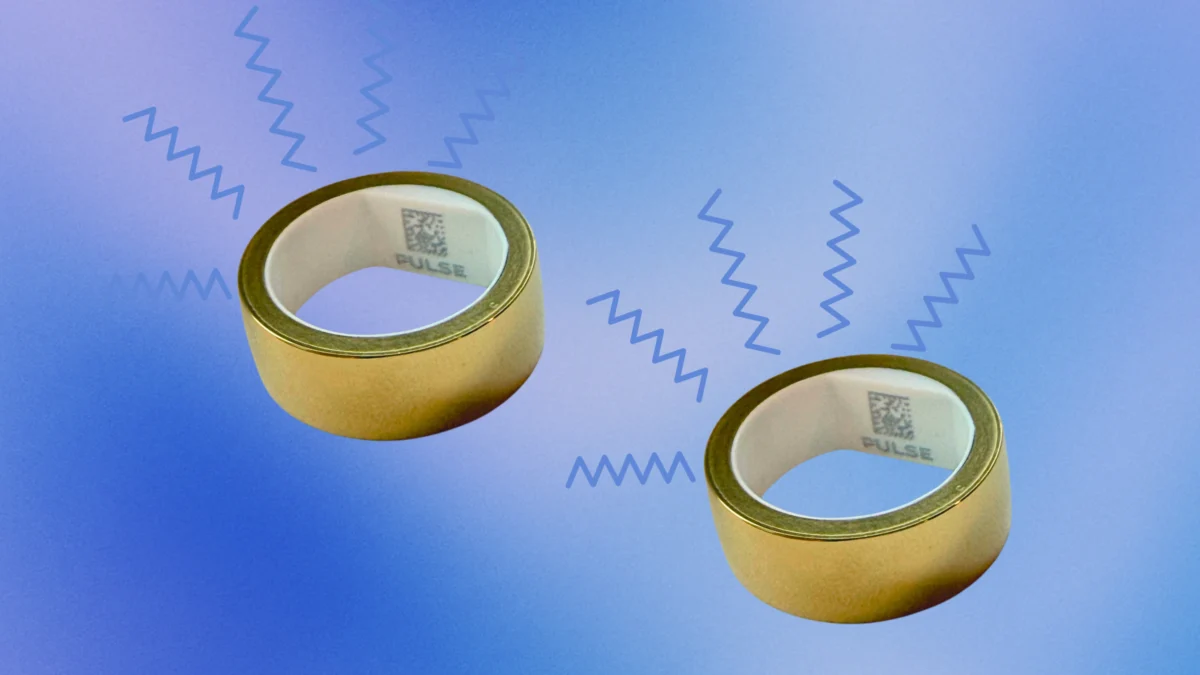
The device, available in silver ($199) and gold ($239), arrives with a sizing kit, a necessity given the ring’s somewhat "chunky" aesthetic. Upon unboxing, the titanium construction—lightweight yet waterproof—surprises the wearer, who may initially mistake the matte finish for plastic. The setup is straightforward: a sleek, magnetic charging port powers the device, and a Bluetooth pairing process connects it to the Pulse app.
Day 3: The Adjustment Period.
Initial usage is marked by distraction. The wearer finds themselves hyper-aware of the finger, waiting for the "stimulus." The random, gentle pulses—defaulting to "Mindfulness Mode"—initially cause a startle response rather than a sense of calm. However, as the user begins to assign personal meaning to these pulses (e.g., a reminder to take a deep breath or hydrate), the distraction begins to subside.
Day 7: Integration and Haptic Meditation.
By the end of the first week, the user shifts from anticipating the buzz to integrating it. The "Breathing Sessions" feature emerges as the standout utility. Unlike audio-guided meditations, which require headphones and a quiet space, the haptic metronome allows for discrete, eyes-closed meditation in public or private settings.
Supporting Data and Technical Utility
The Pulse Mindfulness Ring operates on the premise of "intention-based stimulus." The hardware is essentially a haptic engine encased in titanium, which utilizes the following primary modes:
- Mindfulness Mode: Random, intermittent pulses throughout the day that serve as "pattern interrupts," designed to break the user’s cognitive autopilot.
- Breathing Sessions: A customizable metronome that pulses for inhales and exhales, allowing users to practice box breathing or 4-7-8 techniques without the need for an external screen.
- Focus Sessions: Based on the Pomodoro Technique, these provide physical cues for 25-minute work intervals followed by short, restorative breaks.
- Soothing Sessions: Short, 1-to-3-minute bursts of gentle, patterned vibrations—some modeled after the low-frequency rhythm of a cat’s purr—intended to soothe the nervous system during moments of acute stress.
While clinical studies on the long-term neurological impacts of haptic-based mindfulness are still emerging, the application of "tactile anchoring" is well-documented in behavioral psychology. By providing a sensory cue that is not tied to a screen or an audio feed, the ring reduces the "cognitive load" typically required to initiate a mindfulness practice.
Official Perspectives: The Philosophy of "Less"
The manufacturers of the Pulse Ring have leaned into a minimalist marketing strategy. In discussions regarding the device’s design, the company emphasizes that the ring is not a diagnostic tool.
"We are not interested in telling you how you slept," a company representative noted in recent documentation. "We are interested in helping you arrive at the current moment."
This stance is a direct pushback against the "maxxing" culture. By refusing to provide metrics, the Pulse Ring effectively removes the possibility of "failing" at mindfulness. There is no leaderboard for breathing, no graph for stress levels, and no notification that you are "underperforming" in your relaxation. The device functions as a blank slate, where the user projects their own intentions onto the haptic feedback.
The Implications of Haptic-Driven Mindfulness
The rise of devices like the Pulse Ring has significant implications for the future of the wellness industry. It suggests a potential market pivot away from "surveillance-based health" and toward "intervention-based health."
1. The De-quantification of Wellness
If the Pulse Ring succeeds, it may signal that consumers are becoming fatigued by the "data-first" approach. A shift toward tools that facilitate presence rather than tracking metrics could allow users to reclaim their autonomy, moving away from the need for digital validation of their mental state.
2. Discreet Integration
The ability to meditate or focus in a crowded office, on a subway, or during a meeting without drawing attention is a major advantage. Traditional meditation apps often require a "time out" from reality. The Pulse Ring, conversely, integrates into reality, acting as a subtle companion that keeps the user tethered to their physical body regardless of the external environment.
3. The Risk of Dependency
Despite its benefits, the device does raise questions about dependency. If one relies on a physical buzz to remember to breathe, does the capacity for mindfulness atrophy in the absence of the device? Critics argue that true mindfulness should be an internal, self-generated state. Proponents, however, view the ring as a "training wheel"—a temporary scaffold that eventually builds the neural pathways required to sustain awareness without the technology.
Conclusion: A Tool for the Modern Stoic
The Pulse Mindfulness Ring is not a panacea for the anxieties of modern life. It is, by its own admission, a piece of vibrating titanium. Yet, in that simplicity lies its greatest strength. By refusing to participate in the data-maximization race, it offers a reprieve from the burden of self-analysis.
For those who find themselves caught in the cycle of "optimizing" their way to serenity, the ring provides a necessary reminder: the most effective way to be mindful is often the simplest. Sometimes, the most advanced technology is the one that reminds us to put our phones away, close our eyes, and simply breathe. Whether the ring is a lasting solution to the noise of modern life or merely another gadget in a crowded market remains to be seen. But for now, its commitment to "doing less" is a welcome, if slightly ironic, contribution to the world of wellness.