By Neil Baum, MD
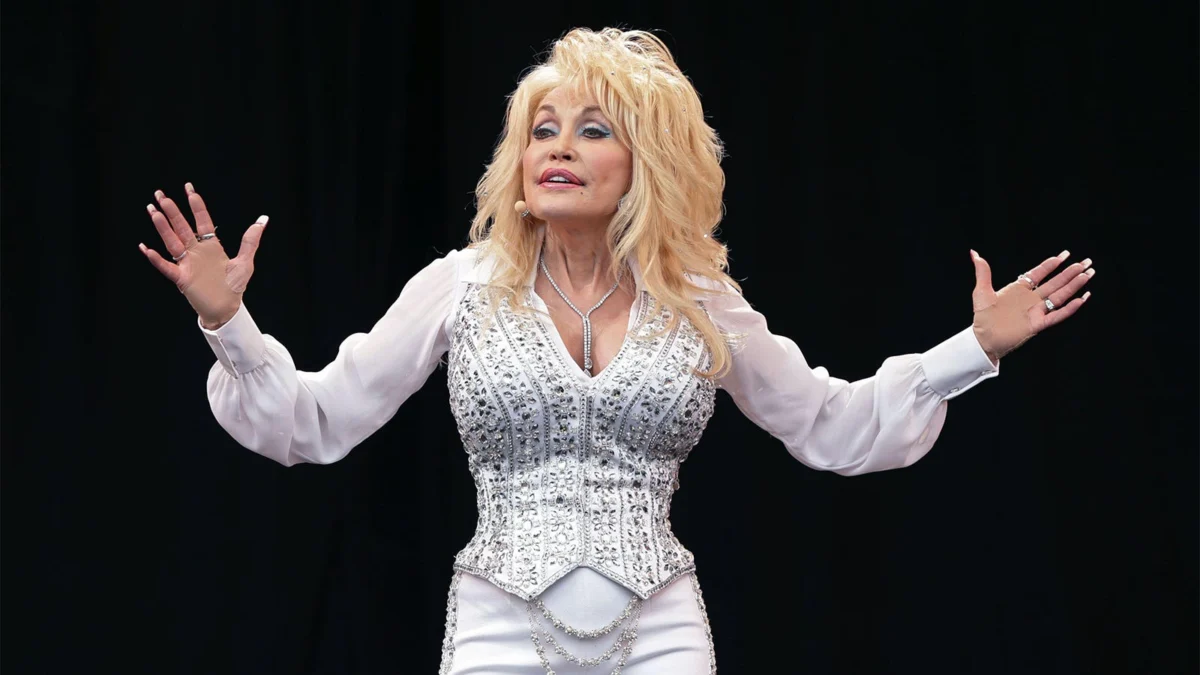
The passing of Dolly Parton last month at the age of 80 has triggered a global outpouring of grief and reflection. While the world mourns a legendary songwriter, entrepreneur, and cultural icon, her death has also sparked a profound reassessment of her humanitarian and healthcare legacy. Amidst the tributes, a unique perspective has emerged from within the medical community: Dolly Parton was not merely an entertainer; she was a masterclass in human-centric leadership.
For physicians operating in an increasingly clinical, technology-driven, and often impersonal healthcare environment, Parton serves as an unlikely but essential role model. The very qualities that propelled her to the pinnacle of global stardom—humility, resilience, authenticity, and an uncanny ability to make others feel "seen"—are the exact traits required to heal in the 21st century.
A Legacy of Impact: The Facts and the Philanthropy
Born in 1946 in the Great Smoky Mountains of Tennessee, Parton’s rise from a one-room cabin without electricity or running water to international superstardom is well-documented. However, it was her transition into a philanthropic powerhouse that defined the latter half of her life.
The centerpiece of her humanitarian work, the Imagination Library, has been a transformative force in childhood literacy, donating more than 330 million books to children worldwide. This commitment to the public good was not a side project; it was an extension of her core identity. For the medical profession, her life serves as a stark reminder that professional success is not an endpoint, but a platform for social obligation.
The Chronology of a Cultural Icon
To understand Parton’s influence, one must look at the arc of her evolution:
- 1960s-1970s: The rise of a country music pioneer, where she navigated a male-dominated industry with sharp business acumen and unwavering creative control.
- 1980s: Her expansion into Hollywood, cementing her status as a mainstream cultural force.
- 1995: The launch of the Imagination Library, marking her pivot toward large-scale, systemic philanthropy.
- 2000s-2024: Her transition into an elder stateswoman of pop culture, characterized by her embrace of digital platforms and a relentless commitment to kindness as a brand pillar.
Throughout this timeline, Parton never suffered from the "drift" that often affects successful public figures. She remained consistent in her message, her aesthetic, and her advocacy, proving that one can evolve without losing one’s soul.
Supporting Data: The Human Element in Medicine
The medical field is currently grappling with a crisis of burnout and patient disconnection. Data consistently shows that when patients feel "seen"—a hallmark of Parton’s interactions—outcomes improve.
According to recent studies from the American Medical Association (AMA), nearly one in three physicians will face a malpractice suit during their career. The emotional toll of these events is staggering, often leading to a "defensive" posture in clinical practice. Parton’s life provides a counter-narrative to this stress. By refusing to let rejection or criticism define her, she offers a blueprint for resilience.
Furthermore, as artificial intelligence begins to automate diagnostic and administrative tasks, the "human" aspect of the white coat becomes our most valuable asset. Parton’s ability to use humor, touch, and genuine empathy as therapeutic tools is a skill set that no algorithm can replicate.
Official Responses and Reflections
Medical leaders and educators are increasingly looking toward "non-traditional" mentors to bridge the gap in clinical empathy training. Following her passing, many in the healthcare space have noted that while medical school focuses on protocols, guidelines, and algorithms, there is a dangerous gap in training for the "human" element.
"Patients don’t just want our medical knowledge," notes Dr. Neil Baum. "They want to know that there is a human being wearing the white coat. No single personality type makes an excellent physician, but there is a baseline requirement for authenticity that is currently being neglected in the race for technical efficiency."
Implications for the Modern Physician
The passing of Dolly Parton leaves behind a void, but also a roadmap for those who wish to practice medicine with both excellence and grace.
The Power of Humility in High-Stature Roles
Physicians, like celebrities, are often placed on a pedestal. This creates a barrier between the provider and the patient. Parton’s lesson was that success does not require an inflated ego. By maintaining her down-to-earth personality despite her stature, she remained approachable. Doctors who cultivate this same humility—avoiding the "god complex"—find that patients are more open, more compliant, and more trusting.
The Imperative of Adaptation
Parton was a chameleon, moving from songwriter to actress to entrepreneur without hesitation. Medicine is undergoing its own radical evolution. The rapid integration of AI, telehealth, and genomic medicine requires physicians to be perpetual students. Parton’s life reminds us that our identities can, and should, expand. A doctor is a scientist, but they are also a communicator, a leader, and a community advocate.
Authenticity as a Clinical Tool
Perhaps the most critical lesson is the danger of conformity. Medical training teaches us how to dress, speak, and document. While these professional standards are necessary, they often strip away the very personality that makes a physician relatable.
Authenticity is the foundation of the physician-patient relationship. When a doctor is "unapologetically themselves," it builds a level of trust that clinical credentials alone cannot achieve. When you have to deliver a life-changing diagnosis, it is not your board certification that comforts the patient; it is your humanity.
Turning Adversity into Advantage
Parton faced poverty, bullying, and stereotypes throughout her life. She did not hide these experiences; she leveraged them. In a high-stakes environment like a hospital or clinic, adversity is inevitable. Whether it is a challenging case, a negative patient outcome, or the stress of a potential malpractice suit, the way we frame these obstacles determines our longevity in the field. If we view these challenges as opportunities for growth rather than as threats to our status, we maintain our passion for the work.
A Call to "Serious" Kindness
Dolly Parton’s greatest strength was her ability to take her work seriously without taking herself too seriously. Humor, when used with appropriate tact, is a potent medicine. It lowers blood pressure, eases tension in clinical teams, and makes the doctor-patient interaction feel less like a transaction and more like a collaboration.
As we move forward in an era of rapid technological advancement, the temptation will be to view patients as data points and symptoms as problems to be solved. We must resist this. We must remember that behind the lab coat is a person, and in the exam chair is a human being with a story.
Dolly Parton may have seemed like an unlikely role model for the medical profession, but her absence serves as a reminder of what is missing in many clinical settings today. She built an empire on the foundation of humility, generosity, and an unwavering commitment to making others feel valued. These are not just the traits of an entertainer; they are the hallmarks of an exceptional physician.
In the final analysis, the greatest lesson from Parton’s life is simple: You can be a professional of the highest order, but you must never become too important to be kind. As we reflect on her legacy, the challenge for every doctor is to find their own version of that authenticity. When we do, we don’t just treat diseases—we heal people.