In the wake of the Supreme Court’s decision to overturn Roe v. Wade, the American political landscape regarding reproductive rights has undergone a tectonic shift. While a majority of Republicans remain steadfast in their opposition to abortion, the legislative reality of state-level bans has begun to erode the monolith of conservative consensus. Across the country, stories of medical necessity, personal trauma, and the logistical nightmare of navigating restrictive laws are forcing voters—including those raised in strictly religious, conservative households—to reconcile their past ideological convictions with the harrowing realities of modern healthcare.
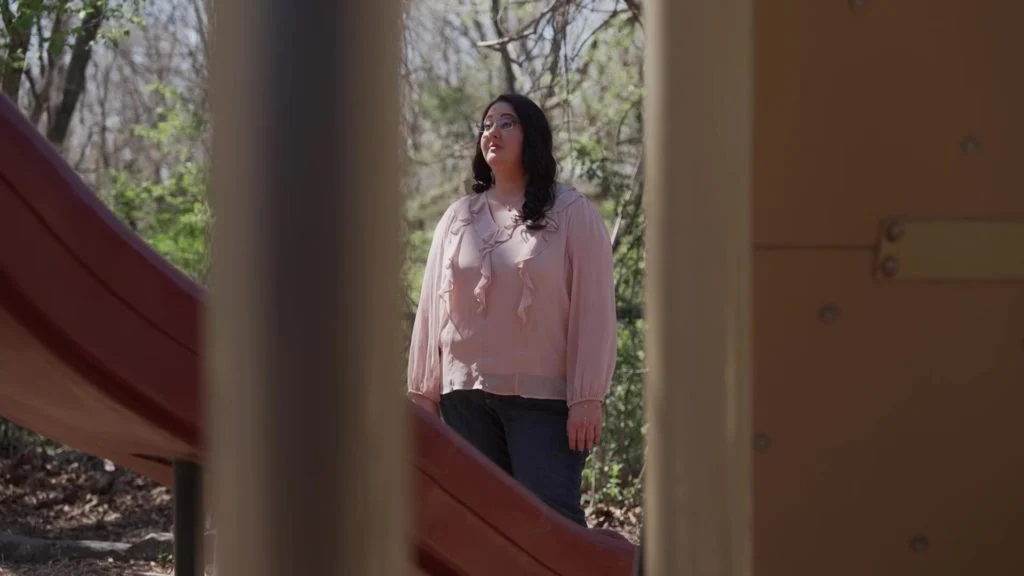
Among those at the epicenter of this shift is Chelsea Stovall, a 35-year-old mother from Fayetteville, Arkansas. Her journey from a devout evangelical upbringing to becoming a lead plaintiff in a lawsuit challenging her state’s near-total abortion ban offers a poignant window into how the abstract debate over abortion is transforming into a visceral, lived experience for thousands of Americans.
A Legacy of Faith and Silence
To understand the depth of the shift in public opinion, one must look at the cultural architecture that built it. For many in the American South, opposition to abortion was not merely a political stance; it was a foundational element of identity, often inherited through the church and family tradition.
Chelsea Stovall, born into a large, mobile family, grew up in an environment where faith was the primary lens through which the world was viewed. "We were sort of evangelical Christian," Stovall recalls. "It was very much a part of everyday life. That’s really where my values came from." In this environment, abortion was a subject shrouded in a heavy, impenetrable taboo. It was never framed as a component of reproductive healthcare; it was spoken of only in the abstract as a moral failing.
Her husband, Thomas, shared a similar upbringing in a small Mississippi town. His exposure to the topic was limited to the fire-and-brimstone rhetoric of his local Southern Baptist church. "It was our way or the highway," Thomas explains. "The very first time I ever heard the word ‘abortion,’ it was from a preacher. He said, ‘Oh, it’s wrong. It’s a sin.’ And that was the end of it. I hadn’t done my own research. I never thought it would affect me."
For the Stovalls, as for many others, the political became personal only when the theoretical possibility of a medical crisis became an unavoidable reality.
The Anatomy of a Crisis: A Chronology of Loss
The turning point for the Stovall family began in 2022. Having successfully navigated two previous pregnancies, Chelsea was overjoyed to discover she was expecting her third child. She attended every prenatal appointment with diligence, and for the first two months, the pregnancy appeared to be progressing normally.
However, the medical trajectory of her life collided violently with the legal trajectory of her state. Just two months into her pregnancy, the Supreme Court issued its ruling in Dobbs v. Jackson Women’s Health Organization, effectively ending the federal constitutional right to abortion and triggering Arkansas’ "trigger law," which instituted a near-total ban on the procedure.
Shortly thereafter, at an anatomy scan, the joyful anticipation of parenthood turned to clinical devastation. The ultrasound technician, initially chatty and upbeat, suddenly went quiet. The physician later delivered a diagnosis that rendered the state’s new laws a source of profound cruelty: the fetus had a congenital diaphragmatic hernia. The fetus’s intestines had migrated into the chest cavity, preventing the lungs and heart from developing.
"I was told that there was a less than 1 percent chance of surviving," Stovall says. A neonatal specialist later confirmed that had the diagnosis been made just four weeks earlier—prior to the enactment of the state ban—a medical termination would have been a viable, legal option. Instead, Stovall was left with a pregnancy that was medically doomed and legally untouchable within her home state.
The Logistical and Emotional Toll
Faced with the reality that her child would not survive, Stovall was forced to endure a "process of elimination" regarding her own bodily autonomy. Because Arkansas law offered no exemptions that would allow her to receive care at home, she was forced to look to neighboring states, only to find similar bans in Oklahoma and Missouri.
Ultimately, she was forced to travel to Illinois, a journey that stripped away the support systems she had relied on throughout her life. "I had to figure out childcare for my kids. It was a six-hour drive. I had to get a hotel room because it was a multi-day process," she recounts. The indignity of the situation was compounded by the security protocols at the clinic, which prohibited her husband from entering the building.
"My OB, my doctor, that delivered both my other babies, wasn’t allowed to deliver my third baby," she says. "I couldn’t have my friends by my side. I couldn’t have my husband by my side. It was very lonely." Outside the clinic, while Stovall was inside receiving care, Thomas was subjected to the vitriol of protesters. "One of them called me a murderer," he remembers. "I just looked at him and said, ‘You have no idea who I am, or what I am going through.’"
Shifting Tides: The Data Behind the Anecdotes
The Stovalls’ experience is emblematic of a broader, measurable shift in American public opinion. Polling data from organizations like Pew Research Center and Gallup have consistently shown that while the Republican party platform remains largely aligned with abortion restriction, the electorate itself is becoming more nuanced.
Since the overturning of Roe, there has been a documented increase in the percentage of Democrats and independents who believe abortion should be legal in all or most cases. Perhaps more significantly, there has been a softening of views among conservative-leaning individuals who have either experienced a medical crisis or have seen loved ones navigate the post-Roe landscape. The argument that abortion is "healthcare" rather than "birth control" is gaining traction, even in states where the legislative body remains staunchly opposed to the practice.
Implications: The Legal and Moral Reckoning
The political implications of these stories are beginning to manifest in courtrooms and ballot initiatives. Chelsea Stovall is now part of a collective of Arkansans suing the state to challenge the constitutionality and the clinical impact of its current laws.
The core of the legal argument—and the moral argument that Stovall now champions—is that the state has overstepped its bounds by imposing rigid, absolute rules on complex medical situations. For Stovall, the experience has fundamentally altered her spiritual and political outlook. "It really changed my values," she says. "It changed my opinion on what people are affected by and what the laws in our country are, because they affect people, whether they realize it or not."
While she maintains that she does not have a problem with Christianity as a belief system, she is deeply critical of those who leverage religious dogma to dictate public policy. Her transition from a silent observer of the "culture wars" to an active participant in legal reform underscores the profound disconnect between the ideological platforms of political elites and the realities faced by the constituents they claim to represent.
As the nation approaches future election cycles, the "Stovall effect"—where personal trauma bridges the gap between traditional conservatism and the demand for reproductive rights—may prove to be a decisive factor in local, state, and national races. The debate over abortion, once confined to the binary of "pro-life" versus "pro-choice," is evolving into a more complex conversation about government overreach, medical ethics, and the extent to which the state should be allowed to interfere in the most private, painful moments of a citizen’s life.
For the Stovalls, the damage of that lost pregnancy remains, but their resolve to change the legislative landscape has only hardened. "If more people knew my story," Stovall concludes, "I think that they would understand that abortion is a medical procedure. It is used in a multitude of situations. It’s not just used as birth control."