For nearly a decade, the healthcare industry has been locked in a high-stakes tug-of-war between two competing imperatives: the desperate need to harness the transformative power of generative AI and the non-negotiable requirement to protect sensitive patient data at all costs. Historically, these goals were diametrically opposed. While cloud-based large language models (LLMs) offered breathtaking capabilities in clinical reasoning, the necessity of routing protected health information (PHI) through external APIs created security vulnerabilities that compliance officers, hospital administrators, and patient privacy advocates simply could not accept.
That friction is now dissolving. A paradigm shift is underway, moving healthcare AI from passive, interactive chat interfaces to sophisticated, automated workloads driven by "agentic" tools. This evolution is enabling faster clinical outcomes while fundamentally changing the geography of data processing. A new reference architecture, powered by the Dell Pro Max with GB300 and the NVIDIA Grace Blackwell Ultra GB300 Superchip, proves that multi-agent clinical AI can now function entirely on-premises, keeping patient data within the fortified walls of the healthcare organization’s own infrastructure.
Main Facts: The Deskside Data Center
The technical breakthrough lies in the ability to deliver data-center-class performance in a deskside form factor. The system, which features 20,000 TFLOPS of FP4 computing power, provides the memory headroom required to host models with up to one trillion parameters. For research labs and enterprise AI teams, this means frontier-scale clinical reasoning is no longer a cloud-exclusive service; it is a local utility.
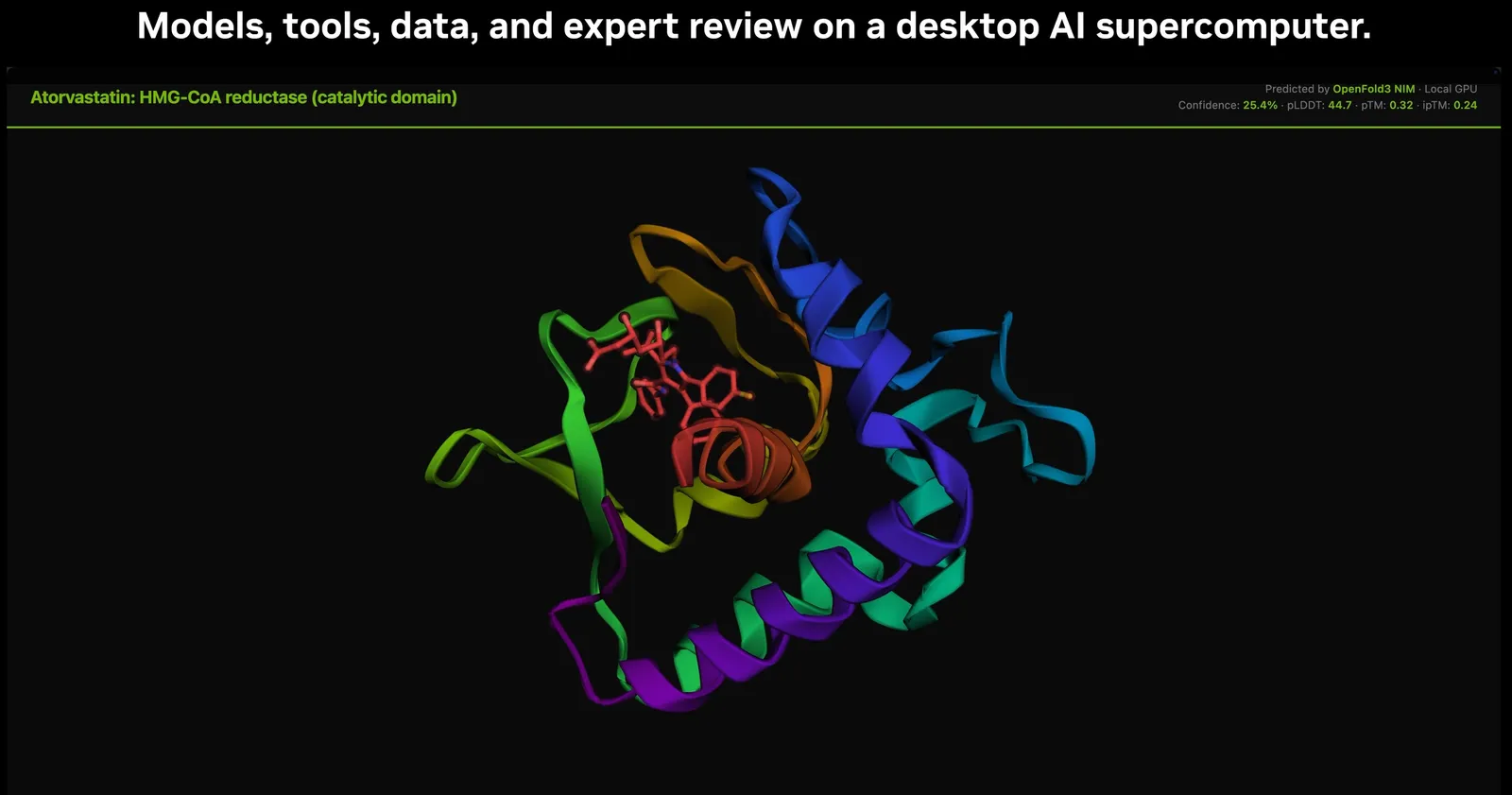
The core of this innovation is a six-agent system detailed in a recently published NVIDIA playbook. The architecture deploys a "coordinator" agent supported by five specialized domain experts tasked with managing patient data, labs and vitals, medications, clinical analysis, and molecular visualization. At the heart of this ecosystem is the NVIDIA Nemotron 3 Super—a 120-billion-parameter mixture-of-experts model that operates locally via containerized inference.
Crucially, this system supports air-gapped deployments. Because the processing occurs on-device, patient data never traverses external networks or third-party cloud environments. Under an implicit-deny network policy, only a minimal, read-only set of outbound connections are permitted, effectively neutralizing the risk of data leakage.
A Chronological Shift in Clinical AI
The journey to this moment has been defined by three distinct eras of clinical technology:
- The Pre-Generative Era: Clinical software was rigid, relying on deterministic rules that failed to account for the nuance of human biology or the complexity of unstructured medical notes.
- The Cloud-Centric Generative Era: Early LLMs arrived with promise, but the reliance on external APIs forced healthcare organizations to choose between innovation and HIPAA compliance. Many projects were relegated to "sandbox" environments that could never touch live patient data.
- The Sovereign AI Era (Present): With the introduction of high-density, on-premises supercomputing, healthcare providers have gained the ability to bring the model to the data, rather than the data to the model. This marks the transition from experimental pilots to integrated, secure, enterprise-grade AI production.
Supporting Data: Efficiency and Scalability
The economic and technical advantages of this transition are significant. In traditional cloud-based AI, organizations face variable token-usage costs that balloon as agentic workflows increase in frequency and complexity. On-premises infrastructure converts this variable operational expense (OpEx) into a predictable capital investment (CapEx).
The hardware metrics are equally compelling:
- Computational Power: 20,000 TFLOPS of FP4 processing capability.
- Model Capacity: Support for models with up to one trillion parameters.
- Deployment Velocity: Full deployment of the six-agent system can be achieved in approximately one hour.
- Workflow Integration: The system uses human-readable "skill files," allowing for instantaneous updates to clinical guidelines without the need for costly and time-consuming model retraining.
Official Perspectives: Augmenting the Clinician
For biopharma and hospital leadership, the primary concern is not whether the technology works, but whether it is additive to the existing clinical workflow. The "Local Healthcare Agent" architecture is designed specifically to augment human expertise rather than replace it.
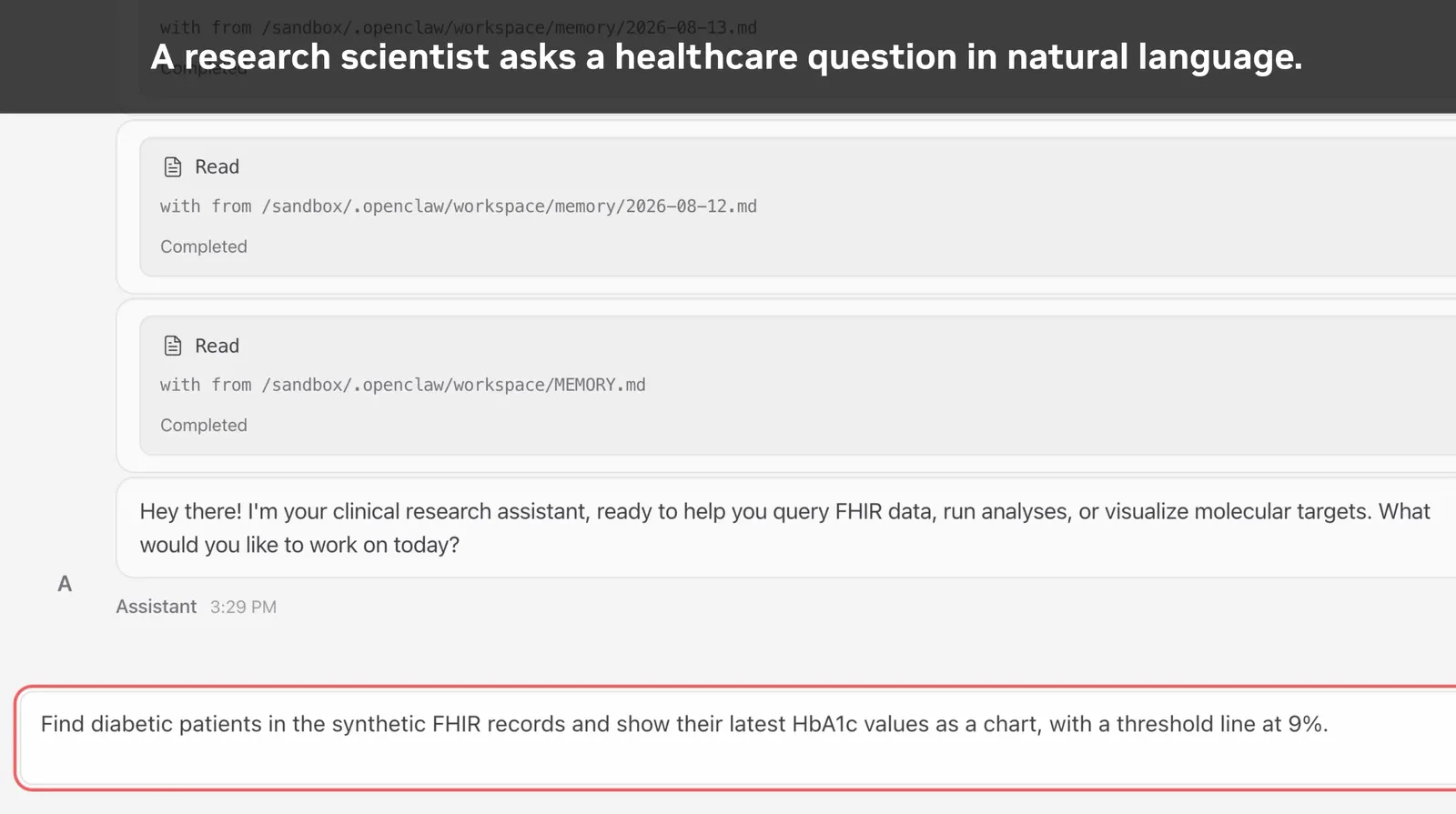
Consider the challenge of care gap identification—a cornerstone of modern quality assurance. Currently, quality teams spend thousands of hours manually cross-referencing lab results against evolving medical definitions. This is a labor-intensive, error-prone, yet vital task. The new AI architecture automates this by querying patient records and surfacing those who fall outside target thresholds.
However, the "intelligence" driving these decisions is decoupled from the model itself. The system reads human-readable files that define clinical thresholds. If a medical society updates a standard—for example, changing a blood pressure target from 140/90 to 130/80—the organization simply updates the text file. The agents immediately adopt the new standard on the next query. This ensures that the AI remains a faithful servant to current clinical science, rather than a "black box" that lags behind the latest research.
Implications for the Healthcare Industry
The arrival of local, agentic AI has profound implications for the future of medicine and the regulatory landscape.
1. Data Sovereignty and Security
In highly regulated fields like healthcare and life sciences, data is the most valuable intellectual property. By keeping both the training data and the model weights within a firewalled, local environment, organizations satisfy strict data sovereignty requirements. This removes the "compliance hurdle" that has historically stalled AI adoption.
2. The End of "Black Box" Rigidity
Because the system utilizes external, readable skill files, the clinical reasoning becomes transparent and auditable. Clinicians can see exactly which guidelines the agents are referencing, providing a "chain of thought" that is essential for trust in medical settings.
3. Scalability from Deskside to Data Center
One of the most significant architectural advantages is the continuity between the deskside unit and the larger enterprise AI factory. A clinical researcher can validate a new diagnostic workflow on their local machine, and that exact configuration can then be deployed to the hospital’s data center without re-platforming or retraining. This seamless scalability reduces the "time-to-clinic" for new AI-driven tools.
4. A New Standard for Clinical Research
With the memory density to run both a frontier-class LLM and complex protein structure prediction models simultaneously, a single workstation becomes a comprehensive research hub. This empowers smaller clinical teams and regional health systems to perform the kind of molecular analysis that was previously limited to massive, centralized research institutions.
Conclusion: "Where Do We Start?"
The Local Healthcare Agent playbook is a proof point that the computational barrier to running sophisticated, secure AI has effectively collapsed. The conversation in boardrooms and IT departments is shifting from a skeptical "Can we actually do this?" to an urgent "Where do we start?"
The answer, logically, is right where the data lives. By deploying AI at the source of the clinical record, healthcare organizations are not just adopting a new tool; they are building a sustainable foundation for the future of medicine. The technology is no longer a distant cloud service managed by third parties—it is a secure, local asset that allows clinicians to focus on the patient, while the infrastructure handles the complexity of the digital age.
For those looking to explore this transition, the path is increasingly well-defined: leverage the Dell AI Factory with NVIDIA to standardize the infrastructure, deploy the six-agent architecture, and begin the work of transforming clinical efficiency at the speed of human knowledge. The era of the "Local Healthcare Agent" has arrived, and it promises to make high-quality, data-driven, and secure care the standard for everyone.