
In the world of fitness, we are often bombarded with complex routines, expensive gym memberships, and high-tech equipment designed to optimize our health. Yet, one of the most effective diagnostic tools for longevity requires nothing more than the floor beneath your feet and the resolve to push your own body weight. For adults over the age of 60, the humble push-up serves as a profound barometer of physiological health, functional independence, and cardiovascular resilience.
According to fitness experts, the ability to perform a specific number of push-ups is not merely a vanity metric for chest development; it is a vital sign that speaks to your ability to navigate the physical demands of daily life well into your later years.
Main Facts: The Functional Power of the Push-Up
At its core, the push-up is a foundational movement pattern that requires the synchronization of multiple muscle groups. When performed with proper technique, it engages the pectorals (chest), the anterior deltoids (shoulders), the triceps (arms), and, crucially, the core (trunk stability).
For individuals navigating their sixties and beyond, these specific muscle groups are the "frontline defenders" of functional mobility. Strong chest and shoulder muscles facilitate pushing movements, such as opening heavy doors or moving furniture. Core stability is the primary defense against falls—the leading cause of injury among older adults. By maintaining the strength to support your body weight, you are essentially "insuring" your body against the frailty that often accompanies aging.
Chronology: From Academic Research to Practical Application
The conversation surrounding push-ups as a health indicator gained mainstream scientific momentum in 2019. A landmark study published in JAMA Network Open sent shockwaves through the fitness community by establishing a quantifiable link between push-up capacity and heart health.
Harvard T.H. Chan School of Public Health researchers tracked 1,104 active, middle-aged male firefighters over a decade. The results were stark: those who could perform more than 40 push-ups at the start of the study had a 96 percent lower risk of cardiovascular disease events compared to those who could perform fewer than 10.
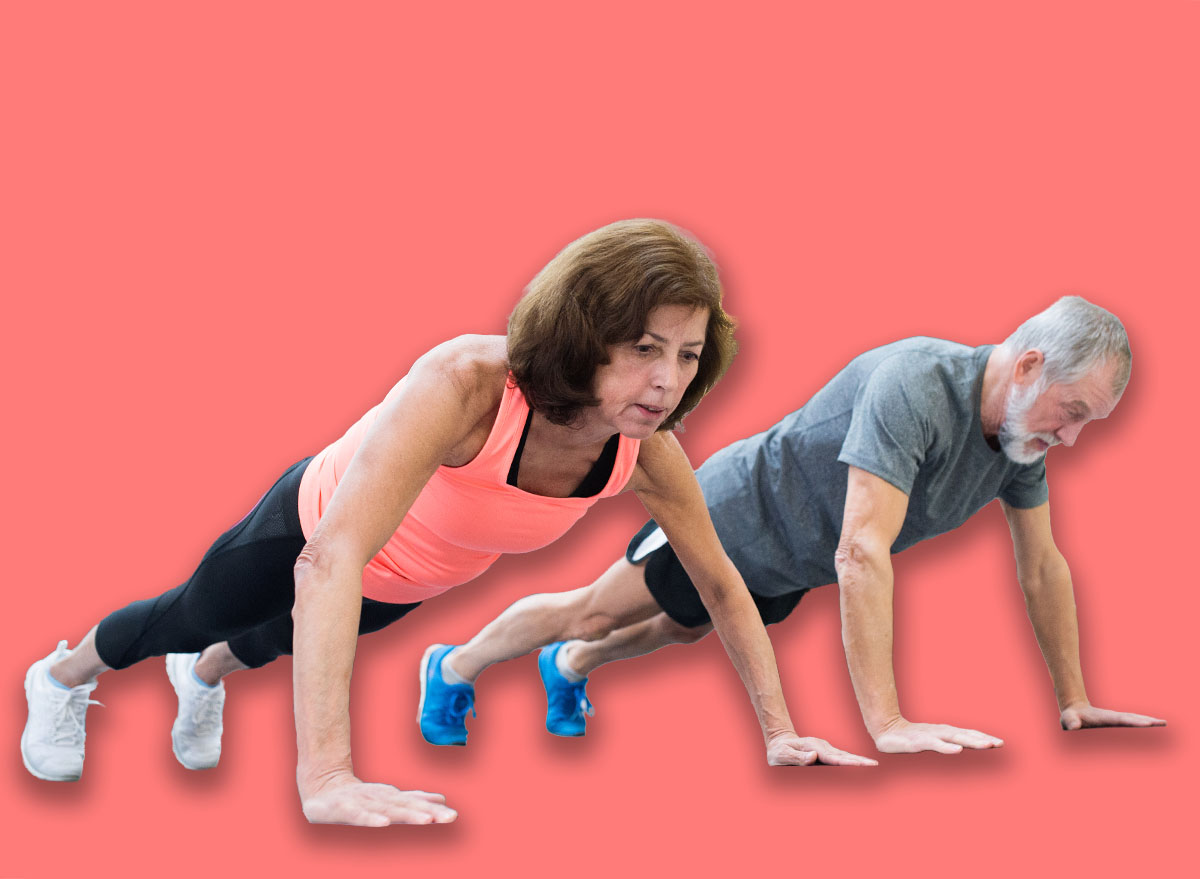
While the subjects in the study were in their forties, the implications for the aging population were clear. As we transition into our sixties and seventies, cardiovascular health remains the primary driver of life expectancy. While the exact numerical threshold of 40 may not be the immediate target for a 65-year-old, the underlying principle holds firm: the more capacity you have to generate force through your upper body, the more likely you are to have a robust, resilient cardiovascular system.
Supporting Data: Why 15 is the "Magic Number" After 60
To translate these findings for the over-60 demographic, we consulted James Bickerstaff, a certified personal trainer at OriGym. Bickerstaff emphasizes that fitness in the seventh decade of life is less about high-intensity repetition and more about structural integrity and muscular control.
"The quality of your push-ups matters significantly more than chasing a high number," Bickerstaff explains. "Someone over 60 who can perform 15 slow, controlled push-ups through a full range of motion is displaying excellent strength, stability, and muscular endurance. That level of fitness is indicative of a body that is well-maintained and capable of handling real-world stressors."
The shift from the "40-rep" goal in younger populations to the "15-rep" benchmark for older adults accounts for natural changes in muscle mass (sarcopenia) and joint recovery times. However, the 15-rep goal remains a high bar that suggests a level of physical autonomy that most of the general population struggles to maintain.
Official Expert Perspectives on Technique
"Sloppy, half-rep push-ups are counterproductive," Bickerstaff warns. "If you are rushing through the movement or failing to reach the floor, you are inflating your ego, not your strength. True strength is built in the eccentric phase—the lowering—and the transition from the bottom of the movement."
To ensure the exercise is providing the health benefits intended, Bickerstaff recommends the following checklist:

- The Descent: Keep your chest moving toward the floor with a steady, controlled tempo.
- Elbow Positioning: Keep your elbows tucked closer to your sides (roughly at a 45-degree angle from your torso) rather than flared out, which protects the shoulder joint.
- Core Engagement: Your body should form a straight line from your head to your heels. If your hips sag or your lower back arches, your core is not engaged, and you are losing the stability benefit of the movement.
Progression: How to Build Toward the Benchmark
If the prospect of 15 full, floor-based push-ups feels daunting, it is important to understand that fitness is a cumulative process. The body is remarkably adaptive, regardless of age. If you cannot currently perform a standard push-up, you should not be discouraged.
The Incline Progression
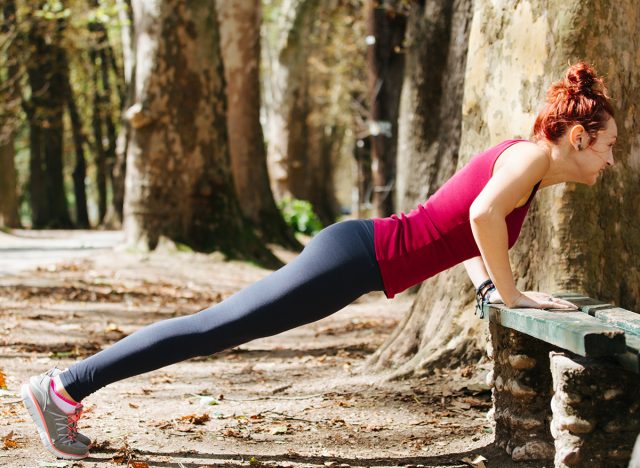
The most effective way to build strength without overloading the joints is to utilize an incline. By placing your hands on a sturdy countertop, a heavy table, or a weight bench, you reduce the percentage of your body weight that you are required to move.
- Start High: Begin by doing push-ups against a wall. This provides a very low-resistance entry point.
- Lower the Angle: Once you can comfortably perform 15 reps against a wall, move to a high countertop.
- The Bench Phase: Transition to a sturdy bench or a sturdy chair placed against a wall to prevent sliding. This is the final stage before hitting the floor.
"Consistency is the antidote to decline," Bickerstaff notes. "Even if you only start with three sets of five reps on an incline, you are signaling to your muscles that they need to adapt. Within weeks, you will find yourself moving to a lower surface, and eventually, the floor."
Implications for Long-Term Health and Independence
The push-up is more than an exercise; it is a test of "functional reserve." As we age, we do not lose our strength overnight; we lose it through a slow, incremental reduction in the activities that require us to use our muscles. When you stop pushing, you lose the ability to push.
1. Fall Prevention
The same muscles you use to push yourself off the floor are the ones that save you when you trip. If you stumble forward, your arms and shoulders must be strong enough to absorb the impact and stabilize your torso. A weak upper body often turns a simple trip into a catastrophic fall.
2. Metabolic Health
Push-ups are a compound movement. Engaging multiple large muscle groups at once burns more calories and improves insulin sensitivity. Better metabolic health translates to lower blood pressure, better blood sugar control, and a reduced risk of metabolic syndrome.
3. Bone Density
As we age, bone mineral density becomes a primary concern. Resistance training, such as the push-up, exerts a "load" on the bones of the arms, wrists, and shoulders. This mechanical stress triggers the body to increase bone density, acting as a preventative measure against osteoporosis.
The Bottom Line: Start Where You Are
The goal of 15 push-ups after 60 is a target, not a prerequisite for existence. If you are starting today, your only goal should be to perform one rep better than you did yesterday.
Whether you are performing them against a wall, a kitchen counter, or on the floor, the act of pushing your body against gravity is one of the most profound investments you can make in your own longevity. It is a daily reminder that you are not just surviving—you are thriving, maintaining your strength, and claiming your physical independence one repetition at a time.
Disclaimer: Before beginning any new exercise program, especially if you have pre-existing health conditions or joint issues, please consult with a physician or a physical therapist. Listen to your body and prioritize form over intensity to avoid injury.