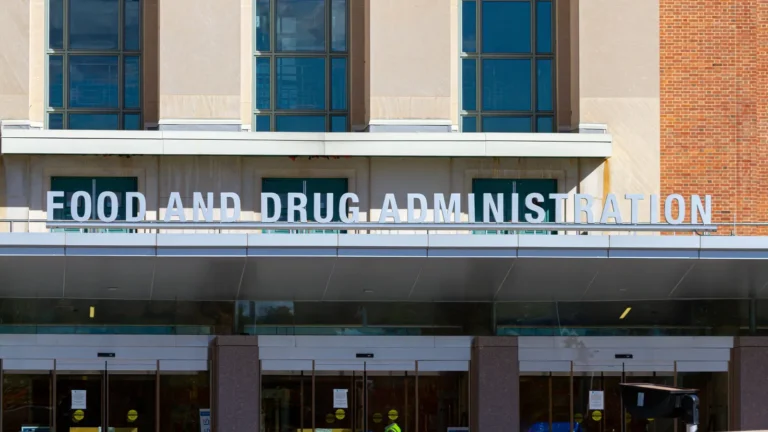







The United States Supreme Court is currently navigating a high-stakes legal labyrinth that threatens to redefine the boundaries of federal regulatory authority and the landscape of reproductive healthcare. Following a temporary, week-long stay on a federal appeals court ruling that sought to curtail the mail-order distribution of the abortion medication mifepristone, the nation’s highest court is expected to deliver a pivotal decision by Monday evening.
The outcome of this case holds profound implications that extend far beyond the specific drug in question. At its heart, the legal battle pits the established scientific authority of the Food and Drug Administration (FDA) against the regulatory aspirations of individual states, potentially setting a precedent that could allow state governments to bypass federal oversight in the drug approval process.
The Core Conflict: Federal Authority vs. State Sovereignty
The central legal question, as articulated by Laurie Sobel, associate director for women’s health policy at KFF, is fundamental: "Who gets to regulate mifepristone? Can a state go further than the FDA? Is the FDA the floor or the ceiling?"
While individual states possess clear constitutional authority to regulate the practice of abortion within their borders, the FDA maintains exclusive jurisdiction over the approval and safety monitoring of pharmaceutical products. In 2023, the agency took the significant step of removing the long-standing requirement for in-person dispensing of mifepristone, facilitating a shift toward telehealth consultations and mail-order delivery. This move was intended to align regulatory practices with modern medical standards and increased patient access.
However, the state of Louisiana has challenged this, arguing that the FDA’s decision violated the Administrative Procedure Act (APA). Louisiana contends that the agency failed to base its decision on adequate scientific evidence and invoked the 1873 Comstock Act—a dormant, century-old law—to argue that the mailing of abortion-related materials remains a federal offense.
A Chronology of the Legal Impasse
The current legal volatility is the latest chapter in an escalating battle over reproductive rights following the Supreme Court’s 2022 Dobbs v. Jackson decision.
- 2023: The FDA formally removes the in-person dispensing requirement for mifepristone, citing updated safety data and the efficacy of the two-drug regimen (mifepristone and misoprostol).
- 2024: The Supreme Court addresses a challenge brought by the Alliance for Hippocratic Medicine. The Court ultimately ruled that the anti-abortion coalition lacked the legal standing to challenge the FDA’s regulatory decisions, effectively preserving the status quo at that time.
- Early 2026: The 5th U.S. Circuit Court of Appeals moves to reinstate in-person requirements, arguing that the FDA’s move lacked sufficient safety oversight.
- May 2026: The Supreme Court grants an emergency stay on the 5th Circuit’s decision, maintaining the status quo while the justices deliberate on whether to issue a shadow docket ruling or remand the case back to the lower courts.
As of Monday, the Supreme Court faces a binary choice: issue a swift, emergency "shadow docket" ruling on the petitions filed by two mifepristone manufacturers, or remand the case to the 5th Circuit, acknowledging that the legal battle will likely return to the Supreme Court on its merits at a later date.
Supporting Data and the Scientific Consensus
Despite the legal challenges, the use of medication abortion has surged. Following the Dobbs decision, as states implemented varying levels of restrictions, the total number of abortions in the United States saw a slight increase. Analysts attribute this trend directly to the availability of mifepristone and misoprostol through telehealth and mail-order pharmacy services, which have provided a vital lifeline for patients in restrictive jurisdictions.
The scientific community has mobilized in defense of the FDA’s regulatory process. In a striking display of institutional alignment, a coalition of nine former FDA commissioners—including Janet Woodcock and Robert Califf—filed an amicus brief emphasizing that the agency’s 2023 decision was "consistent with sound science."
"Ruling against the decision as the 5th Circuit did would upend FDA’s gold-standard, science-based drug approval system and creates a roadmap for attacks on science-based drug regulatory decisions," the former commissioners warned. They noted that the 5th Circuit’s critique of the FDA’s adverse-event reporting system ignores the reality that voluntary reporting is the industry standard for the vast majority of the 20,000 drugs currently approved in the United States.
The Industry Perspective: Fear of "Weaponizing" Regulation
The pharmaceutical industry has voiced deep alarm regarding the implications of this case. In a brief submitted to the court, the lobbying group PhRMA argued that Louisiana is attempting "to impose its own view of a drug’s safety profile on the entire nation."
Industry leaders fear that if the judiciary begins to override FDA determinations on the basis of political or ideological disagreement, the entire drug development pipeline could be destabilized. "Drug sponsors and FDA would have to continuously look over their shoulders to determine whether someone is going to try to seek an injunction to undo science- and evidence-based determinations," PhRMA noted.
Furthermore, a group of prominent food and drug law scholars has echoed these sentiments, asserting that the 5th Circuit’s rationale rests on a "critical misunderstanding" of federal law. They argue that if the courts allow litigants to weaponize data limitations to challenge drug approvals, the "orderly system that Congress and FDA have established would screech to a halt."
Implications: A Shifting Regulatory Landscape
If the Supreme Court ultimately sides with the 5th Circuit and mandates a return to in-person dispensing, the practical enforcement of such a ruling presents significant hurdles. The FDA would be required to leverage its authority over drug manufacturers to compel compliance, a process that would likely involve the creation of a new, more restrictive Risk Evaluation and Mitigation Strategy (REMS).
However, even a restrictive ruling may not eliminate access to medication abortion. Providers could pivot to a "misoprostol-only" regimen. Misoprostol, originally approved for the treatment of gastric ulcers, is widely recognized as a safe and effective alternative for medication abortion.
Perhaps the most significant—and unusual—aspect of this case is the absence of a defense from the federal government. The current administration has remained conspicuously quiet, declining to defend the FDA’s regulatory actions in court. This lack of executive advocacy, combined with a pending internal FDA safety review expected in the fall, leaves the agency in a precarious position. Many experts believe the upcoming review, which has been described by federal health leaders as being "informed by the lack of adequate consideration underlying the prior REMS approvals," may be used to further distance the agency from its previous, more permissive stances on the drug.
Conclusion
As the Supreme Court nears its deadline, the nation remains in a state of suspended animation. The decision will not only affect the immediate availability of mifepristone but will also dictate the future of the FDA’s autonomy. If the Court allows the 5th Circuit’s logic to prevail, the agency may find itself permanently weakened, unable to act as the final arbiter of drug safety in the face of state-level legal challenges. For patients, providers, and the pharmaceutical industry, the message is clear: the wall between scientific regulation and political litigation is becoming increasingly porous.